





How to Check Whether an RCD Is Working Correctly Malaysia

How to Check Whether an RCD Is Working Correctly Malaysia
An RCD, RCCB or ELCB is an important part of an electrical protection system. But simply seeing an RCD installed in a distribution board does not tell you how it will actually respond under a residual-current condition.
For electricians, electrical contractors and maintenance technicians, the question is:
How do you check whether an RCD is operating correctly?
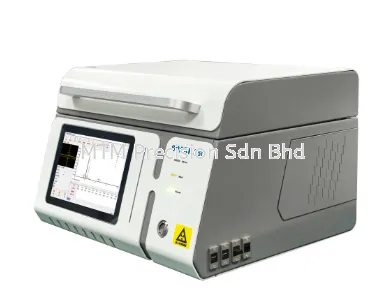
A professional assessment may involve visual inspection, functional checking and controlled testing with a dedicated instrument such as the Benetech GT5206A Digital RCD / ELCB Tester.
1. Start with a Visual Inspection
Before performing electrical tests, inspect the protective device and surrounding installation.
Look for obvious problems such as:
Physical damage
Burn marks
Loose or damaged components
Signs of overheating
Moisture
Incorrect labelling
Unusual condition of the distribution board
Also identify the information printed on the RCD, including its rated residual operating current and device type.
2. Check the RCD TEST Button
Most RCDs have a built-in TEST button.
Operating this button provides a basic functional check of the device's internal trip mechanism.
However, there is an important limitation:
The TEST button does not replace instrument-based RCD testing.
It does not provide a measured trip time or tell the electrician the actual trip-current behaviour of the device.
For more detailed evaluation, use an appropriate RCD tester.
3. Use a Dedicated RCD Tester
The Benetech GT5206A is specifically designed for RCD / ELCB testing.
Its selectable test-current settings include:
10mA / 20mA / 30mA / 100mA / 300mA / 500mA
This allows technicians to select an appropriate test setting according to the device and required test procedure.
4. Check RCD Trip Time
One important measurement is trip time.
This answers:
How long does the RCD take to operate after the selected residual test condition is applied?
A dedicated RCD tester can provide a measured result instead of relying only on whether the device appears to trip.
The result should then be interpreted according to the RCD type, manufacturer information and applicable electrical requirements.
5. Test Under Different Current Conditions
The GT5206A supports:
×1/2 / ×1 / ×5
test modes.
These allow technicians to investigate how the RCD responds under different test-current conditions.
This can provide a more complete assessment than performing only one test.
6. Compare 0° and 180° Testing
The GT5206A also provides:
0° / 180° phase selection
This allows the protective device to be tested from different starting points of the AC waveform.
Where required by the testing procedure, comparing these results can provide additional information about RCD operating behaviour.
7. Check Trip Current with AUTO RAMP
Another useful question is:
At approximately what residual test current does the RCD operate?
The GT5206A's AUTO RAMP function progressively increases the test current until the protective device trips.
This gives the technician useful trip-current information for inspection and troubleshooting.
What If the RCD Does Not Trip?
If the RCD does not operate as expected, don't immediately assume the device is defective.
Check factors such as:
Correct tester connection
Correct test-current setting
Supply condition
Wiring condition
RCD rating
RCD type
Test procedure
If these conditions are correct and the RCD still fails to respond as expected, further investigation is required.
What If the RCD Keeps Tripping?
An RCD that trips frequently is not necessarily faulty.
It may be responding to a genuine electrical problem.
Possible causes include:
Appliance leakage
Insulation deterioration
Moisture
Damaged wiring
Faulty electrical equipment
Accumulated leakage from multiple loads
Installation problems
This is why RCD troubleshooting may require more than one test instrument.
An electrician may use an RCD tester together with an insulation resistance tester, clamp meter, leakage-current clamp meter or other appropriate electrical test equipment.
RCD Testing for Building Maintenance
RCD testing can be particularly relevant for maintenance teams responsible for:
Offices
Shopping premises
Apartments
Hotels
Schools
Warehouses
Workshops
Factories
Commercial buildings
Industrial facilities
Testing can form part of planned preventive electrical maintenance rather than waiting until an RCD begins causing problems.
Is Pressing TEST Enough?
For a basic user check, the built-in TEST button is useful.
For professional electrical inspection, troubleshooting or maintenance, however, technicians may need measured information.
This is the key difference:
TEST button → Basic functional check
RCD tester → Controlled performance testing and measured results
Benetech GT5206A RCD Tester Malaysia
The Benetech GT5206A Digital RCD / ELCB Tester is suitable for electrical professionals who need dedicated RCD testing functions rather than only general-purpose electrical measurements.
It is particularly relevant for:
Electricians
Electrical contractors
Facility management companies
Building maintenance teams
Factory maintenance departments
Electrical troubleshooting work
Always perform electrical testing according to the instrument manufacturer's instructions, appropriate safety procedures and applicable Malaysian electrical requirements.
Contact MTM Precision
MTM Precision Sdn Bhd
No. 29-1 & 29-2, Jalan Bandar 18
Pusat Bandar Puchong
47160 Puchong, Selangor, Malaysia
Website: www.mtmpre.com.my
WhatsApp: +6016-660 7346
Email: mtmpre@yahoo.com
Contact MTM Precision for Benetech GT5206A Digital RCD / ELCB Tester Malaysia, RCD testing equipment, electrical safety instruments and professional measurement solutions.
23 Aug 2026


