





0 vs 180 RCD Testing Explained Malaysia

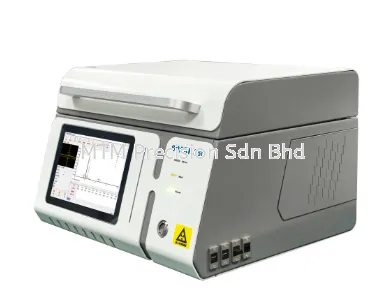
0° vs 180° RCD Testing Explained MalaysiaWhen using an RCD tester, electricians may notice a test option marked:0° / 180°What does this mean, and why would an RCD need to be tested at two different phase angles?The Benetech GT5206A Digital RCD / ELCB Tester provides 0° and 180° phase selection, allowing technicians to evaluate the response of an RCD or RCCB from different starting points of the AC waveform.What Does 0° and 180° Mean?AC electricity continuously changes direction.During RCD testing, the test current can be introduced at different points of the AC waveform.Two commonly used starting positions are:0°and180°In simple terms, the tester can initiate the RCD test from opposite points of the AC cycle.Why Test at Both 0° and 180°?An RCD may not produce exactly the same trip-time result at both starting positions.Testing at 0° and 180° allows the technician to compare the protective device's response under both conditions where the applicable procedure requires it.This can provide more useful information than relying on a single test.Example of RCD TestingImagine an electrician is checking an RCD.The technician may perform:Test 1: 0°Record the measured trip time.Then:Test 2: 180°Record the second trip time.The results can then be evaluated according to the device type, manufacturer information and applicable testing requirements.The objective is not simply to obtain the smallest number.The objective is to verify the RCD's operating behaviour under the required test conditions.Benetech GT5206A Phase SelectionThe Benetech GT5206A provides:0° / 180° phase selectiontogether with selectable RCD test-current settings including:10mA / 20mA / 30mA / 100mA / 300mA / 500mAThis allows technicians to configure the tester according to the RCD and required test procedure.×1/2, ×1 and ×5 TestingThe GT5206A also supports:×1/2 / ×1 / ×5test modes.Therefore, professional RCD evaluation may involve more than simply:Connect tester → Press TEST → RCD tripsInstead, technicians can evaluate different combinations of test current, multiplier and phase position as appropriate.0° / 180° Testing and Trip TimePhase selection is particularly relevant when measuring RCD trip time.Trip time answers:How long does the protective device take to operate after the specified residual-current test condition is applied?Testing from both 0° and 180° can help identify the RCD response under both waveform starting conditions.What About AUTO RAMP?AUTO RAMP answers a different question.It helps determine:At approximately what residual test current does the RCD operate?The GT5206A progressively increases the test current until the protective device trips.Therefore:0° / 180° → Phase starting positionTrip Time → How quickly the RCD operatesAUTO RAMP → At what test-current level the RCD operatesThese functions provide different information about RCD performance.Is 0° Always Better Than 180°?No.0° and 180° should not be viewed as "good" and "bad" settings.They are different test starting conditions.The measured results should be evaluated according to the RCD type and applicable test requirements.Why This Matters for Electrical ContractorsElectrical contractors may be responsible for:New installation testingRenovation workElectrical troubleshootingBuilding maintenanceFactory maintenancePreventive maintenanceElectrical inspectionWhen measured RCD results need to be documented, having 0° / 180° selection provides more useful testing capability than a simple functional trip check.Record Both ResultsFor professional maintenance records, technicians can document information such as:RCD: 30mATest Mode: ×10° Trip Time: Recorded result180° Trip Time: Recorded resultDate: Test dateTechnician: Technician nameThis creates traceable test information for future comparison.Do I Need an RCD Tester If I Have a Multimeter?A digital multimeter and an RCD tester perform different functions.A multimeter is useful for:VoltageResistanceContinuityGeneral electrical measurementsA dedicated RCD tester evaluates residual-current protective-device behaviour.If your work includes professional RCD / RCCB inspection, an RCD tester such as the Benetech GT5206A performs measurements that a standard multimeter does not replace.RCD Testing for MalaysiaThe GT5206A can be useful for:ElectriciansElectrical contractorsM&E contractorsFacility managersFactory maintenance teamsBuilding maintenance companiesElectrical inspection techniciansIt provides a dedicated way to investigate RCD / RCCB / ELCB operation under controlled test conditions.Always follow the tester manufacturer's instructions, safe electrical working procedures and applicable Malaysian electrical requirements.Benetech GT5206A RCD / ELCB Tester MalaysiaFor technicians comparing RCD testers, don't look only at the maximum test current or price.Functions such as:Trip Time + Multiple Test Currents + ×1/2 / ×1 / ×5 + AUTO RAMP + 0° / 180°can make an RCD tester considerably more useful for professional troubleshooting and maintenance.The Benetech GT5206A Digital RCD / ELCB Tester combines these functions in one dedicated electrical testing instrument.Contact MTM PrecisionMTM Precision Sdn BhdNo. 29-1 & 29-2, Jalan Bandar 18Pusat Bandar Puchong47160 Puchong, Selangor, MalaysiaWebsite: www.mtmpre.com.myWhatsApp: +6016-660 7346Email: mtmpre@yahoo.comContact MTM Precision for Benetech GT5206A Digital RCD / ELCB Tester Malaysia, RCD trip-time testing equipment and professional electrical measurement solutions.
23 Aug 2026
