





Thermal Camera vs Infrared Thermometer: Which Should You Buy? Noyafa NF-522 Malaysia

Thermal Camera vs Infrared Thermometer: Which Should You Buy? Noyafa NF-522 Malaysia
A thermal imaging camera and an infrared thermometer both measure temperature without direct contact, but they solve different inspection problems.
An infrared thermometer is ideal when you already know exactly where you want to measure.
A thermal imaging camera is more useful when you need to discover where the abnormal temperature is located.
For electricians, HVAC technicians, factory maintenance teams and building inspectors in Malaysia, understanding this difference can help determine whether a conventional IR thermometer is sufficient or whether a thermal camera such as the Noyafa NF-522 would provide more value.
What Is an Infrared Thermometer?
An infrared thermometer, commonly called an IR thermometer or temperature gun, measures infrared energy emitted from a target surface.
The user points the instrument toward the target and obtains a temperature reading.
Typical applications include:
Checking motor surface temperature
Measuring HVAC outlet temperature
Checking machinery
Inspecting electrical components
Food-surface temperature checks
Comparing equipment temperatures
Its biggest advantages are simplicity, speed and relatively low cost.
However, it primarily gives you a temperature reading for the selected measurement area.
What Is a Thermal Imaging Camera?
A thermal imaging camera also detects infrared energy, but instead of producing only a spot reading, it creates a thermal image.
Different temperatures are represented visually across the screen.
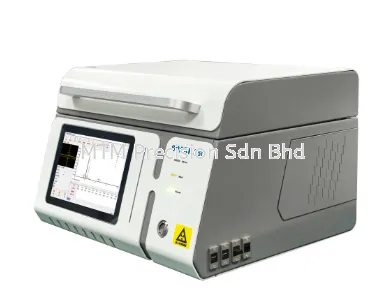
The Noyafa NF-522, for example, has a 200 × 150 infrared detector.
That represents approximately:
30,000 thermal pixels.
Instead of checking one selected location, the user can view temperature distribution across an entire scene.
The Most Important Difference
The easiest way to understand the difference is to consider the question each instrument answers.
An infrared thermometer answers:
“What is the temperature here?”
A thermal imaging camera answers:
“Where is the unusual temperature?”
This distinction becomes extremely important during troubleshooting.
Example: Electrical Distribution Board
Imagine an electrical distribution board containing 30 circuit breakers.
With an infrared thermometer, the technician needs to select measurement points and check breakers individually.
This works—but the technician must already know where to point the instrument.
With a thermal camera, the technician can scan the complete panel.
If one breaker or terminal appears significantly hotter than surrounding components, it immediately attracts attention.
The technician can then perform further electrical testing.
For electrical troubleshooting, thermal imaging therefore provides a powerful screening advantage.
Example: Factory Motor
Suppose a factory has six similar motors.
With an IR thermometer, a technician may measure each motor at several locations.
With the NF-522, the technician can visually compare the thermal pattern of each motor.
If one bearing area appears unusually hot, the technician knows where further investigation should begin.
Additional testing may include:
Vibration measurement
Current measurement
RPM measurement
Bearing inspection
Lubrication assessment
The thermal camera does not replace these tests—it helps decide where they are needed.
Example: Water Leak Investigation
Consider a large ceiling with suspected water leakage.
Using an infrared thermometer would require the technician to select individual points for measurement.
The technician may not know which points are important.
A thermal camera allows the entire visible ceiling surface to be scanned for unusual temperature patterns.
If a suspicious area is found, it can then be checked using a moisture meter or physical inspection.
Again, the advantage is finding the area first.
Example: HVAC Troubleshooting
An HVAC technician may need to investigate why one section of a room is warmer than another.
An infrared thermometer can measure selected vents and surfaces.
A thermal camera provides a broader overview.
The technician can scan:
Air vents
Ducts
Ceiling areas
Walls
Windows
HVAC components
This may reveal a temperature-distribution problem that would be slower to identify using spot measurements alone.
Thermal Camera vs IR Thermometer Comparison
FeatureInfrared ThermometerThermal Imaging CameraNon-contact measurementYesYesSpot temperature measurementYesYesThermal imageNoYesLocate unknown hot spotsLimitedExcellentCompare temperature distributionLimitedExcellentElectrical panel scanningBasicVery usefulMotor inspectionUsefulMore visualBuilding inspectionLimitedVery usefulWater-leak screeningLimitedMore suitableCostLowerHigher
The correct choice depends on the application rather than simply which instrument has more features.
When Is an Infrared Thermometer Enough?
An infrared thermometer may be sufficient when:
You already know the measurement location
You need only occasional spot measurements
Thermal patterns are not important
You need a simple temperature check
Budget is the main consideration
For many technicians, an IR thermometer remains an essential tool.
Thermal imaging does not make infrared thermometers obsolete.
When Should You Consider a Thermal Camera?
A thermal imaging camera becomes more valuable when:
The location of the problem is unknown
You need to scan many components quickly
You need to compare temperature patterns
You perform electrical preventive maintenance
You inspect motors and machinery
You troubleshoot HVAC systems
You inspect buildings
You investigate possible moisture problems
In these situations, being able to see temperature distribution can significantly improve inspection efficiency.
Why Thermal Resolution Matters
Thermal cameras are often compared by detector resolution.
The Noyafa NF-522 offers:
200 × 150 infrared resolution
which equals approximately:
30,000 thermal pixels.
Each pixel contributes temperature information to the image.
This is fundamentally different from a conventional IR thermometer, which does not produce a thermal map of the inspected scene.
What Is Thermal Sensitivity?
Thermal sensitivity describes the ability of a thermal camera to distinguish small temperature differences.
The NF-522 is specified with 65mK thermal sensitivity.
This can help produce clearer differentiation when temperature differences are relatively subtle.
Applications where this may be useful include:
Building inspection
HVAC inspection
Motor inspection
Electrical troubleshooting
Insulation assessment
Noyafa NF-522 Temperature Range
The NF-522 offers a measurement range of approximately:
-40°C to 330°C
This covers many common industrial, electrical, mechanical, HVAC and building inspection applications.
Users should still verify that the instrument's measurement range and other specifications match their actual application.
What About Emissivity?
Infrared measurement accuracy is affected by the emissivity of the target surface.
Different materials emit infrared energy differently.
The NF-522 provides adjustable emissivity from 0.1 to 1.0, allowing the user to better match the setting to the target material.
This is important for both thermal cameras and infrared thermometers.
Highly reflective surfaces, particularly shiny metals, require additional care when interpreting infrared measurements.
Should Every Maintenance Technician Buy a Thermal Camera?
Not necessarily.
If your work involves only occasional spot-temperature measurement, a good infrared thermometer may be sufficient.
However, if your work regularly involves troubleshooting unknown problems, thermal imaging can provide significantly more information.
This is especially relevant for:
Factory maintenance
Facility management
Electrical inspection
HVAC servicing
Building inspection
Predictive maintenance
Best Combination: Use Both
In many professional applications, the question should not be:
Thermal camera OR infrared thermometer?
A better approach may be:
Thermal Camera + Suitable Temperature Measurement Tools
The thermal camera finds the unusual area.
The technician can then perform more focused measurements and diagnostics.
For example:
NF-522 Thermal Scan → Find Hot Motor → Vibration Test → Clamp Meter Test → Diagnose Problem
This creates a much more complete maintenance workflow.
Is the Noyafa NF-522 a Good Upgrade from an IR Thermometer?
For technicians who already use an infrared thermometer but frequently need to search for unknown hot or cold spots, the NF-522 represents a meaningful step up.
Its 200 × 150 thermal resolution changes the workflow from measuring individual points to visualizing temperature distribution.
That can be especially useful when inspecting electrical panels, machinery, HVAC systems and building surfaces.
Who Should Consider the Noyafa NF-522?
The NF-522 can be considered by:
Electricians
M&E contractors
Factory maintenance teams
Facility managers
HVAC contractors
Building inspectors
Property maintenance companies
Automotive technicians
Engineering contractors
Preventive maintenance providers
Looking for a Thermal Camera in Malaysia?
MTM Precision supplies thermal imaging cameras, infrared thermometers and industrial testing instruments for Malaysian technicians, contractors, factories and engineering companies.
If you are unsure whether you need a conventional infrared thermometer or a thermal imaging camera such as the Noyafa NF-522, contact us with your application requirements.
We can help you select a suitable instrument based on the actual inspection task rather than simply choosing by price.
Contact MTM Precision
MTM Precision Sdn Bhd
No. 29-1 & 29-2, Jalan Bandar 18,
Pusat Bandar Puchong,
47160 Puchong, Selangor, Malaysia.
Website: www.mtmpre.com.my
WhatsApp: +6016-660 7346
Email: mtmpre@yahoo.com
24 Aug 2026


