






How to Find a CCTV Network Cable Fault – TDR Cable Testing Guide Malaysia

How to Find a CCTV Network Cable Fault – TDR Cable Testing Guide Malaysia
When an IP CCTV camera repeatedly disconnects, loses video or cannot connect to the network, the camera itself may not be the problem.
A damaged Ethernet cable or RJ45 connection can produce similar symptoms.
Instead of replacing the entire cable immediately, technicians can use TDR cable testing to help identify cable length and locate abnormal conditions along the cable.
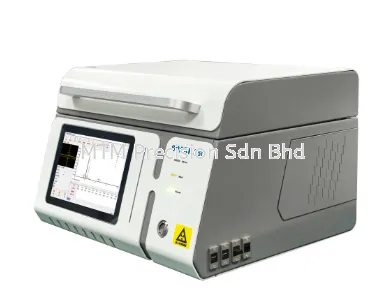
The Noyafa NF-IPC728HSO CCTV Tester incorporates TDR cable testing over approximately 2–195 metres, together with IP camera, PoE, network and cable diagnostic functions.
What Is TDR Cable Testing?
TDR stands for Time Domain Reflectometry.
A TDR sends a signal through a cable and analyzes reflections caused by changes in the cable.
These reflections can help technicians estimate cable length and identify the approximate location of certain cable abnormalities.
In CCTV and Ethernet installations, TDR is useful because much of the network cable may be hidden inside:
Walls
Ceilings
Conduits
Cable trays
Underground routes
Building risers
Without a cable tester, physically inspecting the complete cable route can be difficult.
What CCTV Problems Can Be Caused by Network Cabling?
Ethernet cable problems can cause symptoms such as:
IP camera offline
Camera repeatedly disconnecting
No video
Unstable video
Network communication failure
Intermittent connection
PoE-related problems
Reduced network reliability
These symptoms can easily be mistaken for camera or NVR faults.
That is why cable testing should be part of a professional IP CCTV troubleshooting process.
Step 1: Confirm the Camera Works
Before blaming the cable, test the IP camera independently where practical.
The Noyafa NF-IPC728HSO supports IP camera testing up to 8K / 32MP.
If the camera can be powered, discovered and viewed normally during direct testing, the technician has useful evidence that the fault may exist elsewhere in the installation.
The next areas to investigate include:
RJ45 Connector → Ethernet Cable → Switch → Network → NVR
Step 2: Inspect Both RJ45 Connectors
Before performing advanced testing, inspect the physical connectors.
Look for:
Incorrect termination
Loose connector
Damaged RJ45 plug
Bent or contaminated contacts
Poor crimping
Cable damage near the connector
Sometimes the fault is located at the termination rather than somewhere along the cable run.
Step 3: Perform TDR Cable Testing
The NF-IPC728HSO provides TDR cable testing from approximately 2 to 195 metres.
Connect the cable according to the tester's operating procedure and perform the TDR measurement.
The tester can help technicians evaluate cable length and identify abnormal conditions.
For example, if a cable is expected to be approximately 80 metres long but the tester indicates an abnormality much earlier along the route, the technician has a better idea of where to begin inspecting.
Can TDR Tell You Exactly Where a Cable Is Broken?
TDR can help estimate the distance to an impedance change or cable abnormality, but technicians should not treat every distance reading as an exact physical position.
Cable routing, patch cords, connectors and installation conditions can affect interpretation.
The best practice is to use the TDR result as a diagnostic guide and then inspect the corresponding section of the installation.
Step 4: Check Cable Wiring
A cable can have continuity problems even when it looks physically normal.
Check for wiring faults such as:
Open circuit
Short circuit
Incorrect wiring
Pair problems
Poor termination
For CCTV systems using PoE, good cabling is especially important because the cable carries both network data and electrical power.
Step 5: Trace the Correct Cable
Sometimes the biggest problem is not finding the fault—it is finding the correct cable.
Large CCTV installations may contain dozens or hundreds of similar Ethernet cables inside the same rack.
The NF-IPC728HSO includes cable tracing functionality, helping technicians identify the required cable before testing or replacing it.
This is useful for:
CCTV maintenance
Network cabinet troubleshooting
Camera replacement
Cable identification
System expansion
Step 6: Test Network Communication
If the cable passes physical testing but the camera still does not communicate correctly, move to network diagnostics.
The NF-IPC728HSO includes dual 10/100/1000 Mbps Gigabit Ethernet ports and network testing functions.
This helps technicians investigate whether the problem is actually related to:
IP configuration
Network switch
Network communication
Camera-to-NVR connection
Network traffic
A good cable does not automatically mean the entire CCTV network is working correctly.
Why Does My Camera Work Sometimes and Disconnect Later?
Intermittent faults can be caused by:
Poor RJ45 termination
Partially damaged cable
Unstable PoE supply
Loose connector
Network congestion
Switch problems
IP conflicts
Camera problems
When a camera repeatedly goes online and offline, technicians should investigate both the physical cable and network conditions.
Can a Damaged Cable Still Supply PoE Power?
In some fault conditions, a camera may appear to receive power while data communication remains unreliable or unavailable.
Therefore:
Camera Has Power ≠ Ethernet Cable Is Definitely Good
Technicians should verify the network connection separately rather than assuming that PoE power confirms a healthy cable.
Where Is TDR Useful for CCTV Installation?
TDR testing is especially useful where CCTV cable runs are long or difficult to access, such as:
Factories
Warehouses
Office buildings
Condominiums
Shopping centres
Hotels
Car parks
Schools
Industrial facilities
Multi-storey buildings
If a cable disappears into a ceiling or conduit for tens of metres, knowing the approximate distance to an abnormality can greatly narrow the inspection area.
TDR Tester vs Basic Cable Tester
A basic cable tester is useful for checking wiring and continuity.
A TDR tester adds distance information.
For example:
Basic Tester: There is a cable fault.
TDR: There is a cable abnormality approximately a certain distance along the cable.
That additional information can be valuable when troubleshooting installed Ethernet cabling.
Why Use an All-in-One CCTV Tester with TDR?
A dedicated TDR tester can test cables, but CCTV technicians often need to diagnose much more than cabling.
The Noyafa NF-IPC728HSO combines:
8K / 32MP IP camera testing
ONVIF discovery
PoE-related testing
TDR cable testing
Cable tracing
Dual Gigabit Ethernet
Network diagnostics
Analog CCTV testing
Wi-Fi analysis
Fiber optic testing capabilities
This allows a technician to move from camera → cable → network troubleshooting without changing instruments repeatedly.
CCTV Cable Fault Testing Malaysia
When an IP camera is offline or unstable, do not automatically replace the camera or the entire Ethernet cable.
First determine where the problem is located.
A logical troubleshooting sequence is:
Test Camera → Check RJ45 → Test Cable → Locate Fault → Check Network → Check NVR
For CCTV installers, ELV contractors and network technicians in Malaysia, the Noyafa NF-IPC728HSO provides TDR cable testing together with the CCTV and network tools needed for field troubleshooting.
Contact MTM Precision
Looking for a TDR Cable Tester, CCTV Tester or Network Cable Tester in Malaysia?
Contact MTM Precision for Noyafa NF-IPC728HSO price, availability and technical information.
MTM Precision Sdn Bhd
No. 29-1 & 29-2, Jalan Bandar 18,
Pusat Bandar Puchong,
47160 Puchong, Selangor, Malaysia.
Website: www.mtmpre.com.my
WhatsApp: +6016-660 7346
Email: mtmpre@yahoo.com
Meta Description: Learn how to find CCTV Ethernet cable faults using TDR testing. Noyafa NF-IPC728HSO provides approximately 2–195m TDR testing, cable tracing, IP camera and network diagnostics in Malaysia.
29 Aug 2026


