






Gigabit CCTV Network Tester Malaysia – Noyafa NF-IPC728HSO Dual Gigabit Ethernet

Gigabit CCTV Network Tester Malaysia – Noyafa NF-IPC728HSO Dual Gigabit Ethernet
Modern IP CCTV systems are also computer networks.
When an IP camera freezes, disconnects or fails to communicate with an NVR, the problem may not be the camera. It can originate from the Ethernet cable, PoE, network switch, IP configuration or network connection.
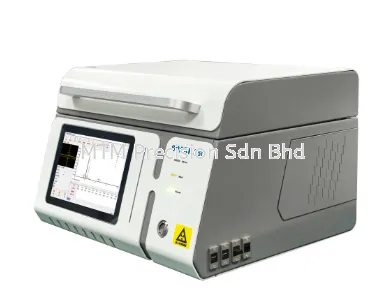
The Noyafa NF-IPC728HSO combines professional CCTV camera testing with dual 10/100/1000 Mbps Gigabit Ethernet ports, network diagnostics, TDR cable testing and cable tracing.
For CCTV installers and network technicians in Malaysia, this provides one field instrument for troubleshooting both the camera and the network behind it.
Why Does Gigabit Ethernet Matter for CCTV?
Modern CCTV systems can contain many high-resolution IP cameras transmitting video simultaneously.
As camera resolution and system size increase, network performance becomes increasingly important.
A professional technician may therefore need to investigate:
Camera connectivity
Ethernet link
Network communication
IP configuration
Network traffic
Switch connectivity
Camera-to-NVR communication
This is why a modern CCTV tester should provide more than a video display.
What Is a Gigabit CCTV Network Tester?
A Gigabit CCTV network tester combines camera-oriented testing with Ethernet diagnostic functions capable of working with Gigabit network connections.
The NF-IPC728HSO provides dual 10/100/1000 Mbps Ethernet ports.
This makes it suitable for technicians who work across:
IP Camera + Ethernet Cable + Network + NVR
rather than only checking whether a camera produces an image.
Why Are Two Gigabit Ethernet Ports Useful?
The dual-port configuration provides an important troubleshooting advantage.
The tester can be placed in the communication path during certain diagnostic workflows:
IP Camera → NF-IPC728HSO → Network / NVR
This allows technicians to investigate the relationship between the camera and network while working directly in the field.
For professional CCTV service work, this can provide more diagnostic flexibility than a tester with only basic network connectivity.
Camera Works Directly but Not Through the Network
This is a common troubleshooting scenario.
The technician connects directly to the camera and confirms:
Camera powers on.
Camera can be discovered.
Camera produces video.
But when connected through the installed network, it fails.
This immediately changes the troubleshooting direction.
Instead of replacing the camera, investigate:
Ethernet cable
Network switch
IP configuration
Network topology
NVR communication
A camera tester with network diagnostic capability makes this process more systematic.
Start with the Camera
The NF-IPC728HSO supports IP cameras up to 8K / 32MP.
It also supports major video formats including:
H.265+
H.265
H.264
MPEG4
Before troubleshooting the network, technicians can first confirm that the camera itself produces a valid video stream.
This creates a useful baseline:
Camera Works → Continue to Network
or
Camera Does Not Work → Investigate Camera / Power First
Check the IP Address
A functioning Ethernet connection does not guarantee correct IP communication.
Check:
Camera IP address
Subnet mask
Gateway
Duplicate IP address
NVR network settings
The NF-IPC728HSO provides IP and ONVIF camera discovery for compatible devices.
This can help technicians identify cameras and investigate network configuration before assuming a hardware fault.
Check PoE
Most modern IP cameras use Power over Ethernet.
A camera can fail because of power-related issues even when the network configuration appears correct.
A logical troubleshooting path is:
PoE → Camera → Cable → Network → NVR
The NF-IPC728HSO provides PoE-related testing capabilities to support this workflow.
Check the Ethernet Cable
Physical cabling remains one of the foundations of reliable IP CCTV.
Potential problems include:
Bad RJ45 termination
Open circuit
Short circuit
Damaged cable
Poor connector
Cable abnormalities
The NF-IPC728HSO incorporates TDR cable testing over approximately 2–195 metres.
TDR can help technicians evaluate cable length and estimate the distance to certain cable abnormalities.
Why Cable Faults Can Look Like Network Problems
A damaged cable may not always create a completely dead connection.
Some faults can result in intermittent behaviour.
Possible symptoms include:
Camera repeatedly disconnects
Video freezes
Camera intermittently disappears
Unstable communication
Network performance problems
This is why network troubleshooting should include physical cable inspection and testing.
Cable Tracing Before Troubleshooting
In a large equipment rack, technicians may first need to determine which cable belongs to the problematic camera.
The NF-IPC728HSO includes cable tracing functionality.
A practical workflow becomes:
Identify Cable → Test Cable → Check PoE → Test Camera → Diagnose Network
This is particularly useful for existing installations with poor cable documentation.
Network Problem or NVR Problem?
Suppose the camera works correctly and network communication appears normal, but the NVR still cannot display it.
Check:
Camera credentials
NVR channel configuration
ONVIF settings
Video stream configuration
Network settings
NVR compatibility
The objective is to isolate each part of the system rather than replacing equipment randomly.
Why High-Resolution CCTV Needs Good Network Infrastructure
An 8K or other high-resolution IP camera is only one part of the system.
The complete video path depends on:
Camera → Cable → Switch → Network → NVR / Storage
Installing a high-resolution camera without considering network infrastructure can create performance problems.
Professional CCTV commissioning should therefore include both camera and network checks.
Gigabit CCTV Tester vs Basic Camera Monitor
A basic CCTV monitor helps answer:
“Does the camera produce an image?”
A professional network-capable CCTV tester helps answer more questions:
Is the camera online?
Is PoE available?
Is the Ethernet cable healthy?
Can the camera communicate through the network?
Can the NVR communicate with the camera?
For complex IP CCTV projects, these additional questions matter.
Who Needs a Gigabit CCTV Network Tester?
A network-capable CCTV tester is particularly useful for:
CCTV installers
ELV contractors
Security system integrators
Network technicians
IP camera technicians
CCTV maintenance companies
Building maintenance teams
Factory maintenance departments
Data and communication contractors
It is especially relevant when the technician's responsibility extends beyond the camera itself.
One Tester for Camera + Cable + Network
The Noyafa NF-IPC728HSO combines:
Dual 10/100/1000 Mbps Gigabit Ethernet
8K / 32MP IP Camera Testing
ONVIF / IP Camera Discovery
PoE Testing
Network Diagnostics
TDR Cable Testing
Cable Tracing
Analog CCTV Testing
Wi-Fi Analysis
Fiber Optic Testing Capabilities
This creates a broader troubleshooting platform for modern CCTV infrastructure.
Gigabit CCTV Network Tester Malaysia
Modern IP surveillance technicians increasingly need both CCTV and networking knowledge.
When a camera fails, the correct question is not simply:
“Is the camera broken?”
Instead ask:
“Where along the complete communication path is the fault?”
For CCTV installers, ELV contractors and network technicians in Malaysia, the Noyafa NF-IPC728HSO provides dual Gigabit Ethernet together with camera, cable and network diagnostic functions for professional field troubleshooting.
Contact MTM Precision
Looking for a Gigabit CCTV Network Tester, IP Camera Tester or Network Tester in Malaysia?
Contact MTM Precision for Noyafa NF-IPC728HSO price, availability and technical information.
MTM Precision Sdn Bhd
No. 29-1 & 29-2, Jalan Bandar 18,
Pusat Bandar Puchong,
47160 Puchong, Selangor, Malaysia.
Website: www.mtmpre.com.my
WhatsApp: +6016-660 7346
Email: mtmpre@yahoo.com
Meta Description: Gigabit CCTV Network Tester Malaysia – Noyafa NF-IPC728HSO combines dual Gigabit Ethernet, 8K/32MP IP camera testing, ONVIF, PoE, TDR and network diagnostics.
29 Aug 2026

