





How to Locate an Unknown Underground Power Cable Before Excavation Malaysia

How to Locate an Unknown Underground Power Cable Before Excavation Malaysia
Before excavation, trenching, roadwork or construction begins, one of the most important questions is:
Where exactly is the underground power cable?
In many real-world situations, the contractor may have drawings showing an approximate cable route, but the exact position on site may be uncertain. In other cases, the underground cable route may be completely unknown.
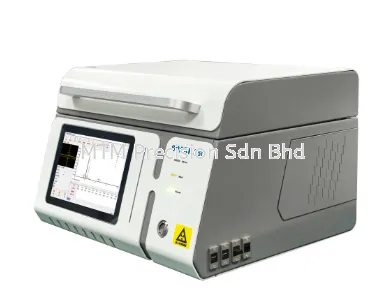
The FUZRR ES7080 Underground Utilities Locator provides several detection approaches for locating, tracing and measuring underground metallic pipelines and cables. According to the ES7080 manual, the system supports passive detection, direct connection, clamp coupling and induction-based detection, depending on the site conditions.
Finding an Underground Cable When the Location Is Unknown
When the approximate position of the underground cable is not known, immediately placing the transmitter over the cable is not necessarily possible.
The ES7080 manual describes Regional Detection for searching an area for unknown pipelines.
One available approach is Passive Source Detection.
In passive detection, the ES7080 receiver is used without the transmitter. The operator performs a grid search across the area while monitoring signal response.
For power-frequency passive detection, ES7080 provides:
50Hz / 60Hz / 250Hz
The manual states that power-frequency detection is particularly suitable for exploring operating cables. However, it also gives an important warning: detecting a power-frequency response does not automatically prove that the detected utility is a power cable, because other pipelines may carry induced power-frequency current. Passive detection also cannot guarantee detection of every underground line.
Therefore, passive detection should be treated as an important searching stage, rather than automatic confirmation of cable identity.
Step 1 — Search the Area
Start with the ES7080 receiver and perform a systematic grid search.
Set the receiver to the appropriate passive frequency and use Wide Peak or Narrow Peak mode.
As the operator moves across the area, observe changes in signal strength.
When a significant peak response is detected:
Mark the location on the ground.
Continue searching instead of stopping after detecting the first response. There may be several underground utilities crossing the excavation area.
The objective at this stage is:
Search → Detect → Mark → Continue Searching
This is particularly important before excavation because one detection method alone may not reveal every underground utility.
Step 2 — Apply an Active Signal Where Appropriate
Once the probable cable location or route has been established, an active locating method can be selected according to site conditions.
ES7080 provides three principal transmitter methods:
Direct Connection
Clamp Coupling
Induction
The best method depends on whether the target cable is accessible and whether an electrical connection is permitted.
Direct Connection — Preferred When Conditions Allow
According to the ES7080 manual, direct connection injects the transmitter signal directly into the metallic pipeline or cable.
The manual specifically states that compared with the other methods, Direct Connection can obtain the maximum transmitting current, and therefore should be used as far as possible when site conditions permit.
This can provide a stronger and more controlled signal for tracing the intended line.
For an out-of-service cable, the manual recommends the core-earth connection method as the preferred wiring arrangement for path detection and identification because of its anti-interference advantages.
Electrical connection procedures must only be performed under the safety conditions specified by the manufacturer and by appropriately trained and authorized personnel.
Clamp Coupling — Useful for Accessible Operating Cables
What if the cable is operating and direct electrical connection is undesirable?
ES7080 provides Clamp Coupling.
The transmitting clamp is installed around the accessible cable, allowing the transmitter signal to be coupled onto the target cable without making a direct electrical connection.
According to the manual, this method is convenient and does not require modification of the normal operation of the tested pipeline/cable.
However, grounding conditions are important. The manual states that both ends of the cable sheath need to be properly grounded for effective coupling.
For suitable operating power-cable applications, this can be preferable to simply inducing a signal into every nearby utility.
Induction — When There Is No Accessible Connection Point
Sometimes there is no exposed cable or suitable connection point.
In this situation, ES7080 provides an Induction Method.
No external transmitter accessory is required. The transmitter is placed horizontally on the ground above the expected pipeline position, with its orientation adjusted according to the expected pipeline direction.
The transmitter generates an electromagnetic field that induces current into suitable underground metallic utilities. The receiver then detects the resulting field.
This makes induction particularly useful for searching when physical connection is unavailable.
However, there is an important limitation.
Induction is less selective.
Other suitable metallic utilities within the transmitter field may also receive the signal. The ES7080 manual therefore notes that although induction is useful for regional exploration, it can be difficult to identify one specific pipeline.
How Deep Can Induction Detect?
The ES7080 technical specification states that the induction method is suitable for cables with buried depths of less than 2 metres.
This should not be confused with the ES7080's overall stated depth measurement range.
The receiver specification gives a 0–20m depth measurement range, but that does not mean induction is equally suitable for detecting a cable at every depth up to 20m.
The detection method and the depth-measurement specification are two different things.
Which Frequency Should You Use?
ES7080 offers multiple active frequencies, but higher frequency is not automatically better.
For general cable detection, the manufacturer's manual recommends the default:
3.20kHz
The manual explains that 3.20kHz provides relatively long propagation, is less likely to couple onto other pipelines and offers good receiver performance and interference resistance.
For long-distance cables exceeding approximately 2–3km, the manual recommends considering:
1.28kHz
Lower frequencies generally provide longer propagation and are less likely to induce signals onto neighbouring utilities.
For higher-resistance pipelines, higher frequencies such as 32.7kHz, 65.6kHz, 81.9kHz or 197kHz may be selected, although the manual warns that higher frequencies have shorter propagation and are more likely to couple onto other pipelines.
There is also an important distinction for Induction Mode: the manual lists 32.7kHz, 81.9kHz and 197kHz as its selectable frequencies, with approximately 33kHz as the default.
Step 3 — Trace the Underground Cable Route
After detecting the line, the next job is not simply finding one point.
The operator needs to determine:
Where does the cable go?
ES7080 provides several receiver modes, including:
Wire Cruise Mode
Classic Positioning Mode
Signal Distortion Measurement Mode
Wire Cruise Mode provides a visual indication of the pipeline's relative position and continuously displays information including depth and current.
Classic Positioning Mode uses the compass, direction indication and signal amplitude to help determine the pipeline direction.
The operator can progressively mark the cable route on the ground as it is traced.
Step 4 — Make Sure You Are Not Following the Wrong Cable
This becomes especially important in substations, factories, commercial developments and areas where several underground cables run alongside one another.
The strongest signal is not necessarily the target cable.
For selected frequencies—
640Hz / 1.28kHz / 2.56kHz / 3.20kHz
—the ES7080 provides Current Direction Determination.
The operator can calibrate the current direction on the known target line and then monitor the direction indication while tracing.
The manual specifically describes this function as a method for helping distinguish the target pipeline from adjacent pipelines and reducing tracking errors.
This is one of the more important ES7080 capabilities for complex underground cable environments.
Step 5 — Accurately Position the Cable
Once the approximate route has been identified, ES7080 provides different response modes for more accurate positioning:
Wide Peak — high sensitivity and larger response range.
Narrow Peak — steeper response, useful for distinguishing parallel lines.
Sound Valley — minimum signal directly over the pipeline under suitable field conditions and useful for precise positioning.
The manual recommends using the peak response to locate the line and periodically checking using different response methods where interference is suspected.
Step 6 — Measure Underground Cable Depth
Once the receiver is correctly positioned above the target cable, ES7080 can display:
Cable Depth + Current
in real time.
The specified measurement depth is:
0–20m
But the manufacturer provides an important practical warning.
Real-time automatic depth measurement is convenient, but under stricter pipeline exploration requirements it should be considered a reference. The manual describes two manual methods for more reliable depth determination:
Sound Valley 45° Method
and
Wide Peak 80% Method.
There is also a useful field check.
Measure the depth with the receiver close to the ground, then raise the receiver approximately 0.5m and measure again.
If the second reading changes by approximately 0.5m, the manual states that the depth result can be considered more credible.
A Practical ES7080 Workflow Before Excavation
For an unknown underground power-cable location, the overall workflow can therefore be understood as:
SEARCH → LOCATE → TRACE → VERIFY → POSITION → MEASURE DEPTH → MARK
This is much more useful than simply obtaining one signal response.
The objective is to establish a practical picture of the underground cable route before excavation begins.
FUZRR ES7080 Underground Utilities Locator Malaysia
The FUZRR ES7080 is designed for applications including underground metallic pipeline and cable path detection, cable identification, depth measurement and, with the optional A-frame, pipeline grounding-fault positioning.
It can be considered for applications involving:
Electrical contractors • Utility maintenance • Underground cable work • Construction sites • Roadworks • Municipal projects • Pipeline maintenance • Pre-excavation utility locating
For Malaysian contractors, the key value is straightforward:
Don't just detect a signal. Locate the route, verify the line and determine its depth before digging.
Contact MTM Precision
For FUZRR ES7080 Underground Utilities Locator Malaysia, product enquiries, technical information and demonstration enquiries:
MTM Precision Sdn Bhd
No. 29-1 & 29-2, Jalan Bandar 18,
Pusat Bandar Puchong,
47160 Puchong, Selangor, Malaysia
Website: www.mtmpre.com.my
WhatsApp: +6016-660 7346
Email: mtmpre@yahoo.com
03 Sep 2026

