





High Ammonia in Fish Pond Causes, Testing & What to Check Malaysia

High Ammonia in Fish Pond – Causes, Testing & What to Check Malaysia
High or rising ammonia in a fish pond should not be evaluated from one number alone.
Ammonia conditions can be related to feeding, fish biomass, organic waste, biological activity, water exchange and other factors.
Just as importantly, ammonia should be considered together with:
pH
Temperature
Nitrite
and:
Dissolved Oxygen (DO)
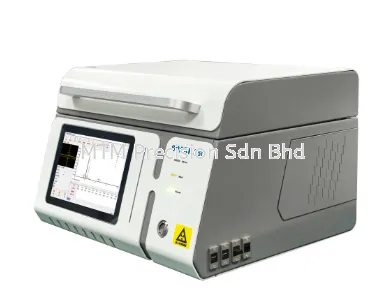
For routine aquaculture troubleshooting, the Smart Sensor AR8407 Water Quality Meter allows operators to check:
DO + pH + Ammonia Nitrogen + Nitrite + Temperature
using one portable system.
Quick Answer: Why Does Ammonia Increase in a Fish Pond?
Common contributors can include:
Fish waste
Uneaten feed
Overfeeding
High stocking density
Increasing fish biomass
Decomposing organic matter
Sludge accumulation
Dead algae or biological material
Insufficient biological processing
Changes in water exchange
Often, more than one factor is involved.
That is why the first step should be:
Measure → Record → Compare → Investigate
rather than guessing the cause.
Where Does Pond Ammonia Come From?
Aquaculture ponds continuously receive nitrogen-containing material.
Fish consume feed and produce waste.
Some feed may remain uneaten.
Organic material accumulates.
Microorganisms decompose this material.
These processes can contribute to ammonia nitrogen in the system.
As production intensity increases, the amount of nitrogen entering the pond may also increase.
Does More Feed Mean More Ammonia?
Not automatically.
But increased feeding can increase the amount of material entering the pond system.
Consider the chain:
More Feed
↓
More Fish Metabolism
↓
More Waste
and potentially:
More Uneaten Feed
↓
More Organic Decomposition
Therefore, after a significant increase in feeding, ammonia monitoring becomes particularly useful.
Why High Stocking Density Matters
Increasing stocking density can increase:
Biomass
Feed demand
Waste production
Oxygen demand
The pond may therefore experience several changing conditions simultaneously.
This is why a high-density aquaculture system should not rely only on pH measurement.
Monitor the broader water-quality pattern.
Why Sludge and Organic Waste Matter
Organic material can accumulate on the bottom of ponds and tanks.
Possible sources include:
Uneaten feed
Fish waste
Dead algae
Plant material
Other organic debris
As organic material decomposes, it affects the biological and chemical processes occurring in the water.
If ammonia begins rising, waste accumulation is one area worth investigating.
Don't Check Ammonia Alone
This is one of the most important points.
Suppose your ammonia test indicates a change.
You should also ask:
What is the pH?
What is the temperature?
What is the nitrite?
What is the dissolved oxygen?
A multi-parameter view provides much more useful information.
Why pH Matters When Checking Ammonia
Ammonia in water can exist in different chemical forms.
The balance between these forms is influenced partly by:
pH
and:
Temperature
Therefore:
The same ammonia-related reading should not automatically be interpreted identically under every pH and temperature condition.
For species-specific safe limits and corrective action, use appropriate professional aquaculture guidance.
Why Temperature Matters
Temperature affects many biological and chemical processes in a pond.
It is also directly relevant to dissolved oxygen.
Warm water generally has a lower physical capacity to hold dissolved oxygen than cooler water.
When investigating ammonia:
Record temperature at the same time.
Do not leave it out of the monitoring record.
Why Check Nitrite When Ammonia Is High?
A simplified nitrogen cycle is:
Ammonia → Nitrite → Nitrate
If ammonia changes, nitrite provides additional information about nitrogen conversion in the system.
For example:
Ammonia ↑ + Nitrite normal
and:
Ammonia ↑ + Nitrite ↑
are different patterns.
Both require proper interpretation, but measuring both gives the operator more information than measuring ammonia alone.
Why Check Dissolved Oxygen Too?
The biological processes involved in nitrogen conversion can depend on oxygen conditions.
At the same time, high organic loading can contribute to oxygen demand.
Therefore, an ammonia investigation should also include:
DO measurement.
If you see:
Ammonia ↑
while:
DO ↓
investigate the overall pond loading, aeration and biological condition rather than treating the two measurements as unrelated.
Step-by-Step: What to Check When Ammonia Is High
Step 1 – Repeat the Measurement
Confirm the result using the correct testing procedure.
Do not make a major management decision from a questionable measurement.
Step 2 – Check pH
Record pH at the same sampling point.
Step 3 – Check Temperature
Record water temperature.
Step 4 – Check Nitrite
Determine whether nitrite is also changing.
Step 5 – Check Dissolved Oxygen
Measure actual oxygen conditions.
Step 6 – Review Feeding
Ask:
Has feed quantity recently increased?
Is uneaten feed visible?
Step 7 – Review Stocking and Biomass
Has fish biomass increased substantially since the previous monitoring period?
Step 8 – Review Aeration
Check whether aerators are operating correctly and whether DO differs between pond locations.
Step 9 – Review Organic Waste
Investigate sludge, decomposing material and waste accumulation.
Step 10 – Review Water Management
Check whether water exchange, filtration or other treatment conditions have changed.
Measure at More Than One Location
One sample may not represent the entire pond.
Consider comparing:
Near Aerator
Feeding Zone
Away From Aerator
Water Inlet
Pond Outlet
If the readings differ significantly, location itself becomes part of the investigation.
Use Consistent Sampling Points
Suppose Monday's ammonia sample is collected at the inlet.
Tuesday's is taken from the feeding area.
Wednesday's comes from beside an aerator.
Comparing these numbers may be misleading.
For trend monitoring:
Use defined sampling points.
For example:
Pond A – Point 1
Pond A – Point 2
Pond A – Point 3
Repeat the same locations whenever possible.
Look at the Trend
A single result is useful.
A trend is better.
Example:
DayAmmoniaNitritepHDOTempDay 1_______________Day 2_______________Day 3_______________Day 4_______________
Now ask:
Is ammonia rising?
Is nitrite following?
Is early-morning DO falling?
Has temperature changed?
Has pH shifted?
This is much more useful than asking whether one isolated reading is “good” or “bad.”
Smart Sensor AR8407 for Ammonia Troubleshooting
The AR8407 provides:
Ammonia Nitrogen
0–1.00 mg/L
Nitrite
0–1.00 mg/L
pH
3.5–11.0
Dissolved Oxygen
0–30.0 mg/L
Temperature
0–50°C
This combination is particularly useful when the objective is not simply to detect ammonia, but to investigate several related water-quality conditions.
Important: AR8407 Uses Different Test Methods for Different Parameters
Do not assume the AR8407 obtains every parameter by placing one multi-sensor probe into the pond.
The dissolved oxygen measurement uses the DO probe system.
The pH, ammonia nitrogen and nitrite functions use the corresponding test/reagent procedures specified for the instrument.
Follow the correct procedure for each measurement to obtain meaningful results.
When AR8407 May Not Be Suitable
Always check the required measurement range.
AR8407 ammonia nitrogen range:
0–1.00 mg/L
AR8407 nitrite range:
0–1.00 mg/L
If your expected concentrations are outside these ranges, select an appropriate alternative method or instrument.
Likewise, regulatory, laboratory or research applications may require specified analytical procedures rather than a portable field-testing approach.
Can You Fix High Ammonia Just by Adding More Aeration?
Do not assume one action solves every ammonia problem.
Aeration may be important to the overall pond system, but an ammonia increase can involve multiple factors.
Investigate:
Feed
Biomass
Waste
DO
pH
Temperature
Nitrite
Water exchange
Filtration or biological treatment
The correct corrective action depends on the actual cause and production system.
Should You Stop Feeding Immediately?
Feeding decisions should not be based on a generic internet rule.
The appropriate response depends on:
Species
Fish size
Water conditions
Ammonia result
pH
Temperature
DO
Farm management procedures
Use actual measurements and appropriate aquaculture guidance before making significant production changes.
The Goal Is Earlier Detection
The best time to discover a water-quality change is not after fish behaviour becomes obviously abnormal.
Routine monitoring allows the operator to identify:
Normal Baseline
↓
Small Change
↓
Developing Trend
before relying solely on visible symptoms.
This is one of the strongest reasons for keeping a water-quality meter available at the farm.
Fish Pond Ammonia Tester Malaysia
MTM Precision supplies water-quality testing instruments for:
Fish Farms
Shrimp & Prawn Farms
Tilapia Farms
Catfish Farms
Hatcheries
Aquaculture Nurseries
RAS Systems
Environmental Monitoring
Available categories include:
Ammonia | Nitrite | Dissolved Oxygen | pH | EC | TDS | Salinity | Turbidity | Multi-Parameter Water Quality Testing
For routine aquaculture monitoring requiring:
DO + pH + Ammonia Nitrogen + Nitrite + Temperature
ask MTM Precision about the Smart Sensor AR8407 Water Quality Meter.
Before purchasing, tell us:
1. What species are you farming?
2. Freshwater or brackish water?
3. Which parameters do you need?
4. What measurement range is required?
5. How many ponds or tanks are monitored?
We can help compare suitable water-quality testing instruments for your application.
Contact MTM Precision
MTM Precision Sdn Bhd
Website: www.mtmpre.com.my
Email: mtmpre@yahoo.com
WhatsApp: 016-660 7346
Showroom & Service Centre
No. 29-1 & 29-2, Jalan Bandar 18,
Pusat Bandar Puchong,
47160 Puchong, Selangor, Malaysia
Supplying water-quality testing instruments across Selangor, Kuala Lumpur, Johor, Penang, Perak, Melaka, Negeri Sembilan, Pahang, Kedah, Perlis, Terengganu, Kelantan, Sarawak and Sabah.
09 Sep 2026


