






How to Check If Your Air Purifier Is Really Reducing PM2.5 in Malaysia

How to Check If Your Air Purifier Is Really Reducing PM2.5 in Malaysia
You switched on your air purifier — but how do you know whether PM2.5 in the room is actually decreasing?
Many air purifiers have their own air-quality indicator, but an independent portable PM2.5 monitor can provide another way to observe particulate conditions in the room.
Using a particle detector such as the Temtop P600, you can perform a simple comparison:
Measure Before → Run the Purifier → Measure Again → Observe the Trend
This is particularly useful in Malaysia during haze conditions, or whenever fine particulate pollution is a concern.
Why Measure PM2.5 Around an Air Purifier?
An air purifier may be running, but that alone does not tell you how particulate concentration is changing throughout the room.
Actual conditions can be influenced by:
Room size
Purifier capacity
Filter condition
Fan speed
Door and window position
Outdoor haze
Air leakage
Purifier location
Room layout
Indoor particle sources
Measurement allows you to observe what is happening instead of relying entirely on assumptions.
What Is PM2.5?
PM2.5 refers to fine particulate matter with an aerodynamic diameter of approximately 2.5 micrometres or smaller.
PM2.5 can be associated with:
Haze
Smoke
Combustion
Traffic pollution
Cooking
and other fine-particle sources.
Because these particles are extremely small, you cannot reliably determine PM2.5 concentration simply by looking at the air.
A room can look clean while still containing measurable fine particulate matter.
Step 1 — Measure PM2.5 Before Switching On the Purifier
Start with a baseline measurement.
Place the PM2.5 monitor at a representative location in the room.
Avoid placing it:
Directly beside the purifier
Directly at the purifier outlet
Immediately beside an open window
Directly under an air-conditioning outlet
unless one of these locations is specifically what you want to investigate.
Allow the reading to settle and record the PM2.5 concentration.
This is your before measurement.
Step 2 — Keep the Room Conditions Consistent
For a useful comparison, try not to change too many variables at the same time.
For example, avoid:
Opening and closing windows repeatedly
Moving the purifier continuously
Cooking nearby
Smoking
Heavy cleaning
Introducing obvious dust sources
If many conditions change simultaneously, it becomes harder to understand what caused the PM2.5 reading to change.
Step 3 — Switch On the Air Purifier
Operate the purifier according to its normal instructions.
Choose the fan setting you actually want to evaluate.
Then allow the purifier to operate.
Do not expect every room to produce the same rate of change.
A small bedroom and a large open-plan office can behave very differently.
Step 4 — Measure PM2.5 Again
Continue monitoring the PM2.5 concentration.
Instead of asking:
“What is the reading right now?”
ask:
“Is the reading consistently moving downward?”
That trend is often more informative.
For example:
Before Purifier: Higher PM2.5
↓
Purifier Operating: PM2.5 begins decreasing
↓
Later: PM2.5 stabilises at a lower concentration
This provides a practical indication that particulate conditions in the measured area have changed.
Why Temtop P600 Is Useful for This Test
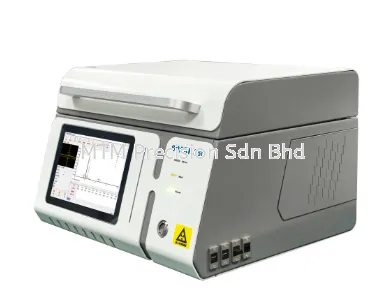
The Temtop P600 Air Quality Laser Particle Detector measures:
PM2.5
and
PM10
with a specified measurement range of:
0–999 μg/m³
and displayed resolution of:
0.1 μg/m³
More importantly for this application, the P600 provides a:
12-Hour PM2.5 Histogram
This allows users to observe particulate trends rather than relying entirely on one instantaneous number.
Example: Air Purifier Test During Malaysia Haze
Imagine outdoor haze conditions have worsened.
You measure the living room.
PM2.5 is elevated compared with your usual indoor conditions.
You then:
Close external windows
↓
Operate the air purifier
↓
Continue monitoring
↓
Observe PM2.5 over time
If PM2.5 decreases consistently, you now have useful measurement data showing how particulate conditions changed under those conditions.
Test Different Air Purifier Fan Speeds
You can also compare operating modes.
For example:
Low Speed
Monitor PM2.5 behaviour.
Medium Speed
Observe whether the rate of change differs.
High Speed
Repeat the comparison.
This does not replace formal laboratory testing of purifier performance, but it can help users understand how their purifier behaves in their actual room.
Test Different Purifier Locations
Purifier placement can matter.
You may want to compare:
Corner of Room
vs
More Open Location
or:
Living Room
vs
Bedroom
The P600 is portable, so you can investigate several configurations without installing a fixed measurement system.
Don't Measure Only at the Purifier Outlet
This is a common mistake.
If you place a particle detector directly beside the clean-air outlet, you may be measuring air immediately after it has passed through the purifier.
That does not necessarily represent particulate conditions throughout the entire room.
For general room monitoring, choose a location that better represents the occupied space.
Compare Near vs Far From the Air Purifier
Another useful test is to compare several locations.
For example:
Location A — Near Purifier
Location B — Centre of Room
Location C — Opposite Side of Room
If readings differ significantly, room circulation and purifier placement may deserve further investigation.
Test With Windows Open vs Closed
During haze, outdoor air entering the building can influence indoor particulate levels.
You can compare:
Condition A
Window open.
Measure PM2.5.
Condition B
Window closed.
Monitor again.
Condition C
Window closed + air purifier operating.
Observe the trend.
This can provide a much better understanding of your own indoor environment than relying on assumptions.
Why Does PM2.5 Sometimes Increase Even With the Purifier Running?
Do not immediately assume the purifier has failed.
Investigate what else happened.
Possible reasons include:
External door opened
Window opened
Cooking started
Someone smoked
Cleaning disturbed particles
Outdoor haze intensified
Purifier filter needs attention
Room is large relative to purifier capacity
Air circulation is poor
A PM2.5 monitor tells you that the particulate condition changed.
You still need to investigate why it changed.
What About PM10?
The Temtop P600 also measures PM10.
This can provide additional information when larger inhalable particles are present.
For example, PM10 may be relevant when investigating:
Dust
Cleaning activities
Outdoor particle infiltration
Construction-related particulate conditions
General airborne dust
Therefore, P600 can be useful beyond PM2.5-only air purifier checks.
Air Purifier Built-In Sensor vs Independent PM2.5 Monitor
Many modern air purifiers include built-in particle sensors.
These can be useful for automatic operation and everyday monitoring.
However, an independent portable meter provides another advantage:
You can measure somewhere else.
The purifier sensor measures conditions at or inside the purifier.
A portable P600 can be taken to:
Opposite side of room
Bedroom
Living room
Office
Near a window
Another floor
This makes it useful for comparative investigation.
Can You Compare Two Air Purifiers?
Yes, for practical room-level comparisons — but keep the limitations in mind.
If you want a meaningful comparison, try to keep major conditions similar:
Same room
Similar starting conditions
Same measurement location
Comparable operating time
Similar window and door conditions
Even then, this should be treated as an informal field comparison, not a certified laboratory performance test.
Air Purifier Testing in an Office
The same method can be applied to office environments.
For example:
Meeting Room Without Purifier
vs
Meeting Room With Purifier
or:
Before Office Hours
vs
During Occupancy
vs
After Purification
Facilities personnel can use portable measurements to identify where further investigation may be useful.
Air Purifier Testing in Schools
During haze, schools and education facilities may operate air purifiers in selected indoor areas.
A portable PM2.5 monitor can be moved between:
Classroom A
Classroom B
Library
Teacher Room
Filtered Classroom
This can help compare particulate conditions across multiple spaces.
Is Temtop P600 an Air Purifier Certification Instrument?
No.
This distinction is important.
The Temtop P600 can be used for practical particulate monitoring and comparative checks.
It should not be presented as a replacement for controlled laboratory testing, formal purifier certification or professional performance verification where such methods are required.
Its strength is:
Real-world portable particulate investigation.
Temtop P600 for Air Purifier Checks
The P600 is particularly useful if your questions are:
Is PM2.5 decreasing after I switch on my purifier?
How quickly are particulate conditions changing?
Is one room better than another?
Does closing the window make a difference during haze?
Is PM2.5 higher on the opposite side of the room?
How did PM2.5 change during the last several hours?
These are exactly the kinds of questions a portable particle monitor can help investigate.
Simple Air Purifier PM2.5 Test Checklist
For a practical comparison:
1. Measure PM2.5 before operating the purifier.
2. Record the starting condition.
3. Keep major room conditions reasonably consistent.
4. Switch on the purifier.
5. Continue monitoring PM2.5.
6. Look for a trend rather than one isolated number.
7. Compare different locations if required.
8. Investigate unexpected increases.
Most importantly:
Measure the room — not only the air immediately beside the purifier.
Temtop P600 PM2.5 Monitor Malaysia
MTM Precision supplies the Temtop P600 for applications including:
PM2.5 Monitoring
PM10 Monitoring
Malaysia Haze Monitoring
Air Purifier Checks
Indoor vs Outdoor Particle Comparison
Home Air Quality
Office Air Quality
School Environmental Monitoring
General Particulate Investigation
If you are unsure whether you need a dedicated particle detector or a broader multi-parameter IAQ monitor, contact us with your application.
Contact MTM Precision
MTM Precision Sdn. Bhd.
Showroom & Service Centre
No. 29-1 & 29-2, Jalan Bandar 18,
Pusat Bandar Puchong,
47160 Puchong, Selangor, Malaysia
Website: www.mtmpre.com.my
Email: mtmpre@yahoo.com
WhatsApp: 016-660 7346
Serving customers throughout Selangor, Kuala Lumpur, Johor, Penang, Perak, Negeri Sembilan, Melaka, Pahang, Kedah, Perlis, Terengganu, Sabah and Sarawak.
09 Sep 2026
