






2-Gas vs 4-Gas Detector Is Eranntex MS104K-S2 Enough for Your Application? Malaysia

2-Gas vs 4-Gas Detector Is Eranntex MS104K-S2 Enough for Your Application? Malaysia
Should you buy a 2-gas detector or a 4-gas detector?
This is one of the most important questions to answer before purchasing portable gas-detection equipment.
A 2-gas detector is not automatically inferior to a 4-gas detector. If your workplace has two clearly identified gas hazards, a properly configured two-gas detector may provide exactly the monitoring you need.
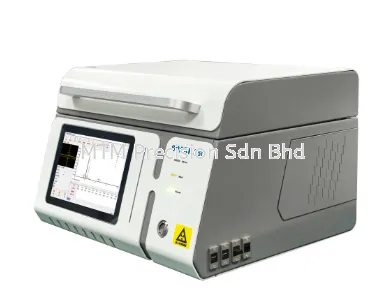
The Eranntex MS104K-S2 Portable Gas Detector is designed for one- or two-gas detection, making it particularly relevant for users who want a focused detector rather than automatically selecting a conventional four-gas instrument.
The correct decision should always start with the hazard, not the number of sensors.
What Is a 2-Gas Detector?
A 2-gas detector monitors two selected gases or atmospheric parameters simultaneously.
Depending on the application and available sensor configuration, examples may include:
O + HS
O + CO
LEL + O
CO + HS
The advantage is straightforward:
Two required measurements → One portable detector.
Instead of carrying two separate single-gas detectors, workers can monitor both parameters from one instrument.
What Is a 4-Gas Detector?
A conventional portable four-gas detector commonly monitors:
O + LEL + CO + HS
These four parameters cover several common atmospheric hazards:
O oxygen deficiency or enrichment
LEL combustible gas or vapour
CO carbon monoxide
HS hydrogen sulphide
For many industrial and confined-space applications, this combination provides broader atmospheric coverage.
However, that does not mean every worker automatically needs all four sensors.
The Biggest Purchasing Mistake
A common mistake is asking:
“Which detector has more gases?”
A better question is:
“Which gases can actually be present in my workplace?”
Suppose a facility's assessment identifies only oxygen and carbon monoxide as the relevant monitoring requirements for a particular task.
Purchasing four sensors does not necessarily make that task safer if the additional sensors do not address an identified hazard.
On the other hand, purchasing an O + CO detector simply because it is cheaper would be a serious mistake if HS or combustible gas is also a credible hazard.
The correct sequence is:
Identify Hazard → Identify Gas → Choose Sensor → Choose Detector
Not:
Choose Detector → Decide What to Measure Later
When Does a 2-Gas Detector Make Sense?
A two-gas detector can make sense when the hazard profile is well understood and consistently involves two measurements.
O + HS
Potentially relevant for selected:
Wastewater applications
Sewage operations
Drainage work
Sludge areas
Tank maintenance
The two primary concerns are oxygen condition and hydrogen sulphide exposure.
O + CO
Potentially relevant for selected:
Boiler rooms
Generator areas
Factory maintenance
Utility rooms
Combustion-related environments
The primary concerns are oxygen condition and carbon monoxide exposure.
LEL + O
Potentially relevant for selected:
Oil & gas applications
Petrochemical work
Tank maintenance
Fuel-related environments
Industrial process areas
The primary concerns are combustible atmosphere and oxygen condition.
CO + HS
Potentially relevant where these two toxic gases are the specifically identified monitoring requirements.
In every case, the final configuration must follow the actual workplace risk assessment.
When Should You Choose a 4-Gas Detector?
A four-gas detector becomes the stronger choice when workers may reasonably encounter the broader combination of:
O + LEL + CO + HS
This is particularly important when the work procedure specifically requires four-gas atmospheric testing.
For example, a site may require workers to verify:
Is there enough oxygen?
Is combustible gas present?
Is carbon monoxide present?
Is hydrogen sulphide present?
A two-gas detector cannot answer all four questions simultaneously.
Is MS104K-S2 Suitable for Confined Space?
It depends on the confined space and the required gas test.
The term “confined space detector” can be misleading because different confined spaces can contain different hazards.
A tank, sewer, pit, vessel or chamber does not automatically have the same atmospheric risk.
If the work procedure requires only the gases installed in the MS104K-S2, it may be considered for the relevant monitoring role.
If the procedure requires four-gas testing, a two-gas MS104K-S2 configuration is not a replacement for a suitable four-gas instrument.
This distinction matters.
2-Gas vs 4-Gas Detector: Quick Comparison
Requirement2-Gas Detector4-Gas DetectorNumber of monitored gasesUp to 2 selected gasesTypically 4Focused hazard monitoringExcellentGoodBroader atmospheric coverageLimited to selected sensorsBetterO + HSYes, if configuredTypically yesO + COYes, if configuredTypically yesLEL + OYes, if configuredTypically yesO + LEL + CO + HS simultaneouslyNoYesPersonal monitoringSuitableSuitableConfined-space useDepends on required gasesOften selected where four gases are requiredBest choiceKnown 12 gas hazardsMultiple atmospheric hazards
The table should be treated as a selection guide rather than a substitute for a workplace risk assessment.
What Makes the MS104K-S2 Different?
The Eranntex MS104K-S2 is not simply a basic two-sensor alarm.
It combines its one- or two-gas architecture with features intended for more structured industrial safety applications.
These include:
Digital Sensor Technology
Digital sensor architecture can support more organised sensor and detector management.
IP68 Protection
The detector is designed for demanding industrial environments where dust and moisture resistance can be important.
Large Data Storage
The MS104K-S2 supports storage exceeding one million records, providing useful gas-monitoring history for organisations that require traceability.
Wireless Connectivity
Depending on configuration, communication options can include:
4G / Wi-Fi / LoRa / Bluetooth
This makes the platform relevant to companies considering connected worker and remote gas-monitoring applications.
Fall Detection
The detector can incorporate worker-oriented fall-detection functionality.
SOS Function
Emergency SOS functionality adds another layer of worker-safety capability beyond gas concentration alarms alone.
2-Gas Detector vs Two Single-Gas Detectors
There is another comparison worth considering.
Why not simply carry two single-gas detectors?
That approach can work.
However, a two-gas detector consolidates both measurements into one device.
Potential advantages include:
One detector to carry
One display to check
One instrument to manage
Consolidated data
Simplified equipment allocation
The best approach depends on the company's operational and maintenance strategy.
Diffusion vs Pump Is a Separate Decision
Do not confuse number of gases with sampling method.
The MS104K-S2 is primarily a diffusion-type portable detector.
A diffusion detector monitors the atmosphere surrounding the instrument.
A pumped detector actively draws a sample from another location through a hose or probe.
Therefore, even if a two-gas configuration contains exactly the gases you need, you must still ask:
“Do I need to sample remotely?”
For personal monitoring around the worker, diffusion may be appropriate.
For pre-entry testing several metres inside a tank or chamber, a pumped sampling solution may be more appropriate.
More Sensors Are Not Always Better
It is tempting to think:
1 gas < 2 gas < 4 gas
But gas detector selection does not work like buying a higher-specification phone.
A sensor has a purpose.
It requires management, functional checking, calibration and eventual replacement.
The goal should be to have the correct sensors for the actual hazards, not simply the highest sensor count.
Fewer Sensors Are Not Always Cheaper Either
Purchase price is only one part of gas-detector ownership.
Companies should also consider:
Sensor replacement
Calibration
Bump testing
Maintenance
Battery management
Training
Data management
Equipment downtime
Detector lifecycle
A lower initial price does not automatically mean lower total cost of ownership.
Likewise, paying for unnecessary capability does not automatically create additional value.
How to Choose in 60 Seconds
Ask these four questions.
1. Which gases can actually be present?
Start with the risk assessment.
2. How many gases must be monitored simultaneously?
If there are two identified gases, consider a two-gas solution.
If there are four, use a detector capable of monitoring all four.
3. Personal monitoring or remote sampling?
This determines whether diffusion or pump sampling is appropriate.
4. What does the site procedure require?
The detector must satisfy the actual safety procedure and applicable requirements.
Example 1: Wastewater Worker
The assessment identifies:
O + HS
An MS104K-S2 configured for these two gases may be worth considering.
But if methane/combustible gas is also a credible hazard, the detector requirement must be reassessed.
Example 2: Boiler Maintenance
The identified monitoring requirements are:
O + CO
A two-gas configuration may provide a focused solution for personal monitoring.
If combustible gas must also be monitored, two sensors may no longer be sufficient.
Example 3: Tank Entry
The site procedure requires:
O + LEL + CO + HS
In this situation, do not choose an O + LEL two-gas detector simply because those are two of the required measurements.
All four required parameters need to be covered.
Frequently Asked Questions
Is a 2-gas detector safer than carrying two single-gas detectors?
Not automatically. Safety depends on selecting the correct sensors, using the instrument correctly and maintaining it properly. A two-gas detector mainly provides the convenience of combining two measurements in one instrument.
Is a 4-gas detector always better?
No. It provides broader gas coverage, but the correct choice depends on the hazards identified for the task.
What gases does a typical 4-gas detector measure?
A common configuration is O, LEL, CO and HS, although detector configurations can vary.
Can MS104K-S2 replace a 4-gas detector?
Only when the actual monitoring requirement is limited to the one or two gases installed in the MS104K-S2. It cannot replace a four-gas detector when four parameters are required.
Can I use MS104K-S2 for confined-space work?
Potentially, but “confined space” alone is not enough information to select the detector. The required gases, sampling method and site procedure must first be determined.
Which MS104K-S2 configuration should I buy?
Tell the supplier the application and expected gases first rather than choosing the sensor combination only from a product list.
Need Help Choosig 2-Gas or 4-Gas?
MTM Precision can help industrial customers evaluate the required gas-detector configuration based on the intended application.
When contacting us, provide:
Application + Expected Gas + Required Range + Sampling Requirement
For example:
“Wastewater maintenance, need O + HS personal monitoring.”
or:
“Tank inspection, need O + LEL + CO + HS with remote sampling.”
This gives us much more useful information than simply asking:
“How much is a gas detector?”
We support customers across Selangor, Kuala Lumpur, Johor, Penang, Melaka, Negeri Sembilan, Perak, Pahang, Kedah, Perlis, Terengganu, Sarawak and Sabah.
Contact MTM Precision
MTM Precision Sdn Bhd
Website: www.mtmpre.com
Email: mtmpre@yahoo.com
WhatsApp: 016-660 7346
Showroom & Service Centre
No. 29-1 & 29-2, Jalan Bandar 18,
Pusat Bandar Puchong,
47160 Puchong, Selangor, Malaysia.
Send us your application and required gases and we can help determine whether the Eranntex MS104K-S2 2-gas detector or a different multi-gas solution is more appropriate.
13 Sep 2026
