





Gas Detector Sensor Life - When to Replace CO, H2S, O2, NH3 and SO2 Sensors Malaysia

Gas Detector Sensor Life - When to Replace CO, H2S, O2, NH3 and SO2 Sensors Malaysia
How long does a gas detector sensor last?
Does a gas detector need to be replaced when the sensor reaches the end of its service life?
Can an old gas detector still be used if it switches on normally?
These are important questions for companies using portable gas detectors for factory safety, confined space work, wastewater, refrigeration and industrial maintenance.
A gas detector sensor is a consumable component.
It does not necessarily last for the entire physical life of the instrument.
For the OTYWELL G10S configurations being introduced by MTM Precision, the manufacturer advises a typical sensor life of approximately:
2-3 years
However, actual sensor life can vary significantly depending on the sensor, gas exposure, operating environment, storage and maintenance.
What Is a Gas Detector Sensor?
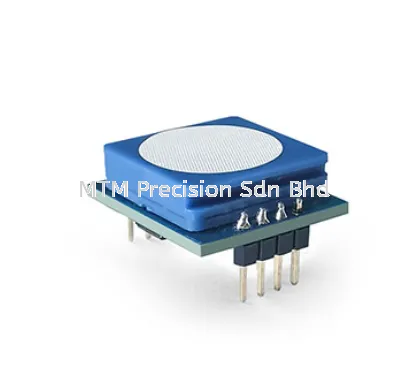
The sensor is the component that responds to the target gas or atmospheric condition.
For example:
CO Sensor
Measures carbon monoxide.
H2S Sensor
Measures hydrogen sulphide.
O2 Sensor
Measures oxygen.
NH3 Sensor
Measures ammonia.
SO2 Sensor
Measures sulphur dioxide.
Different sensors are designed for different gases.
A CO sensor cannot simply be used to measure H2S, and an O2 sensor cannot provide an NH3 reading.
How Long Does a Gas Detector Sensor Last?
There is no universal service life that applies to every gas detector sensor.
For the OTYWELL G10S configurations currently being introduced by MTM Precision, typical sensor life is approximately:
2-3 years
This should be treated as a typical expected life rather than a guarantee that every sensor will operate for exactly the same period.
Actual service life can depend on:
-
Sensor technology
-
Target gas
-
Gas concentration
-
Frequency of gas exposure
-
Temperature
-
Humidity
-
Contamination
-
Storage conditions
-
Frequency of use
-
Maintenance
-
Operating environment
Does Sensor Life Start Only When I Use the Detector?
Customers should not assume that sensor ageing begins only when the detector is first used.
Sensor technology and storage conditions can affect sensor life.
Therefore, when purchasing replacement sensors or gas detectors, users should consider information such as:
-
Manufacturing or supply date where applicable
-
Storage conditions
-
Sensor installation date
-
Commissioning date
-
Service history
Good record keeping becomes especially important for companies managing many detectors.
What Happens When a Gas Sensor Gets Old?
Sensor performance can change as the sensor ages.
Depending on the sensor and failure mode, potential issues can include:
-
Reduced response
-
Unstable readings
-
Slow response
-
Difficulty calibrating
-
Calibration failure
-
Unexpected readings
-
Sensor fault indication
The exact symptoms depend on the instrument and sensor technology.
Do not assume that every ageing sensor will fail in exactly the same way.
Can a Gas Detector Still Switch On With a Bad Sensor?
Potentially, yes.
A detector powering on does not by itself prove that the sensor is responding correctly to gas.
The screen, battery and electronics may appear normal while the sensor requires further checking.
This is one reason why appropriate:
Functional Checking
Bump Testing
Calibration
are important parts of gas detector management.
Bump Test vs Sensor Life
A bump test helps verify that the detector and alarms respond appropriately when exposed to the relevant test condition.
It does not make an old sensor new again.
If a sensor is deteriorating, repeated bump testing does not restore its condition.
A detector that does not respond appropriately should be investigated according to the manufacturer's procedure.
Calibration vs Sensor Replacement
Calibration and sensor replacement are also different.
Calibration
Checks detector response against an appropriate known reference and allows adjustment where required.
Sensor Replacement
Replaces the sensing component when it has reached the end of its useful life, failed or can no longer perform appropriately.
If a sensor can no longer be calibrated correctly, replacing the sensor may be necessary depending on the diagnosis.
Repeated calibration cannot repair every sensor problem.
Signs That a Sensor May Need Attention
Possible warning signs can include:
-
Detector fails a functional check
-
Calibration repeatedly fails
-
Reading is unstable
-
Sensor response appears unusually slow
-
Detector displays a sensor fault
-
Detector cannot be adjusted appropriately
-
Sensor has reached its expected service period
-
Instrument has experienced unusual exposure or storage conditions
These signs do not automatically prove that the sensor has failed.
The detector and test setup should be properly evaluated.
CO Sensor Life
Carbon monoxide detectors are widely used around:
-
Boiler rooms
-
Generator rooms
-
Combustion equipment
-
Workshops
-
Factories
-
Industrial maintenance
For the OTYWELL G10S-CO configuration:
CO: 0-1000 ppm
Users should maintain records of detector condition, testing, calibration and sensor age.
If an ageing CO detector cannot respond or calibrate appropriately, sensor condition should be investigated.
H2S Sensor Life
H2S detectors may be used in applications such as:
-
Wastewater treatment
-
Sewage systems
-
Sewer maintenance
-
Manholes
-
Pump stations
-
Industrial wastewater
-
Palm oil mill wastewater
-
Factory maintenance
The OTYWELL G10S-H2S configuration measures:
H2S: 0-100 ppm
Harsh environments can make proper detector maintenance particularly important.
O2 Sensor Life
Oxygen monitoring is important in many industrial applications.
The OTYWELL G10S-O2 configuration measures:
O2: 0-30% VOL
Potential applications include:
-
Tank entry
-
Vessel inspection
-
Manholes
-
Underground chambers
-
Pits
-
Confined space work
An oxygen detector should be maintained according to the manufacturer's instructions and the user's safety programme.
An instrument displaying a normal-looking oxygen value should not be assumed to be functioning correctly solely because the display appears reasonable.
NH3 Sensor Life
The OTYWELL G10S-NH3 configuration measures:
NH3: 0-100 ppm
Potential applications include ammonia refrigeration environments such as:
-
Cold storage
-
Refrigeration plants
-
Compressor rooms
-
Food processing
-
Frozen food facilities
-
Industrial refrigeration maintenance
Customers should confirm that NH3 is actually the target gas before selecting an ammonia detector.
Testing and calibration arrangements should be appropriate for the NH3 sensor.
SO2 Sensor Life
The OTYWELL G10S-SO2 configuration measures:
SO2: 0-20 ppm
Potential applications can include certain:
-
Industrial environments
-
Process plants
-
Boiler areas
-
Factory maintenance activities
-
Chemical processes
The G10S-SO2 is a portable single gas detector.
It should not automatically be treated as a stack or flue gas analyzer.
Does Every Gas Sensor Last 2-3 Years?
No.
The 2-3 years figure applies as the typical sensor-life information provided for the OTYWELL G10S configurations being introduced by MTM Precision.
It should not be applied automatically to every gas detector brand, model or sensor technology.
When evaluating another detector, check the manufacturer's information for that specific sensor.
What Can Shorten Gas Sensor Life?
Potential factors can include:
High Gas Exposure
Repeated or significant exposure can affect some sensors.
Temperature
Operating or storing instruments outside suitable conditions can affect detector components.
Humidity
Certain sensor technologies can be affected by environmental conditions.
Contamination
Dust, chemicals or other contaminants can affect detector performance.
Poor Storage
Gas detectors should be stored according to manufacturer recommendations.
Age
Sensors are consumable components and can deteriorate over time even when the detector housing remains in good condition.
Should I Replace the Sensor or Buy a New Detector?
The answer depends on economics and technical condition.
Consider:
-
Detector age
-
Sensor replacement cost
-
Availability of replacement sensors
-
Instrument condition
-
Calibration condition
-
Battery condition
-
Repair cost
-
New detector price
-
Required certification or documentation
-
Future support
For a relatively new detector in good condition, sensor replacement may make economic sense.
For an old detector with several problems, replacement of the complete instrument may sometimes be more practical.
Why Keep a Gas Detector Service Record?
Companies operating multiple gas detectors should consider maintaining records for each instrument.
Useful information can include:
-
Brand
-
Model
-
Serial number
-
Target gas
-
Measuring range
-
Purchase date
-
Commissioning date
-
Bump test history
-
Calibration history
-
Sensor replacement history
-
Repair history
This helps maintenance and safety teams understand the condition of their detector fleet.
What If the Detector Fails Calibration?
Do not immediately assume that calibration itself is the problem.
Possible causes may include:
-
Sensor deterioration
-
Incorrect test gas
-
Incorrect concentration
-
Test setup issue
-
Regulator or tubing issue
-
Contamination
-
Instrument fault
-
Sensor failure
The cause should be investigated before deciding whether calibration, repair or sensor replacement is required.
Can I Keep Using a Detector After a Failed Test?
A gas detector used for safety monitoring should not simply be relied upon when its correct operation is in doubt.
If the instrument fails an appropriate functional or calibration check, it should be evaluated according to the manufacturer's procedure and the user's safety requirements before being returned to service.
OTYWELL G10S Sensor Configurations
MTM Precision is introducing the following G10S single gas detectors:
G10S-CO
CO: 0-1000 ppm
G10S-H2S
H2S: 0-100 ppm
G10S-O2
O2: 0-30% VOL
G10S-NH3
NH3: 0-100 ppm
G10S-SO2
SO2: 0-20 ppm
OTYWELL advises that these instruments are 100% calibrated before shipment and can be supplied with calibration or test documentation.
Typical sensor life advised for these configurations is approximately:
2-3 years
Actual service life depends on operating conditions and sensor usage.
Buying a Gas Detector? Think About the Sensor Before the Instrument
Customers often compare:
Price
Display
Size
Alarm
Brand
But long-term users should also ask:
How long is the sensor expected to last?
Can the sensor be replaced?
How will the detector be tested?
How will it be calibrated?
Is technical support available?
A gas detector is not only a one-time equipment purchase.
It is an instrument that needs ongoing management.
Gas Detector Sensor Replacement and Technical Support Malaysia
If your portable gas detector is showing abnormal readings, failing calibration or approaching the expected end of sensor life, provide MTM Precision with:
Brand
Model
Target Gas
Measuring Range
Serial Number
Approximate Age
Problem Description
Photo of Detector
Photo or Video of Error Message
Where possible, MTM Precision can first review the information to determine the appropriate next step.
Depending on the detector and problem, this may involve further checking, calibration, sensor replacement, repair or replacement of the complete instrument.
Gas Detector Supplier Malaysia
MTM Precision supplies portable gas detection and industrial testing equipment for:
-
Factory maintenance
-
Confined space work
-
Wastewater
-
Sewer and manhole work
-
Industrial refrigeration
-
Boiler and generator areas
-
Facility management
-
Workplace safety
For customers purchasing new OTYWELL G10S detectors, understanding sensor life, bump testing, calibration and future replacement can help reduce long-term maintenance problems.
Contact MTM Precision
MTM Precision Sdn. Bhd. (744811-A)
Telephone: +603-8080 7172
WhatsApp: +6016-660 7346
Email: mtmpre@yahoo.com / enquiry@mtmpre.com.my
Website: www.mtmpre.com.my
Showroom & Service Centre:
No. 29-1 & 29-2, Jalan Bandar 18,
Pusat Bandar Puchong,
47160 Puchong, Selangor, Malaysia.
MTM Precision supplies gas detection and industrial testing equipment throughout Selangor, Kuala Lumpur, Johor, Penang, Melaka, Negeri Sembilan, Perak, Pahang, Kedah, Perlis, Terengganu, Sarawak and Sabah, Malaysia.
17 Sep 2026
