






Can TASI TA702A & TA702B Detect LPG, Methane and Natural Gas Malaysia

Can TASI TA702A & TA702B Detect LPG, Methane and Natural Gas Malaysia
One of the most important questions before buying a combustible gas detector is:
“Can this detector detect the gas I am looking for?”
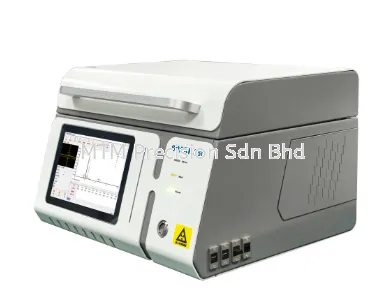
The TASI TA702A and TA702B are portable combustible gas detectors designed for detecting combustible gases and vapours and helping technicians locate suspected leakage points.
According to TASI, the TA702 Series can respond to combustible gases and vapours including examples such as methane, propane, ethanol and gasoline vapours.
But different gases and applications require different considerations.
Can TASI TA702 Detect Methane?
Yes.
Methane is one of the combustible gases specifically associated with the TA702 Series.
Methane may be encountered in applications involving natural gas and certain industrial environments.
For a maintenance technician investigating a suspected methane leak, possible inspection points can include:
Pipe joints
Valves
Regulators
Fittings
Equipment connections
Gas lines
The flexible probe allows the sensing area to be positioned close to individual components during troubleshooting.
Can TASI TA702 Detect Natural Gas?
Natural gas consists primarily of methane, although its exact composition can vary.
Because the TA702 Series is responsive to methane, it can be used for applicable natural gas leak detection and leak-locating work within the instrument's intended use and specifications.
A technician can move the detector around suspected leakage points and observe changes in detector response.
Typical inspection points include:
Gas Pipe → Joint → Valve → Regulator → Equipment Connection
The objective is to identify where the response becomes stronger and investigate that location further.
Can TASI TA702 Detect LPG?
LPG commonly contains propane and/or butane, with composition varying by supply and market.
TASI lists propane among the combustible gases to which the TA702 Series responds.
This makes the TA702 Series relevant to applicable combustible gas leak inspection involving LPG systems.
Potential applications include:
Commercial kitchens
Restaurants
Food preparation facilities
Industrial equipment
Gas piping
Maintenance work
LPG-related connections
Always confirm that the detector specifications and safety requirements are appropriate for the specific application.
What About Propane?
Propane is one of the important applications for a combustible gas leak detector.
If a technician suspects leakage, the detector can be moved around areas such as:
Cylinder-related connections → Regulator → Hose → Valve → Appliance Connection
A stronger detector response near a particular component can help identify an area requiring closer investigation.
Can It Detect Gasoline Vapour?
The TA702 Series is also designed to respond to certain combustible vapours, with gasoline vapour among the examples provided by TASI.
This broadens its potential use beyond only natural gas pipelines.
Depending on the environment and applicable safety requirements, combustible vapour detection may be relevant in:
Workshops
Maintenance areas
Industrial facilities
Equipment servicing
Fuel-related environments
Instrument suitability should always be checked against the actual gas or vapour and operating environment.
Can It Detect Ethanol Vapour?
TASI also identifies ethanol among the combustible substances detectable by the TA702 Series.
This is important because a combustible gas detector is not necessarily limited to methane or LPG.
However, detector response to different gases does not mean that the displayed value should automatically be interpreted as a precise gas-specific analytical measurement.
The intended use and calibration basis of the instrument must be considered.
TA702A for Finding the Leak
The TASI TA702A is particularly useful when the main objective is:
“Where is the combustible gas leaking from?”
TA702A provides:
High / Medium / Low sensitivity adjustment
This allows the technician to progressively narrow down a suspected leakage area.
For example:
High Sensitivity
Start screening around the suspected area.
Medium Sensitivity
Move closer to the components producing a response.
Low Sensitivity
Further investigate individual joints or connections where appropriate.
This makes the TA702A practical for maintenance troubleshooting.
TA702B When You Want More Indication
The TASI TA702B provides additional information, including ppm / LEL indication, ambient temperature and concentration trend information.
It can therefore be useful when the technician wants more information while investigating a combustible gas leak.
The TA702B is not simply about detecting whether gas is present.
It gives the operator additional indication while moving between different inspection points.
Does ppm Mean It Is a Laboratory Gas Analyser?
Not necessarily.
This is an important distinction.
A portable combustible gas leak detector is primarily designed for detecting and locating combustible gas leakage.
A gas-specific analyser may have a different sensor technology, calibration method, selectivity, accuracy and intended purpose.
If your requirement is:
“Is there a combustible gas leak and where is it coming from?”
the TA702 Series may be relevant.
If your requirement is:
“I need a precise concentration measurement of one specific gas for compliance, process control or laboratory analysis.”
a different type of instrument may be required.
What About Oxygen, CO or H₂S?
Do not assume that a combustible gas detector replaces a dedicated detector for other atmospheric hazards.
Applications requiring measurement of gases such as:
O₂ – Oxygen
CO – Carbon Monoxide
H₂S – Hydrogen Sulphide
may require dedicated single-gas or multi-gas instruments.
This is especially important for workplace safety and confined-space applications.
TA702A or TA702B – Which One Should You Buy?
The decision can be simplified.
Choose TA702A if:
Your main requirement is combustible gas leak locating.
You want to investigate pipes, joints, valves and connections and identify the suspected leakage area.
Choose TA702B if:
You also want ppm / LEL indication and additional concentration information during inspection.
For many maintenance customers, both models can perform combustible gas leak detection, but the level of information required determines which model is more suitable.
Typical Applications in Malaysia
The TASI TA702 Series can be considered for appropriate leak-detection applications involving:
Factory maintenance
Facility management
Commercial kitchens
Restaurants
Hotels
HVAC and building maintenance
Workshops
Industrial maintenance
Gas piping inspection
Equipment troubleshooting
Always select the detector according to the gas, application, environment and applicable safety requirements.
Need to Confirm Whether TA702 Can Detect Your Gas?
Before purchasing a gas detector, send MTM Precision the name of the gas and your application.
For example:
“I need to check methane leakage around a factory gas pipe.”
or
“I need to locate a suspected LPG leak around a restaurant kitchen connection.”
or
“I need a detector for confined-space worker safety.”
These are different applications and may require different instruments.
MTM Precision can help you identify whether the TASI TA702A / TA702B or another type of gas detector is more appropriate.
MTM Precision Sdn Bhd
Showroom & Service Centre
No 29-1 & 2, Jalan Bandar 18,
Pusat Bandar Puchong,
47160 Puchong, Selangor.
Tel: 03-8080 7172
WhatsApp: +6016-660 7346
Email: mtmpre@yahoo.com
Website: www.mtmpre.com.my
Serving customers throughout Malaysia including Selangor, Kuala Lumpur, Johor, Penang, Melaka, Negeri Sembilan, Perak, Pahang, Kelantan, Terengganu, Kedah, Perlis, Sabah and Sarawak.
27 Sep 2026

