






What Do ppm and %LEL Mean on TASI TA702B Combustible Gas Detector Malaysia

What Do ppm and %LEL Mean on TASI TA702B Combustible Gas Detector Malaysia
When choosing a combustible gas detector, buyers may see terms such as ppm and %LEL.
But what do these units actually mean?
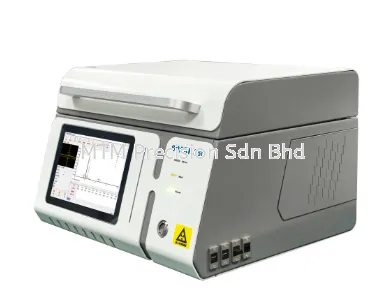
The TASI TA702B Combustible Gas Detector provides ppm / LEL indication for combustible gas leak detection applications.
Understanding these terms helps technicians interpret the instrument correctly and, more importantly, understand what the displayed value does and does not tell them.
What Does ppm Mean?
ppm means parts per million.
It is a way of expressing the concentration of a substance in a mixture.
For gas measurements, ppm is commonly used when discussing relatively small concentrations.
For example:
1 ppm = 1 part per million
However, seeing a ppm number on a combustible gas detector does not automatically mean the instrument is a laboratory-grade gas analyser.
The detector's sensor type, calibration basis, measurement range, selectivity and intended application must also be considered.
What Does LEL Mean?
LEL means Lower Explosive Limit.
In simple terms, it refers to the lower concentration of a combustible gas or vapour in air at which ignition can become possible under appropriate conditions.
Below the LEL, the gas-air mixture is generally too lean to sustain combustion.
At and above the LEL, an ignitable mixture may exist, depending on the gas and conditions.
This is why LEL is an important concept in combustible gas detection.
What Does %LEL Mean?
Gas detectors may express combustible gas concentration as a percentage of the gas's LEL.
For example, conceptually:
10% LEL
means the indicated concentration corresponds to one-tenth of the defined Lower Explosive Limit for the relevant calibration basis.
It does not mean that the atmosphere contains 10% gas by volume.
This distinction is important.
%LEL and %VOL are not the same measurement.
ppm vs %LEL – What Is the Difference?
A simple way to understand them is:
ppm
Expresses concentration in parts per million.
%LEL
Expresses concentration relative to the Lower Explosive Limit.
Both can be useful, but they communicate concentration in different ways.
The correct interpretation depends on the gas, instrument and application.
Why Does TA702B Offer ppm / LEL?
The TASI TA702B is designed to provide more information during combustible gas inspection than a simple alarm-only leak detector.
For a technician investigating a suspected leak, concentration indication can help show how the detector response changes as the probe moves between locations.
For example:
Pipe Joint A → Lower Indication
Valve B → Increasing Indication
Regulator C → Stronger Indication
This can help the technician determine which area requires closer investigation.
Does a Higher Reading Always Mean You Found the Exact Leak?
Not necessarily.
Gas can move because of:
Natural air movement
Mechanical ventilation
Extraction systems
Fans
Open doors
Equipment airflow
The location showing the highest indication may be close to the leak, but technicians should still inspect individual joints, valves and connections systematically.
The detector reading should be interpreted together with the physical inspection.
Why Gas Type Matters
Different combustible gases have different properties and different explosive limits.
A semiconductor combustible gas sensor may also respond differently to different gases and vapours.
Therefore, a displayed ppm or LEL indication should not automatically be interpreted as an equally accurate gas-specific measurement for every combustible substance.
Always consider:
What gas is present?
What gas is the instrument calibrated against?
What does the manufacturer specify?
What is the intended application?
These questions become especially important when quantitative concentration information is required.
Can TA702B Identify Which Gas Is Present?
A combustible gas detector should not automatically be treated as a gas-identification instrument.
For example, if the detector responds in an environment containing several possible combustible vapours, the response itself does not necessarily identify which substance caused it.
This is different from asking:
“Is combustible gas or vapour present around this suspected leak point?”
Gas detection, gas identification and precise gas-specific analysis are different measurement requirements.
TA702B for Leak Tracing
One practical use of the TA702B is comparing detector response while moving around potential leakage points.
A technician may inspect:
Pipe → Joint → Valve → Regulator → Hose → Equipment
Instead of only hearing an alarm, the additional indication can help show whether the detector response is increasing or decreasing.
This can make troubleshooting more systematic.
TA702B vs TA702A
The main choice between the two models can be understood through the type of information required.
TASI TA702A
Focuses on practical leak locating with:
High / Medium / Low sensitivity adjustment
It is suitable when the main question is:
“Where is the suspected leak?”
TASI TA702B
Provides additional concentration-related information, including:
ppm / LEL indication
plus ambient temperature and concentration trend information.
It is suitable when the operator wants more displayed information while investigating the leak.
Does %LEL Make TA702B a Confined-Space Detector?
Not automatically.
This is an important point for industrial buyers.
Seeing %LEL on an instrument does not by itself mean that the instrument is suitable for every personal safety or confined-space application.
Confined-space atmospheric testing may require appropriately specified equipment for hazards such as:
O₂ + Combustible Gas + H₂S + CO
as well as the necessary certifications, procedures and training.
Instrument selection should be based on the actual safety requirement, not only the unit shown on the screen.
Example: Factory Gas Pipe Inspection
Suppose a technician suspects combustible gas leakage around a factory machine.
Possible inspection points include:
Main Pipe → Regulator → Valve → Flexible Hose → Machine Connection
The TA702B can be moved around these points while the operator observes changes in detector response.
If the indication increases repeatedly near one particular connection, that location can be investigated further according to the applicable maintenance procedure.
Example: Commercial Kitchen Inspection
A similar principle can apply when troubleshooting an applicable gas installation in a restaurant, hotel or central kitchen.
Potential inspection points include:
Regulator
Pipe joints
Valves
Hoses
Cooking equipment connections
The detector can assist in identifying where the combustible gas response becomes stronger.
Do Not Buy a Gas Detector Based Only on Measurement Units
When selecting a gas detector, do not ask only:
“Does it show ppm?”
or:
“Does it show LEL?”
Also ask:
What gas do I need to detect?
Do I need leak locating or personal safety monitoring?
Do I need approximate leak-tracing information or gas-specific quantitative measurement?
What measurement range and accuracy do I require?
Does my workplace procedure require particular certification?
These questions provide a much better basis for instrument selection.
TASI TA702B Combustible Gas Detector Malaysia
The TA702B is particularly relevant for technicians who want combustible gas leak detection together with additional concentration indication.
Potential applications include:
Factory maintenance
Gas piping inspection
Facility management
Industrial maintenance
Commercial kitchens
Hotel engineering
Building maintenance
Equipment troubleshooting
The exact suitability should always be confirmed according to the gas, environment and intended application.
Need Help Understanding ppm or LEL Before Buying?
MTM Precision can help Malaysian customers distinguish between gas leak detectors, single-gas detectors and multi-gas safety monitors.
Tell us:
What gas do you need to detect?
What concentration range do you need?
Are you trying to find a leak or monitor worker safety?
Is the instrument required for confined-space work?
This makes it much easier to select the correct instrument instead of choosing only by the words “ppm” or “LEL”.
MTM Precision Sdn Bhd
Showroom & Service Centre
No 29-1 & 2, Jalan Bandar 18,
Pusat Bandar Puchong,
47160 Puchong, Selangor.
Tel: 03-8080 7172
WhatsApp: +6016-660 7346
Email: mtmpre@yahoo.com
Website: www.mtmpre.com.my
Serving customers throughout Malaysia including Selangor, Kuala Lumpur, Johor, Penang, Melaka, Negeri Sembilan, Perak, Pahang, Kelantan, Terengganu, Kedah, Perlis, Sabah and Sarawak.
27 Sep 2026

