






TASI TA702A & TA702B Complete Buying Guide for Combustible Gas Leak Detection Malaysia

TASI TA702A & TA702B Complete Buying Guide for Combustible Gas Leak Detection Malaysia
Choosing a gas detector should start with the application, not the price.
Do you need to locate a combustible gas leak?
Do you need ppm or LEL indication?
Are you checking pipes, valves and regulators?
Or do workers actually require personal multi-gas atmospheric monitoring?
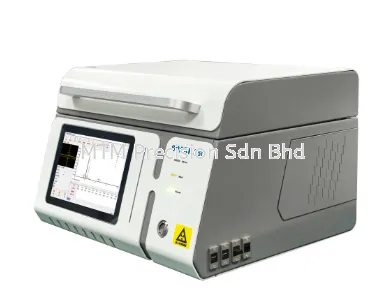
The TASI TA702A and TA702B are portable combustible gas detectors designed for applicable leak detection and troubleshooting.
This guide explains how to decide whether the TA702 Series matches your maintenance application and how to choose between TA702A and TA702B.
What Is the TASI TA702 Series?
The TASI TA702 Series is designed for combustible gas leak detection.
Typical applications can include inspection around:
Gas pipes
Pipe joints
Valves
Regulators
Fittings
Hoses
Equipment connections
Gas-connected machinery
The portable design makes the series suitable for maintenance technicians who need to move between different inspection points.
What Types of Applications Can TA702 Support?
Potential applications include:
Factory Maintenance
Facility Management
Commercial Kitchen Maintenance
Hotel Engineering
Food Processing Maintenance
Boiler and Burner Maintenance
Industrial Service Contractors
Building Maintenance
Gas Pipe Troubleshooting
Preventive Maintenance
Post-Repair Inspection
Always confirm suitability for the actual gas, environment and applicable requirements before use.
Why Use a Portable Combustible Gas Leak Detector?
Imagine a factory technician receives a report:
"There may be a gas leak around this machine."
The technician now needs to determine where to investigate.
Possible locations include:
Pipe Joint A
Valve B
Regulator C
Hose D
Equipment Connection E
A portable detector allows the technician to inspect individual points instead of treating the complete installation as one area.
Flexible Probe for Maintenance Inspection
One practical feature of the TASI TA702 Series is the flexible probe.
Industrial gas connections are not always easy to reach.
They may be located:
Behind equipment
Under machinery
Between pipes
Around valve assemblies
Near walls
Inside maintenance access areas
A flexible probe helps position the sensing area closer to individual inspection points.
What Is the Main Difference Between TA702A and TA702B?
The easiest way to understand the difference is by considering the technician's workflow.
TASI TA702A focuses on practical leak locating with adjustable sensitivity.
TASI TA702B provides additional ppm and LEL indication together with concentration trend information.
Both are intended for combustible gas leak detection, but they provide the technician with different ways of interpreting the response.
Why Choose TASI TA702A?
Consider TA702A when your main objective is practical leak locating.
The TA702A provides:
High Sensitivity
Medium Sensitivity
Low Sensitivity
This allows technicians to progressively narrow the search.
A useful concept is:
High - Search
Medium - Narrow
Low - Focus
For many maintenance applications, this straightforward approach can be highly practical.
Example of TA702A Leak Locating
Suppose a technician needs to inspect several connections around a gas supply system.
The detector responds in the general area.
The technician can start with higher sensitivity to identify where the response is coming from.
After narrowing the area, sensitivity can be reduced to focus more closely on individual:
Valves
Joints
Regulators
Fittings
Connections
This is why adjustable sensitivity is useful for leak locating.
Why Choose TASI TA702B?
Consider TA702B when you want additional displayed information during combustible gas troubleshooting.
The TA702B provides ppm and LEL indication together with concentration trend information.
This allows the technician to observe how detector response changes while moving between inspection points.
Example of TA702B Troubleshooting
Imagine four inspection points:
Pipe Joint A - Lower response
Valve B - Increasing response
Regulator C - Stronger response
Equipment Connection D - Lower response
The technician can investigate the area producing the stronger repeatable response.
The displayed information supports troubleshooting, but it should always be interpreted together with the gas, probe position and surrounding conditions.
What Does ppm Mean?
ppm means parts per million.
It is commonly used to express relatively small concentrations of a substance in air or another medium.
However, a ppm indication on a portable leak detector should not automatically be treated as laboratory gas analysis.
Always consider the detector's intended purpose and specifications.
What Does LEL Mean?
LEL means Lower Explosive Limit.
It relates to the lower concentration at which a combustible gas or vapour can form an ignitable mixture under specified conditions.
LEL information is important in combustible gas applications.
However, an LEL indication alone does not mean that a detector automatically fulfils every personal safety, confined-space or site-specific monitoring requirement.
Can TA702 Detect LPG?
LPG commonly contains combustible hydrocarbons such as propane and butane.
A combustible gas detector may be used for applicable LPG leak detection where the gas falls within the detector's specifications.
For LPG troubleshooting, technicians may inspect:
Cylinder connections
Regulators
Hoses
Valves
Pipe joints
Equipment connections
Always confirm the actual gas and detector suitability.
Can TA702 Detect Methane and Natural Gas?
Natural gas commonly consists mainly of methane.
TASI TA702 Series combustible gas detection can therefore be relevant to applicable methane and natural gas leak troubleshooting.
Typical inspection points may include:
Gas pipes
Pipe joints
Valves
Regulators
Fittings
Equipment connections
Where Can TA702 Be Used in a Factory?
Factories may use combustible gas for different processes.
Depending on the facility, relevant equipment may include:
Boilers
Burners
Heating systems
Ovens
Production equipment
Food processing equipment
Gas distribution systems
A portable detector can support troubleshooting and preventive maintenance around applicable gas connections.
Commercial Kitchen Applications
Restaurants, hotels, central kitchens and food service facilities may have multiple gas-connected appliances.
Potential inspection points include:
LPG regulators
Gas pipes
Flexible hoses
Valves
Cooking equipment connections
A portable detector can help maintenance teams investigate suspected leaks around individual components.
Hotel and Facility Management Applications
Hotel engineering and facility management teams may need to inspect gas-related systems after:
Equipment servicing
Regulator replacement
Hose replacement
Kitchen renovation
Equipment relocation
Reported gas problems
A portable detector can form part of the maintenance tool kit.
Boiler and Burner Maintenance
Boilers and burners may use combustible gas depending on the installation.
Maintenance technicians may need to inspect the associated gas supply system.
Potential inspection points include:
Pipes
Valves
Regulators
Fittings
Burner connections
However, remember that a combustible gas leak detector is not the same as a combustion analyzer.
Preventive Maintenance Applications
TA702 does not have to be used only after a leak complaint.
Where appropriate, relevant gas connections can be incorporated into preventive maintenance inspection.
A maintenance route might include:
Gas Supply
Regulator
Main Pipe
Branch Pipe
Valve
Equipment Connection
Recently Serviced Components
A structured route helps technicians inspect the system consistently.
Post-Maintenance Inspection
Gas-related connections may require attention after maintenance work.
Examples include:
Valve replacement
Regulator replacement
Hose replacement
Pipe repair
Equipment servicing
Equipment relocation
Production line modification
Inspect the relevant affected connections according to the applicable maintenance and safety procedure.
Why Does the Detector Respond More Strongly in One Area?
Several factors can influence detector response.
These may include:
Distance from the source
Probe position
Air movement
Gas concentration
Nearby combustible vapours
Sensitivity setting
Inspection technique
A stronger response can help guide troubleshooting, but the technician should look for a repeatable pattern.
Why Does the Reading Change When the Probe Moves?
Gas does not necessarily remain in one exact position.
Airflow can influence where gas travels.
Possible influences include:
Ventilation
Fans
Air conditioning
Open doors
Outdoor wind
Machinery airflow
Therefore, the strongest response may not always occur directly at the original leakage point.
Systematic inspection is important.
Why Does the Detector Alarm When No Leak Is Obvious?
A combustible gas detector may respond to different combustible gases or vapours within its sensing capability.
Industrial environments may contain other vapours from:
Fuels
Solvents
Cleaning activities
Production processes
Maintenance work
If an unexpected response occurs, investigate the surrounding environment instead of immediately assuming instrument failure.
TA702 vs Soap Bubble Test
Electronic gas detection and approved leak detection solution can serve different purposes.
A portable electronic detector is useful for searching and narrowing down a suspected leak.
An approved leak detection solution may be useful for checking certain accessible connections according to the applicable procedure.
These methods can complement each other.
Do not use improvised liquids where they are not appropriate for the equipment or procedure.
TA702 vs Multi-Gas Detector
This is an important distinction.
TA702A and TA702B are primarily combustible gas leak detection instruments.
A typical multi-gas safety requirement may involve:
O2
CO
H2S
Combustible Gas
If workers require personal atmospheric monitoring, an appropriately specified multi-gas detector may be required.
Do not choose TA702 simply because the application involves gas.
TA702 vs Fixed Gas Detection System
Portable detectors and fixed detectors also perform different jobs.
Portable Detector:
Carried by technician
Used at different inspection points
Useful for maintenance and troubleshooting
Fixed Gas Detection System:
Installed in a designated location
Designed for continuous monitoring
May form part of a facility safety system
Some facilities may require both types of equipment.
TA702 Is Not a Refrigerant Leak Detector
HVAC technicians should pay particular attention to this distinction.
A combustible gas leak detector should not automatically be selected for refrigerant leak detection.
If the requirement is to find a refrigerant leak in an air-conditioning or refrigeration system, select a detector designed for the specific refrigerant application.
Always tell the supplier exactly what gas needs to be detected.
TA702 Is Not a Combustion Analyzer
Combustible gas leak detection and combustion analysis are different applications.
A combustion analyzer may be used to evaluate parameters associated with combustion and flue gas.
TA702A and TA702B are intended for combustible gas leak detection.
Do not substitute one instrument category for another.
Common Mistakes When Buying a Gas Detector
Avoid these common purchasing mistakes:
Buying based only on price
Not identifying the gas
Not explaining the application
Confusing leak locating with personal safety monitoring
Assuming ppm and LEL are the same
Assuming every gas detector detects every gas
Ignoring site certification requirements
Buying a portable detector when continuous monitoring is required
The correct detector starts with the correct application information.
Questions to Ask Before Buying
Before selecting TA702A, TA702B or another detector, answer these questions:
What gas do I need to detect?
What equipment am I checking?
Is the requirement leak locating?
Is personal atmospheric monitoring required?
Do I need ppm indication?
Do I need LEL indication?
Do I need adjustable sensitivity?
Do I need a flexible probe?
Is continuous monitoring required?
Are there specific certification or site requirements?
These questions can prevent incorrect product selection.
TASI TA702A or TA702B - Simple Selection Guide
Choose TASI TA702A when you mainly need:
Combustible gas leak locating
High, Medium and Low sensitivity adjustment
Straightforward maintenance troubleshooting
Choose TASI TA702B when you need:
Combustible gas leak locating
ppm indication
LEL indication
Concentration trend information
Additional displayed information
Consider another detector category when you require:
Personal multi-gas monitoring
O2 monitoring
CO monitoring
H2S monitoring
Specific confined-space monitoring
Continuous fixed monitoring
Refrigerant leak detection
Combustion analysis
Who Should Consider TASI TA702?
Potential users include:
Factory maintenance departments
Preventive maintenance teams
Facility management companies
Hotel engineering departments
Restaurant maintenance teams
Commercial kitchen contractors
Food processing plants
Boiler and burner contractors
Industrial service companies
Building maintenance contractors
Suitability should always be confirmed against the actual gas and application.
A Practical Maintenance Workflow
For appropriate combustible gas leak troubleshooting, a structured workflow may include:
Identify Gas
Understand Equipment
Inspect Gas Path
Detect
Narrow the Search
Locate the Suspected Point
Follow Repair Procedure
Verify
Document
Return Equipment to Service
This is more effective than randomly moving the detector around the equipment.
Looking for TASI TA702A or TA702B in Malaysia?
MTM Precision supplies portable test and measurement instruments for industrial maintenance, factory troubleshooting, facility management and preventive maintenance applications.
If you are unsure whether to choose TA702A, TA702B or another gas detector category, send us:
Gas type
Application
Equipment
Working environment
Required gases
Leak locating or personal monitoring
ppm or LEL requirement
Certification requirement
Quantity
We can help narrow down the appropriate instrument according to your application.
MTM Precision Sdn Bhd
Showroom & Service Centre
No 29-1 & 2, Jalan Bandar 18, Pusat Bandar Puchong, 47160 Puchong, Selangor.
Tel: 03-8080 7172
WhatsApp: +6016-660 7346
Email: mtmpre@yahoo.com
Website: www.mtmpre.com.my
Serving customers throughout Malaysia including Selangor, Kuala Lumpur, Johor, Penang, Melaka, Negeri Sembilan, Perak, Pahang, Kelantan, Terengganu, Kedah, Perlis, Sabah and Sarawak.
27 Sep 2026

