





How to Find the Source of Indoor PM2.5 Using Temtop P600 Malaysia

How to Find the Source of Indoor PM2.5 Using Temtop P600 Malaysia
A high indoor PM2.5 reading tells you that fine particles are present, but it does not automatically identify where they are coming from.
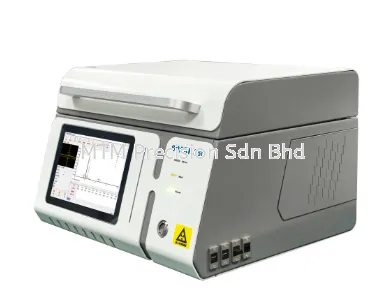
The Temtop P600 Handheld PM2.5 and PM10 Monitor can be carried between locations to compare particle levels and investigate possible pollution sources.
Its handheld format and histogram are useful for finding changes around doors, windows, kitchens, loading bays, guardhouses, and air purifier locations.
What Can the Temtop P600 Measure?
The Temtop P600 focuses on:
- PM2.5
- PM10
- Particle trend histogram
PM2.5 represents fine particles, while PM10 includes a broader range of inhalable particles.
The monitor can show where particle levels are higher, but it cannot identify the chemical composition of those particles.
Start With a Reference Location
Before investigating the suspected source, take a reading in a cleaner indoor area.
A suitable reference location may be:
- An internal office.
- A closed bedroom.
- A cleaner indoor room.
- A meeting room away from the entrance.
- An air-conditioned area with controlled access.
Record:
- PM2.5.
- PM10.
- Time.
- Door and window condition.
- Air conditioner status.
- Air purifier status.
- Nearby activities.
This reference reading gives you a starting point for comparison.
Check the Main Entrance
Outdoor haze, traffic emissions, and road dust may enter when the main door opens.
Compare readings:
- Inside the building away from the door.
- Near the entrance.
- Immediately outside the entrance.
- After the door has remained closed.
- During a busy entry period.
If particle levels are consistently higher near the entrance, outdoor air or nearby activity may be influencing the indoor environment.
Do not stand directly behind a vehicle exhaust pipe when taking a reading.
Check Windows and Ventilation Openings
A window may appear closed but still allow polluted outdoor air to enter through gaps.
Move the P600 gradually between:
- The centre of the room.
- The window area.
- Ventilation openings.
- Gaps around the window frame.
- The area below the window.
Observe whether the histogram changes as the monitor approaches the suspected entry point.
Avoid pressing the sensor directly against the opening because this may not represent the normal occupied area.
Check the Kitchen
Cooking can generate fine particles, especially during frying, grilling, and high-temperature cooking.
Compare readings:
- Before cooking.
- During cooking.
- Near the kitchen entrance.
- In the living room.
- After the exhaust system operates.
- After cooking stops.
Do not hold the P600 directly above a stove, hot surface, steam source, or open flame.
The objective is to observe how particles move through the indoor space.
Check Cleaning Activities
Dry sweeping and dusting can disturb settled particles.
Use the P600 to compare:
- Before cleaning.
- During sweeping.
- During vacuuming.
- Near storage shelves.
- After cleaning is completed.
- After the room has settled.
A short PM10 increase may indicate disturbed dust. PM2.5 may also change depending on the activity and particle type.
Check Air Conditioner Outlets
An air conditioner may move particles already present in the room.
Compare readings:
- Before the air conditioner starts.
- Near the occupied area.
- Away from direct airflow.
- After the air conditioner has operated.
- Before and after filter maintenance.
Do not assume that the air conditioner is the source simply because the reading changes when it operates. Air movement may redistribute particles from another location.
Check the Air Purifier Area
An air purifier can create different readings around its inlet and outlet.
Avoid judging whole-room conditions from a monitor placed directly beside the purifier.
For a better test:
- Place the P600 in a representative occupied location.
- Record the starting PM2.5 and PM10.
- Close unnecessary doors and windows.
- Start the air purifier.
- Keep the monitor position unchanged.
- Observe the histogram.
- Record the reading later.
If the reading does not decrease, check room size, purifier position, fan setting, filter condition, and continued particle entry.
Check Smoking and Burning Sources
Possible sources include:
- Cigarette smoke.
- Incense.
- Candles.
- Mosquito coils.
- Open burning.
- Nearby restaurant exhaust.
- Vehicle exhaust.
- Industrial combustion.
Measure from a safe location and follow applicable site safety procedures.
The P600 is a particle monitor. It is not a carbon monoxide, toxic gas, or combustible gas detector.
Check Printers and Office Equipment
Some office activities may create temporary particle changes.
Compare readings:
- Before printing.
- During heavy printing.
- Near the printer area.
- At occupied desks.
- After ventilation or filtration.
A higher reading near equipment does not identify the particle material. Further professional investigation may be required when the source is uncertain.
Factory and Warehouse Investigation
In a factory or warehouse, possible particle entry points include:
- Loading bays.
- Roller shutters.
- Material handling areas.
- Forklift routes.
- Dusty roads.
- Guardhouses.
- Packing areas.
- Workshop entrances.
- Construction zones.
- Vehicle waiting areas.
Facilities teams can create a simple route and check the same locations in the same order.
Avoid using a general indoor PM2.5 monitor in an environment involving unknown toxic dust, explosive atmospheres, or conditions outside the instrument requirements.
Use PM2.5 and PM10 Together
The relationship between PM2.5 and PM10 may provide useful clues.
PM2.5 Increases Strongly
Possible influences include:
- Haze.
- Smoke.
- Combustion.
- Cooking.
- Fine airborne pollution.
PM10 Increases Strongly
Possible influences include:
- Road dust.
- Sweeping.
- Construction.
- Material handling.
- Larger disturbed particles.
Both Increase
Possible influences include:
- Outdoor pollution entering the building.
- Dusty traffic.
- Smoke mixed with dust.
- Cleaning or workshop activity.
These are investigation clues, not proof of the exact source.
Use the Histogram to Observe Changes
The histogram helps users see whether particle levels:
- Rise near a suspected source.
- Fall after closing a door.
- Fall after starting an air purifier.
- Increase during traffic movement.
- Spike during cleaning.
- Return toward the reference condition.
Look for repeatable patterns.
One short spike may be caused by temporary air movement. A repeated increase at the same location or during the same activity provides stronger evidence.
Keep the Investigation Consistent
For more meaningful comparisons:
- Use the same monitor.
- Use the same measurement height.
- Allow the reading to respond at each location.
- Avoid blocking the air inlet.
- Record the time.
- Note doors and windows.
- Record air conditioner and purifier operation.
- Note cooking, cleaning, traffic, and occupancy.
- Repeat the route when necessary.
Do not compare readings taken under completely different conditions without recording those differences.
A Simple Investigation Route
For a home:
- Bedroom.
- Living room.
- Kitchen entrance.
- Main door.
- Window.
- Air purifier location.
- Outdoor sheltered area.
For an office:
- Internal office.
- Meeting room.
- Reception.
- Main entrance.
- Pantry.
- Printer area.
- Outdoor entrance.
For a factory:
- Main office.
- Meeting room.
- Guardhouse.
- Warehouse office.
- Loading bay entrance.
- Roller shutter area.
- Outdoor vehicle waiting point.
Record every location instead of relying on memory.
What the P600 Cannot Tell You
The Temtop P600 cannot identify:
- The chemical composition of particles.
- Whether particles contain a specific hazardous material.
- Carbon monoxide.
- Carbon dioxide.
- TVOC.
- Formaldehyde.
- Combustible gas.
- Toxic gas.
It also does not replace occupational dust sampling, laboratory analysis, or a complete indoor air quality assessment.
When to Use a Different Temtop Model
Choose the Temtop M10+ when CO2, TVOC, app monitoring, and continuous room trends are needed.
Choose the Temtop M2000 2nd when CO2, PM2.5, PM10, HCHO, and data export are required.
Choose the Temtop LKC-1000S 2nd when PM2.5, PM10, HCHO, TVOC, and renovation related checking are priorities.
Choose the Temtop S1 Up for simpler PM2.5, AQI, temperature, and humidity monitoring in one location.
Find Indoor Particle Sources With Actual Measurements
The Temtop P600 helps users move beyond guessing.
By comparing rooms, entrances, windows, purifier locations, and activity periods, users can identify where particle levels increase and which actions reduce them.
For assistance selecting the Temtop P600 or another Temtop air quality monitor in Malaysia, contact MTM Precision.
MTM Precision Sdn Bhd
Showroom and Service Centre: No. 29-1 and 29-2, Jalan Bandar 18, Pusat Bandar Puchong, 47160 Puchong, Selangor, Malaysia
Tel: 03-8080 7172
WhatsApp: +6016-660 7346
Email: mtmpre@yahoo.com
Website: www.mtmpre.com.my
07 Oct 2026
