





How to Locate Rebar Inside Concrete Malaysia – Using a Professional Rebar Scanner

How to Locate Rebar Inside Concrete Malaysia – Using a Professional Rebar Scanner
Copy Link
How Can You Find Rebar Hidden Inside Concrete?
Reinforcement bars are hidden once concrete has been cast, but contractors, engineers and inspectors often need to know exactly where the reinforcement is located.
This is especially important before drilling, concrete coring, cutting, anchor installation, renovation or structural inspection.
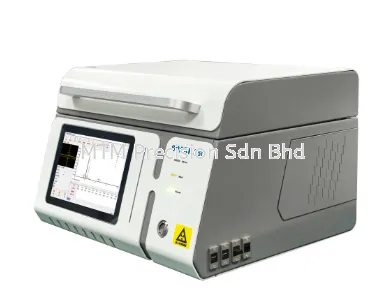
One of the most practical non-destructive methods is to use a professional rebar scanner such as the Langry RS250 Rebar Scanner.
A rebar scanner allows users to inspect reinforced concrete from the surface and identify embedded reinforcement without breaking the concrete simply to find the steel.
Why Do You Need to Locate Rebar?
There are many situations where knowing the position of reinforcement is important.
For example, you may need to:
Drill an anchor hole
Core an opening through a concrete slab
Install M&E services
Cut an existing concrete wall
Inspect an existing building
Verify reinforcement distribution
Measure concrete cover
Investigate a reinforced concrete structure
If the location of the reinforcement is unknown, work may be carried out directly over a rebar.
Locating reinforcement before intrusive work provides additional information for better site planning.
Method 1: Use a Professional Rebar Scanner
For professional concrete inspection, a dedicated rebar scanner or rebar detector is one of the most direct solutions.
The instrument is moved across the concrete surface to identify reinforcement beneath it.
Depending on the instrument, it may provide information including:
Rebar position
Concrete cover thickness
Reinforcement spacing
Reinforcement distribution
Approximate rebar diameter
The Langry RS250 is designed specifically for reinforced concrete inspection and provides a maximum detection range of up to 205 mm, depending on the rebar diameter and measurement conditions.
Method 2: Refer to Structural Drawings
Structural drawings can provide useful information about the intended reinforcement arrangement.
They may show:
Bar spacing
Bar diameter
Reinforcement direction
Structural member details
Reinforcement layers
However, drawings represent design information.
When working on an existing structure, the contractor or engineer may still need to verify the actual reinforcement position on site.
This is where physical scanning becomes useful.
Method 3: Use a Basic Wall or Metal Detector
Basic wall scanners and metal detectors can sometimes indicate the presence of metal behind a surface.
They may be suitable for simple household or general construction applications.
However, professional reinforced concrete inspection may require more detailed information.
A dedicated rebar scanner is generally more appropriate when the objective includes concrete cover measurement, reinforcement mapping or professional structural inspection.
How to Scan Concrete for Rebar
The exact operating procedure depends on the instrument being used, but a typical rebar scanning workflow includes:
1. Identify the Inspection Area
Determine where drilling, coring or structural inspection will be carried out.
2. Prepare the Concrete Surface
The scanning surface should allow the instrument to move smoothly across the inspection area.
3. Scan Across the Concrete
Move the rebar scanner across the surface according to the manufacturer's operating procedure.
4. Identify Reinforcement Positions
Observe the instrument response as reinforcement is detected.
5. Mark the Rebar Location
Mark detected reinforcement positions on the concrete surface where appropriate.
6. Scan in Another Direction
Scanning in more than one direction can help the user understand the reinforcement arrangement.
7. Review Before Drilling or Coring
Use the scanning information together with drawings and engineering requirements before deciding where intrusive work should take place.
Can a Rebar Scanner Measure Concrete Cover?
Yes, professional rebar scanners can be used for concrete cover thickness measurement.
Concrete cover refers to the distance between the concrete surface and the embedded reinforcement.
Cover measurement is useful for:
Construction quality control
Existing structure assessment
Building inspection
Bridge inspection
Civil engineering investigation
Reinforced concrete evaluation
The Langry RS250 combines reinforcement detection with concrete cover measurement capability.
Can a Rebar Scanner Tell the Rebar Diameter?
Professional instruments may also provide rebar diameter estimation under suitable measurement conditions.
However, measurement performance can be influenced by factors such as:
Rebar depth
Rebar spacing
Adjacent reinforcement
Reinforcement arrangement
Concrete conditions
Measurement technique
For professional inspection, users should always follow the instrument manufacturer's recommended measurement procedure and understand the limitations of the selected test method.
How Deep Can the Langry RS250 Detect?
According to Langry specifications, the RS250 provides a maximum detection range of up to 205 mm.
Actual detection capability depends on factors including the diameter and position of the reinforcement and measurement conditions.
For applications requiring deeper or more advanced scanning, customers can also compare the RS250 with other Langry rebar scanner models such as the RS350.
Why Locate Rebar Before Drilling?
Drilling directly into reinforcement can cause several practical problems.
It may result in:
Drill bit wear or damage
Difficulty completing the hole
Relocation of the drilling point
Additional labour
Additional repair work
Project delays
Unwanted contact with structural reinforcement
Scanning beforehand allows the contractor to understand where reinforcement is located before selecting the drilling position.
Why Locate Rebar Before Concrete Coring?
Concrete coring often involves larger openings than normal drilling.
Core openings may be required for:
Plumbing pipes
Electrical cables
HVAC systems
Fire protection services
Drainage
Mechanical services
Building renovation
A rebar scan before coring helps identify reinforcement crossing the proposed opening.
The final coring position should still follow the project's structural and engineering requirements.
Which Rebar Scanner Should You Choose?
The correct instrument depends on what you need to measure.
For basic reinforcement locating, an entry-level instrument may be sufficient.
For professional applications involving rebar location, concrete cover measurement and structural inspection, a dedicated rebar scanner such as the Langry RS250 may be more appropriate.
Langry also offers other models, including:
Langry RS150 – for more basic reinforcement detection requirements.
Langry RS250 – professional mid-range option with Bluetooth connectivity, one-line laser positioning and up to 205 mm maximum detection range.
Langry RS350 – higher-end model for more advanced rebar scanning requirements.
Looking for a Rebar Scanner in Malaysia?
If you need to locate reinforcement before drilling, coring or structural inspection, MTM Precision can assist with the selection of suitable professional concrete testing equipment.
The Langry RS250 Rebar Scanner is suitable for contractors, civil engineers, consultants, testing laboratories and inspection companies requiring non-destructive reinforcement detection.
Contact MTM Precision with your application requirements to discuss the suitable model.
Contact MTM Precision
MTM Precision Sdn. Bhd.
Showroom & Service Centre
No. 29-1 & 29-2, Jalan Bandar 18,
Pusat Bandar Puchong,
47160 Puchong, Selangor, Malaysia
🌐 Website: www.mtmpre.com.my
📧 Email: mtmpre@yahoo.com
📱 WhatsApp: +6016-660 7346
11 Aug 2026
