






Rebar Scanner Before Concrete Drilling and Coring Malaysia – Langry RS250

Rebar Scanner Before Concrete Drilling and Coring Malaysia – Langry RS250
Copy Link
Why Scan Reinforced Concrete Before Drilling or Coring?
Before drilling or coring into reinforced concrete, one important question should be answered:
Where is the reinforcement?
Rebars are hidden inside the concrete and cannot normally be identified accurately by visual inspection alone.
A professional rebar scanner allows contractors and engineers to inspect the proposed drilling or coring area before work begins.
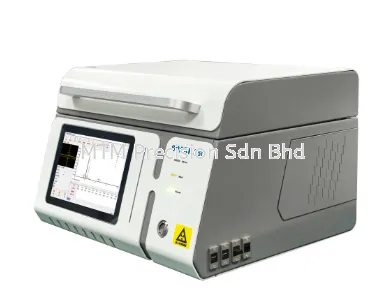
The Langry RS250 Rebar Scanner is designed for professional reinforcement detection and concrete cover measurement, making it suitable for concrete drilling, coring, renovation and civil engineering applications in Malaysia.
What Happens If You Drill Into Rebar?
When drilling reinforced concrete without knowing the reinforcement location, the drill bit may encounter steel.
This can create several practical problems, including:
Difficulty completing the required hole
Increased drill bit wear
Damage to drilling equipment
Additional working time
Relocation of the drilling position
Additional patching or repair work
Project delays
Unwanted interference with reinforcement
For structural reinforcement, any decision involving cutting or modifying a rebar should be referred to the responsible engineer.
A rebar scanner helps identify reinforcement before drilling begins so that the work can be planned more carefully.
Why Scan Before Concrete Coring?
Concrete coring typically creates larger openings than ordinary drilling.
Core holes may be required for:
Water pipes
Drainage pipes
Electrical cables
Communication cables
HVAC systems
Fire protection systems
Mechanical services
Building renovation
Structural investigation
When the proposed core opening crosses reinforcement, the project team may need to reconsider the location or consult the relevant engineer.
Scanning beforehand provides valuable information before the concrete is cut.
How Does a Rebar Scanner Help?
A professional rebar scanner is moved across the concrete surface to detect embedded reinforcement.
Depending on the instrument and site conditions, users can obtain information about:
Rebar position
Concrete cover thickness
Reinforcement spacing
Reinforcement distribution
Approximate rebar diameter
The detected positions can then be marked on the concrete surface before drilling or coring work begins.
Langry RS250 for Pre-Drilling Inspection
The Langry RS250 is designed specifically for reinforced concrete inspection.
Key capabilities include:
Rebar Position Detection
Locate reinforcement beneath the concrete surface before selecting a drilling point.
Concrete Cover Measurement
Determine the depth of reinforcement below the concrete surface.
Rebar Diameter Estimation
Assist with estimating reinforcement diameter under appropriate measurement conditions.
Maximum Detection Range up to 205 mm
According to Langry specifications, the RS250 offers a maximum detection range of up to 205 mm, depending on rebar diameter and measurement conditions.
One-Line Laser Positioning
The integrated one-line laser positioning feature can assist with locating and marking the scanning position during site work.
Bluetooth Connectivity
Bluetooth functionality provides additional flexibility for professional inspection workflows.
A Typical Pre-Drilling Workflow
A practical workflow may include the following steps.
Step 1 – Identify the Proposed Drilling Area
Mark the general location where the hole, anchor or opening is required.
Step 2 – Review Available Drawings
Check structural or construction drawings where available.
Drawings can provide useful information about the expected reinforcement arrangement.
Step 3 – Scan the Concrete Surface
Use the rebar scanner across the proposed work area.
Do not inspect only a single point.
Scanning a wider area provides more information about the reinforcement pattern.
Step 4 – Scan in Different Directions
Reinforced concrete may contain bars running in multiple directions.
Scanning both horizontally and vertically can help identify the reinforcement layout.
Step 5 – Mark Detected Rebar
Mark reinforcement positions on the concrete surface where appropriate.
Step 6 – Review the Proposed Hole Position
Compare the intended drilling or coring location with the detected reinforcement.
Step 7 – Proceed According to Engineering Requirements
If the proposed work may affect structural reinforcement, consult the responsible engineer before proceeding.
Rebar Scanning Before Anchor Installation
Rebar detection is also useful before installing mechanical or chemical anchors.
Anchors are commonly required for:
Steel structures
Machinery
Handrails
Equipment supports
M&E systems
Pipe supports
Cable trays
Structural strengthening systems
A proposed anchor position may coincide with reinforcement.
Scanning before drilling gives installers an opportunity to identify the reinforcement location before making the hole.
Rebar Scanning for M&E Contractors
Mechanical and electrical contractors frequently need to create openings or drill fixing points into existing concrete.
Applications may include:
Air-conditioning systems
Electrical conduits
Cable trays
Fire protection pipes
Plumbing
Mechanical equipment
Building services
For existing buildings where reinforcement locations are not clearly known, a portable rebar scanner can be particularly useful.
Rebar Scanner for Concrete Coring Contractors
For companies regularly performing concrete coring, rebar detection can become part of the pre-coring inspection process.
Instead of discovering reinforcement only after the core drill has started cutting, the contractor can inspect the proposed area beforehand.
This can improve work planning and provide additional information when discussing the core location with the customer, consultant or structural engineer.
Can Construction Drawings Replace Rebar Scanning?
Construction drawings remain important.
However, drawings indicate the intended design and should not automatically be assumed to confirm the exact physical position of every reinforcement bar in an existing structure.
Actual site conditions may differ.
For this reason, drawings and physical rebar scanning can complement each other.
The drawing provides design information.
The scanner provides information from the actual concrete structure being inspected.
Can a Cheap Wall Scanner Do the Same Job?
A basic wall scanner may be useful for general-purpose detection.
Professional concrete drilling and coring applications can require more detailed information.
A dedicated rebar scanner such as the Langry RS250 is designed specifically for reinforced concrete inspection and can provide information such as reinforcement location and concrete cover.
For contractors who regularly work on reinforced concrete structures, a professional instrument may therefore be more appropriate than a basic household wall detector.
Which Langry Rebar Scanner Is Suitable?
Langry offers several models for different requirements.
Langry RS150
Suitable for more basic reinforcement detection requirements.
Langry RS250
A professional mid-range option with:
Up to 205 mm maximum detection range
Concrete cover measurement
Rebar diameter estimation
One-line laser positioning
Bluetooth connectivity
Langry RS350
A higher-end model for users requiring more advanced rebar scanning capability.
For many professional drilling, coring and inspection applications, the RS250 offers an attractive balance between capability and investment.
Who Can Use the Langry RS250?
Potential users in Malaysia include:
Concrete coring contractors
Civil contractors
Main contractors
M&E contractors
Renovation contractors
Structural contractors
Building inspection companies
Civil engineering consultants
Structural engineers
NDT companies
Testing laboratories
Infrastructure contractors
Looking for a Rebar Scanner Before Drilling or Coring in Malaysia?
If your company regularly drills, cores or installs anchors into reinforced concrete, knowing the reinforcement position before starting work can be extremely valuable.
The Langry RS250 Rebar Scanner provides a professional solution for locating reinforcement and measuring concrete cover in reinforced concrete structures.
MTM Precision can also assist customers in comparing the Langry RS150, RS250 and RS350 according to their inspection requirements and budget.
Contact us for product information, quotation and technical discussion.
Contact MTM Precision
MTM Precision Sdn. Bhd.
Showroom & Service Centre
No. 29-1 & 29-2, Jalan Bandar 18,
Pusat Bandar Puchong,
47160 Puchong, Selangor, Malaysia
🌐 Website: www.mtmpre.com.my
📧 Email: mtmpre@yahoo.com
📱 WhatsApp: +6016-660 7346
11 Aug 2026
