






Concrete Testing Equipment for Anchor Installation Contractors Malaysia

Concrete Testing Equipment for Anchor Installation Contractors Malaysia
Copy Link
Rebar Scanning and Anchor Pull-Out Testing for Professional Installation Work
Anchor installation in reinforced concrete involves more than drilling a hole and inserting an anchor.
Professional contractors may need to consider two different questions:
Before drilling: Where is the existing reinforcement?
and
After installation: Does the anchor require pull testing according to the project specification?
These two questions require different instruments.
A practical professional equipment combination for anchor installation contractors can therefore include:
Rebar Scanner + Anchor Pull-Out Tester
The rebar scanner provides information before drilling.
The pull-out tester is used for specified anchor testing after installation.
MTM Precision supplies professional concrete inspection and anchor testing equipment in Malaysia, including Langry RS150, RS250 and RS350 Rebar Scanners together with Langry Anchor Pull-Out Testers in different capacities.
Why Scan Concrete Before Installing Anchors?
Reinforcement is hidden once concrete has been cast.
The contractor looking at the concrete surface cannot necessarily determine where the reinforcement is located.
Depending on the structure, reinforcement may include:
Horizontal rebars
Vertical rebars
Reinforcement mesh
Closely spaced bars
Multiple reinforcement layers
Heavily reinforced structural zones
Pre-drilling scanning can provide additional information about the proposed anchor location.
What Can Happen If You Drill Without Scanning?
Unexpected contact with reinforcement may result in:
Difficulty completing the hole
Drill bit wear
Additional drilling time
Need to relocate the anchor
Additional patching
Installation delays
More importantly, structural reinforcement should not simply be cut because it interferes with the proposed anchor location.
Where reinforcement affects the work, the appropriate project or structural engineer should be consulted.
1. Rebar Scanner Before Anchor Drilling
A professional rebar scanner can assist with identifying reinforcement around the proposed drilling location.
Depending on the instrument, it may provide:
Rebar position
Concrete cover
Reinforcement direction
Reinforcement spacing
Reinforcement distribution
Approximate rebar diameter
This information allows the installation team to review the proposed drilling area before penetrating the concrete.
A Better Anchor Installation Workflow
Instead of:
Mark → Drill → Hit Rebar → Relocate
a more controlled workflow is:
Review → Scan → Locate Rebar → Mark → Review Anchor Position → Drill → Install
Where pull testing is required:
Install → Cure Where Applicable → Pull Test → Record
This creates a more professional installation and testing process.
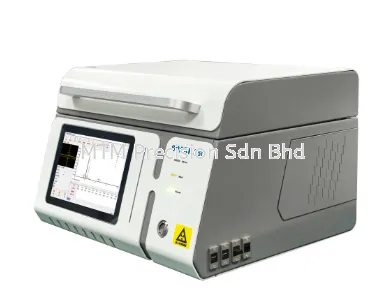
Langry RS250 for Anchor Contractors
The Langry RS250 Rebar Scanner is particularly relevant to professional anchor installation contractors.
Its capabilities include:
Rebar location
Concrete cover measurement
Rebar diameter estimation
Reinforcement distribution inspection
Maximum detection range up to approximately 205 mm
One-line laser positioning
Bluetooth connectivity
For contractors performing regular anchor installation, drilling and concrete work, the RS250 provides a useful balance between professional capability and equipment investment.
Why Is Laser Positioning Useful?
Once reinforcement has been detected, the operator may need to transfer its position onto the concrete surface.
The RS250 provides one-line laser positioning to support this workflow.
For anchor installers, this can be useful when reviewing:
Proposed drilling locations
Anchor spacing
Multiple fixing points
Nearby reinforcement
The scanner does not approve the anchor location, but it provides additional information for the installation team and engineer.
Langry RS350 for More Advanced Contractors
The Langry RS350 can be considered when the company requires Langry's higher-end rebar scanning platform.
According to Langry specifications, the RS350 provides:
Maximum detection range up to approximately 210 mm
Four-line laser positioning
Bluetooth connectivity
Professional reinforcement inspection capability
The RS350 may be attractive to:
Specialist anchor contractors
Structural strengthening contractors
NDT companies
Testing laboratories
Companies carrying out frequent reinforcement mapping
For many general anchor installation applications, however, the RS250 may already be sufficient.
RS250 or RS350 for Anchor Installation?
A practical selection approach is:
Regular Anchor Drilling
RS250
Concrete Drilling and Coring
RS250
General Professional Rebar Location
RS250
Frequent Specialist Reinforcement Mapping
Compare RS250 and RS350
Advanced Positioning Required
Consider RS350
Do not select the RS350 simply because its stated maximum detection depth is slightly greater.
Can a Rebar Scanner Guarantee a Safe Drilling Position?
No.
A professional rebar scanner helps identify reinforcement and reduce uncertainty.
However, detection performance can be influenced by:
Rebar diameter
Concrete cover
Closely spaced reinforcement
Multiple layers
Adjacent steel
Site conditions
Operator technique
The instrument should therefore be used as part of a professional inspection and installation process.
What About Post-Tensioned Concrete?
Anchor drilling into post-tensioned structures requires particular care.
A conventional rebar scanner should not automatically be assumed to identify every type of embedded tendon, duct, cable or other object under all conditions.
Where post-tensioning may be present, the project should be treated according to the appropriate engineering procedure.
Additional investigation technologies may be required.
Do not drill based solely on an assumption that an area is clear.
2. Anchor Pull-Out Testing
After an anchor has been installed, some projects require testing.
An Anchor Pull-Out Tester can apply a controlled tensile load to the installed anchor according to the required test procedure.
Potential applications include:
Mechanical anchors
Chemical anchors
Structural fixings
Construction anchors
Installed anchoring systems
The required equipment capacity depends on the expected test load.
Why Is Anchor Pull Testing Required?
Pull testing may be specified to verify aspects of the installed anchoring system according to the relevant project requirement.
Potential reasons include:
Installation verification
Quality control
Project specification
Consultant requirement
Construction inspection
The required test load and acceptance criteria should be defined by the applicable engineering or project requirements.
Proof Test vs Failure Test
Not every anchor test has the same objective.
Depending on the project, testing may involve applying a specified proof load rather than loading an anchor until failure.
Other projects or research applications may have different objectives.
The contractor should therefore determine:
Test purpose
Required load
Test procedure
Acceptance criteria
before selecting the pull-out tester.
Selecting the Correct Pull-Out Tester Capacity
A common purchasing mistake is simply choosing the highest-capacity tester.
That is not always necessary.
Before selecting equipment, determine:
Anchor type
Anchor diameter
Expected test load
Required proof load
Access around the anchor
Fixture arrangement
Project specification
Required accessories
Then select an appropriate tester capacity.
Langry Anchor Pull-Out Testers
Langry provides professional pull-out testing solutions in different capacities.
This allows contractors and testing companies to select equipment according to their expected applications.
Potential users include:
Anchor installation contractors
Structural strengthening contractors
Testing laboratories
NDT companies
Civil engineering companies
Consultants
Construction inspection teams
Rebar Scanner + Pull-Out Tester: Why the Combination Makes Sense
These instruments work at different stages.
Before Anchor Installation
Rebar Scanner
Purpose:
Locate reinforcement
Review drilling position
Understand concrete cover
Reduce blind drilling
After Anchor Installation
Anchor Pull-Out Tester
Purpose:
Apply specified pull load
Perform required anchor testing
Support installation verification procedures
For professional anchor contractors, owning both types of equipment can create a more complete service capability.
Example: Chemical Anchor Installation
Consider a contractor installing chemical anchors into an existing reinforced concrete structure.
A possible workflow is:
Step 1 Review Drawings
Understand the intended anchor layout.
Step 2 Scan Concrete
Identify reinforcement around proposed drilling points.
Step 3 Mark Reinforcement
Transfer relevant locations to the surface.
Step 4 Review Anchor Positions
Confirm the final drilling locations according to the project requirements.
Step 5 Drill
Use the specified hole diameter and depth.
Step 6 Clean the Hole
Follow the anchor manufacturer's cleaning procedure.
Step 7 Install Chemical Anchor
Follow the manufacturer's installation instructions.
Step 8 Allow Required Curing
Observe the specified curing conditions and time.
Step 9 Pull Test Where Required
Use suitable testing equipment according to the specified procedure.
This illustrates why equipment selection should be considered as part of the complete installation workflow.
Example: Mechanical Anchor Installation
Mechanical anchors may also require careful positioning around existing reinforcement.
The contractor can scan before drilling, install according to the manufacturer's requirements and perform testing where specified.
Again:
Scanning and pull testing are different operations.
One does not replace the other.
Example: Structural Strengthening
A structural strengthening contractor may install many anchors for:
Steel plates
Brackets
New structural steel
Strengthening systems
For this type of work, the combination of:
Professional Rebar Scanner
Anchor Pull-Out Tester
can become part of the contractor's regular site equipment.
Example: M&E Installation
Large M&E systems may require anchors for:
Pipe supports
Cable trays
Mechanical equipment
Electrical equipment
Plant systems
Where installation occurs on existing reinforced concrete, scanning can help identify reinforcement around proposed drilling locations.
Where testing is specified, suitable pull-test equipment can then be used.
Should Anchor Contractors Own Their Own Rebar Scanner?
For occasional anchor installation, contractors may choose to engage a scanning service.
For companies drilling reinforced concrete regularly, owning a professional scanner may provide advantages such as:
Immediate site availability
Less waiting for third parties
Faster review of multiple drilling points
Better integration into the installation workflow
The business case depends on frequency of use.
Should Anchor Contractors Own a Pull-Out Tester?
Again, it depends on the work.
If customers frequently request anchor pull testing, owning appropriate equipment may allow the contractor to expand its service capability.
However, companies should also consider:
Technician competence
Testing procedures
Equipment verification
Calibration requirements where applicable
Reporting
Project requirements
Owning the instrument alone is not the complete testing service.
Starter Equipment Package for Anchor Contractors
A professional contractor expanding its capabilities may consider:
Rebar Inspection
Langry RS250 Rebar Scanner
Advanced Rebar Inspection
Langry RS350, where justified
Anchor Testing
Suitable Langry Anchor Pull-Out Tester
Additional concrete inspection equipment can then be added according to customer demand.
Expand Into a Broader Concrete Testing Service
Once a contractor has established rebar scanning and anchor testing capability, additional equipment may include:
Concrete Test Hammer
Crack Monitoring Equipment
Other concrete NDT instruments
This can gradually move the business from:
Installation Contractor
towards:
Installation + Inspection + Testing Solution Provider
where the company has the appropriate technical capability.
Looking for Rebar Scanners and Anchor Pull-Out Testers in Malaysia?
MTM Precision supplies professional equipment for civil engineering, structural inspection, construction testing and NDT applications in Malaysia.
For anchor installation contractors, we can assist with equipment for:
Rebar location before drilling
Concrete cover measurement
Reinforcement inspection
Anchor pull-out testing
Concrete testing
Langry equipment options include:
RS150 / RS250 / RS350 Rebar Scanners
and
Langry Anchor Pull-Out Testers in different capacities
Tell MTM Precision:
What anchors you install
Expected test load
Typical concrete structure
Expected rebar depth
Frequency of testing
We can help identify a practical equipment combination for your application.
Contact MTM Precision
MTM Precision Sdn. Bhd.
Showroom & Service Centre
No. 29-1 & 29-2, Jalan Bandar 18,
Pusat Bandar Puchong,
47160 Puchong, Selangor, Malaysia
🌐 Website: www.mtmpre.com.my
📧 Email: mtmpre@yahoo.com
📱 WhatsApp: +6016-660 7346
11 Aug 2026

