





Indoor AQI Monitor vs Outdoor AQI Reading: Understanding the Difference Malaysia

Indoor AQI Monitor vs Outdoor AQI Reading: Understanding the Difference Malaysia
When haze or poor air quality affects Malaysia, many people immediately check the outdoor API or AQI reading on their phone.
This is useful for understanding general outdoor air pollution conditions.
But there is an important limitation:
An outdoor air quality reading does not tell you exactly what is happening inside your office, classroom, meeting room or building.
Indoor conditions can be very different from outdoor conditions.
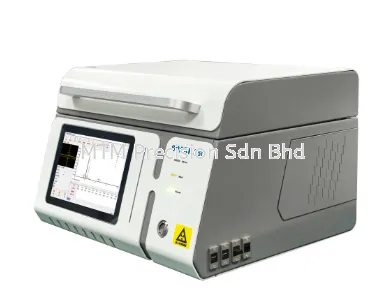
A portable indoor air quality instrument such as the TENMARS TM-380 Multi IAQ Monitor allows users to measure important parameters directly where people are working, studying or spending time indoors.
The TM-380 measures:
CO₂
PM2.5
PM10
Temperature
Relative humidity
What Does an Outdoor AQI or API Reading Tell You?
Outdoor air quality indexes are designed to communicate general ambient air pollution conditions for an area.
They are extremely useful for understanding whether outdoor pollution is elevated.
During haze periods, these readings can help organisations make decisions about outdoor activities.
However, an outdoor monitoring station is not located inside your individual building.
Therefore, its reading should not automatically be treated as the exact air condition inside your room.
What Does an Indoor IAQ Measurement Tell You?
An indoor measurement answers a different question:
What is happening at this actual location?
For example, you may want to know the particulate conditions:
Inside your office
Inside a classroom
Inside a meeting room
Near a building entrance
Beside an air purifier
In a training room
A portable IAQ monitor allows measurements to be taken directly at these locations.
Why Can Indoor and Outdoor Readings Be Different?
Buildings create a barrier between indoor and outdoor environments.
Indoor particulate levels can be influenced by:
Windows
Doors
Ventilation systems
HVAC filtration
Air leakage
Air purifiers
Building design
Indoor activities
Therefore, two buildings located in the same area can have different indoor particulate conditions.
Example: Outdoor Haze but Lower Indoor PM2.5
Imagine outdoor particulate pollution is elevated during a haze episode.
An office has:
Closed windows
Controlled entrances
HVAC filtration
Portable air purifiers
Indoor PM2.5 may be lower than outdoor conditions.
But you cannot know the actual indoor condition simply by looking at an outdoor AQI number.
You need an indoor measurement.
Example: Outdoor Conditions Improve but Indoor Particles Remain
The opposite situation can also occur.
Outdoor conditions may improve while indoor particulate matter remains influenced by:
Dust
Cleaning
Renovation
Indoor activities
Previously accumulated particles
Again, indoor measurement provides location-specific information.
Building Entrances Can Be Important
During haze or poor outdoor air conditions, building entrances are useful locations to investigate.
Doors may open hundreds of times during the day.
A facility manager could compare:
Outdoor
↓
Main Entrance
↓
Lobby
↓
Interior Office
If PM2.5 readings decrease as you move further inside, this provides useful information about particulate conditions across the building.
Don't Forget CO₂
Outdoor AQI discussions usually focus on pollution such as particulate matter.
However, indoor environments have another important consideration:
Occupancy and ventilation.
Imagine a meeting room during haze.
Windows and doors are closed.
An air purifier is operating.
PM2.5 decreases.
But ten people remain inside for a long meeting.
CO₂ can increase if ventilation is insufficient relative to occupancy.
This condition would not be shown by an outdoor AQI reading.
Outdoor AQI and Indoor CO₂ Answer Different Questions
This distinction is important.
Outdoor AQI/API helps describe ambient outdoor pollution conditions.
Indoor CO₂ measurement can provide useful information when investigating ventilation relative to occupancy.
They should not be treated as interchangeable measurements.
Why the TM-380 Measures Both CO₂ and Particles
The TENMARS TM-380 combines:
CO₂
with
PM2.5 + PM10
This makes it useful for investigating two different aspects of an indoor environment.
For example:
Low PM2.5 + High CO₂
Particulate conditions may be relatively low while ventilation requires further investigation.
High PM2.5 + Low CO₂
Ventilation may appear relatively favourable, while particulate entry or indoor particle sources require investigation.
High PM2.5 + High CO₂
Both conditions may require attention.
This is why one number cannot represent every aspect of indoor air quality.
Outdoor AQI Cannot Evaluate Your Air Purifier
Suppose your office purchases an air purifier during haze season.
The outdoor AQI remains high.
Does that mean the purifier is not working?
No.
Outdoor AQI does not measure the air immediately around your purifier.
To investigate purifier performance, you need local particulate measurements.
For example:
PM2.5 before purifier operation
versus
PM2.5 after purifier operation
You can also compare different points around the room.
Measure Near the Air Purifier and Further Away
One useful approach is to take measurements:
Near the purifier
In the centre of the room
At the opposite side of the room
Near the entrance
Near windows
This helps users investigate whether particulate conditions vary throughout the space.
Outdoor AQI Cannot Tell You About Meeting Room Conditions
A city-level outdoor reading cannot tell you whether CO₂ is increasing inside a crowded conference room.
Similarly, it cannot tell you the exact temperature and humidity at an employee's workstation.
Indoor environmental monitoring and outdoor air pollution monitoring serve different purposes.
A Practical Indoor/Outdoor Measurement Method
During a haze episode, facility teams can perform a simple building comparison.
Location 1 – Outdoor Area
Measure particulate conditions outside the building.
Location 2 – Main Entrance
Check conditions where doors frequently open.
Location 3 – Lobby
Move further inside.
Location 4 – Office
Measure in the normal occupied working area.
Location 5 – Meeting Room
Check PM2.5, PM10 and CO₂.
Location 6 – Air Purifier Area
Compare particulate conditions around air-cleaning equipment.
This provides a basic environmental profile across the building.
Why PM10 Is Useful Too
Haze discussions often concentrate on PM2.5.
However, the TM-380 also measures PM10.
PM10 can provide additional information when indoor conditions are influenced by:
Dust
Construction
Renovation
Cleaning
Outdoor particle entry
This expands the instrument's usefulness beyond haze monitoring alone.
Temperature and Humidity Add Context
Indoor environmental conditions also include thermal factors.
The TM-380 measures:
Temperature
Relative humidity
These readings can be observed alongside CO₂ and particulate matter during an indoor inspection.
Conditions Change Throughout the Day
Indoor and outdoor air conditions are dynamic.
Outdoor pollution may increase or decrease.
Doors may open more frequently during lunch.
Meeting-room occupancy may increase in the afternoon.
HVAC systems may operate according to schedules.
The TENMARS TM-380 supports manual and automatic recording, allowing users to observe changes rather than relying only on a single spot measurement.
Who Benefits from Indoor Measurements?
Direct indoor monitoring can be useful for:
Facility managers
HVAC contractors
Building maintenance teams
Schools
Offices
Commercial buildings
Property managers
Environmental consultants
Safety personnel
Industrial facilities
Outdoor AQI Is Useful — But It Is Not Your Indoor Reading
Outdoor AQI/API information remains an important tool.
The point is not to replace it.
Instead, understand its role.
Outdoor AQI/API: Helps understand general outdoor pollution conditions.
Indoor IAQ measurement: Helps understand conditions at the actual indoor location.
Using both types of information can provide a better understanding during haze and other air pollution events.
TENMARS TM-380 Indoor Air Quality Monitor Malaysia
For organisations that want to go beyond checking outdoor AQI and investigate what is actually happening inside their building, the TENMARS TM-380 provides five useful measurements:
CO₂ + PM2.5 + PM10 + Temperature + Relative Humidity
This makes it suitable for indoor environmental checks, haze-related monitoring, HVAC troubleshooting, facility management and air purifier performance comparisons in Malaysia.
Contact MTM Precision
MTM Precision Sdn. Bhd.
Showroom & Service Centre
No. 29-1 & 29-2, Jalan Bandar 18,
Pusat Bandar Puchong,
47160 Puchong, Selangor, Malaysia
🌐 Website: www.mtmpre.com.my
📧 Email: mtmpre@yahoo.com
📱 WhatsApp: +6016-660 7346
Contact MTM Precision for TENMARS TM-380 Multi IAQ Monitor enquiries in Malaysia.
13 Aug 2026


