





Why Indoor PM2.5 Can Remain High Even When Doors and Windows Are Closed Malaysia

Why Indoor PM2.5 Can Remain High Even When Doors and Windows Are Closed Malaysia
During haze or periods of poor outdoor air quality in Malaysia, one of the first actions many offices and building operators take is to close doors and windows.
But sometimes a surprising problem remains:
Indoor PM2.5 is still high.
Why?
Closing doors and windows can help reduce direct outdoor air entry, but it does not automatically make a building airtight or remove particles that are already indoors.
Indoor PM2.5 can be influenced by ventilation systems, building leakage, frequent door opening, indoor activities, filtration and particles already present inside the building.
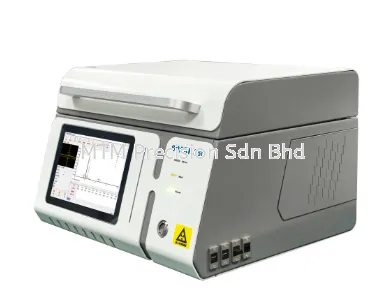
A portable instrument such as the TENMARS TM-380 Multi IAQ Monitor can help users compare PM2.5 conditions at different locations while simultaneously monitoring CO₂, PM10, temperature and relative humidity.
Reason 1: PM2.5 May Already Be Inside
Closing windows does not instantly remove particulate matter that has already entered the room.
If outdoor pollution was elevated before the windows were closed, fine particles may already be present indoors.
Indoor PM2.5 may therefore take time to decrease.
How quickly conditions change depends on factors such as:
Air filtration
Air purifier operation
Air exchange
Room size
Indoor particle sources
Building conditions
This is why taking measurements over time can be more informative than relying on one reading.
Reason 2: The Building Is Not Completely Airtight
Most commercial buildings are not perfectly sealed.
Outdoor air may still enter through:
Door gaps
Window gaps
Building joints
Service openings
Ventilation pathways
Other leakage points
Fine particles can therefore potentially enter even when obvious openings are closed.
Reason 3: Doors Still Open Frequently
An office may keep its windows closed throughout haze season.
But what about the main entrance?
Every time a door opens, indoor and outdoor air can mix.
This can be particularly important at:
Building entrances
Reception areas
Retail shops
Offices with frequent visitors
Loading areas
PM2.5 near an entrance may therefore differ from readings deeper inside the building.
Compare Entrance and Interior Readings
A useful investigation could follow this route:
Outdoor Area
↓
Main Entrance
↓
Reception
↓
Open Office
↓
Interior Meeting Room
If PM2.5 gradually decreases as you move further inside, outdoor particle entry may be contributing to the indoor condition.
The TENMARS TM-380 is portable, making this type of multi-location comparison practical.
Reason 4: Ventilation Systems Can Introduce Outdoor Air
Closing windows does not necessarily mean that all outdoor air stops entering the building.
Many ventilation systems intentionally introduce outdoor air.
This is important for occupied spaces.
However, during periods of elevated outdoor particulate pollution, the condition of filtration and the ventilation system can influence indoor particle concentrations.
If indoor PM2.5 remains unexpectedly high, HVAC and filtration conditions may require professional investigation.
Reason 5: Filter Condition May Matter
HVAC filtration can influence the amount of particulate matter circulating through a building.
Potential issues for further investigation may include:
Filter condition
Filter installation
Filter suitability
Maintenance schedule
Air bypass or leakage
A PM2.5 measurement does not identify which specific filter problem exists.
However, measurements can help identify whether particulate conditions differ between building zones or change after maintenance.
Reason 6: Indoor Activities Can Generate Particles
Not all PM2.5 comes from outside.
Indoor activities can also affect particulate readings.
Depending on the environment, possible contributors may include:
Cooking
Cleaning activities
Certain work processes
Renovation
Movement of settled dust
Other indoor particle-generating activities
If outdoor conditions improve but indoor PM2.5 remains elevated, indoor sources should also be considered.
Reason 7: Renovation and Construction
Construction and renovation can significantly influence indoor particulate conditions.
This can occur even when the work is taking place in another section of the building.
Particles may move through:
Corridors
Doors
Air movement
HVAC systems
Worker movement
For these investigations, measuring both PM2.5 and PM10 can be useful.
The TENMARS TM-380 measures both particle fractions.
Reason 8: Air Purifier Placement May Affect Results
A portable air purifier may reduce PM2.5 effectively near the unit.
But conditions may be different at the opposite side of a large room.
Try comparing readings:
Near Air Purifier
Centre of Room
Opposite Side of Room
Near Entrance
Near Window
This can help determine whether particulate conditions are relatively uniform throughout the occupied area.
Reason 9: The Air Purifier May Need Time
If indoor PM2.5 is initially high, switching on an air purifier may not produce an immediate uniform reduction throughout the room.
Performance can depend on:
Room size
Air purifier capacity
Air circulation
Filter condition
Particle source
Continued outdoor particle entry
Taking measurements over time can help show whether PM2.5 is trending downward.
Reason 10: Outdoor Conditions May Still Be Changing
During haze, outdoor particulate concentrations are not constant.
Conditions can change throughout the day.
Therefore, indoor PM2.5 may also change as outdoor pollution changes.
Comparing indoor measurements with current outdoor conditions can provide useful context.
Why One Measurement Is Not Enough
Suppose you measure PM2.5 at 9:00 AM.
You obtain one number.
But what happens at:
10:00 AM?
12:00 PM?
3:00 PM?
5:00 PM?
Door opening, occupancy, HVAC operation and outdoor pollution may all change.
The TENMARS TM-380 supports manual and automatic recording, allowing users to observe changes over time.
Don't Forget CO₂ When Closing Windows
There is another important issue.
During haze, organisations may close doors and windows to reduce outdoor particle entry.
But heavily occupied enclosed spaces still require appropriate ventilation.
If outdoor air exchange is reduced, CO₂ can increase.
Therefore, it is possible to have:
PM2.5 decreasing
while
CO₂ increasing.
This is why measuring PM2.5 alone may not provide the complete picture.
PM2.5 and CO₂ Require Different Responses
Consider four possible situations.
High PM2.5 + Low CO₂
Investigate particulate sources, outdoor particle entry and filtration.
Low PM2.5 + High CO₂
Particulate conditions may be relatively favourable, but ventilation relative to occupancy may require investigation.
High PM2.5 + High CO₂
Both particulate conditions and ventilation may require attention.
Low PM2.5 + Low CO₂
Conditions may appear relatively favourable at that time and location.
The appropriate response depends on what the measurements show.
A Simple Building Investigation
Facility managers can perform a basic comparison using several locations.
Step 1 – Measure Outdoors
Establish a reference for local particulate conditions.
Step 2 – Measure at the Entrance
Check an area affected by frequent door opening.
Step 3 – Measure in the Main Office
Compare with the entrance.
Step 4 – Measure in an Enclosed Room
Check PM2.5 together with CO₂.
Step 5 – Measure Near an Air Purifier
Compare particle readings.
Step 6 – Repeat Later
Observe whether conditions change over time.
This method can help identify patterns that would be missed by taking one measurement in one location.
TENMARS TM-380 for PM2.5 Troubleshooting
The TENMARS TM-380 combines:
PM2.5 + PM10 + CO₂ + Temperature + Relative Humidity
The particulate measurement uses a laser particulate matter sensor, while CO₂ measurement uses NDIR technology.
This makes the instrument useful when an indoor particulate investigation also needs to consider ventilation and general environmental conditions.
Who Can Use It?
Potential users include:
Facility managers
HVAC contractors
Building maintenance teams
Environmental consultants
Safety personnel
Schools
Offices
Commercial building operators
Property management companies
Indoor PM2.5 Monitoring During Malaysia Haze
Closing windows and doors can be one part of managing outdoor particulate entry, but it should not be assumed that this action alone guarantees low indoor PM2.5.
Actual indoor conditions depend on the building, ventilation, filtration, air leakage, indoor sources and operating conditions.
The most reliable way to know what is happening at a particular location is to measure it.
For users who also need to investigate CO₂, PM10, temperature and humidity, the TENMARS TM-380 provides a practical multi-parameter solution for indoor air quality monitoring in Malaysia.
Contact MTM Precision
MTM Precision Sdn. Bhd.
Showroom & Service Centre
No. 29-1 & 29-2, Jalan Bandar 18,
Pusat Bandar Puchong,
47160 Puchong, Selangor, Malaysia
🌐 Website: www.mtmpre.com.my
📧 Email: mtmpre@yahoo.com
📱 WhatsApp: +6016-660 7346
Contact MTM Precision for TENMARS TM-380 Multi IAQ Monitor enquiries in Malaysia.
13 Aug 2026


