






How to Check Whether an Air Purifier Is Reducing PM2.5 and PM10 Malaysia

How to Check Whether an Air Purifier Is Reducing PM2.5 and PM10 Malaysia
You switch on an air purifier.
The fan starts running.
The indicator light changes.
But how do you know whether particulate levels in the room are actually decreasing?
One practical approach is to measure PM2.5 and PM10 before and after operating the air purifier.
Instead of relying only on the purifier's own display, an independent particulate measurement allows you to compare actual readings at different times and locations.
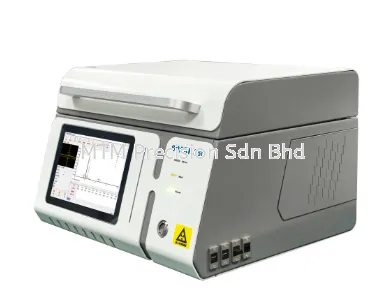
The TENMARS TM-380 Multi IAQ Monitor measures:
PM2.5
PM10
CO₂
Temperature
Relative humidity
This makes it useful for air purifier performance comparisons and broader indoor air quality investigations in Malaysia.
Why Measure an Air Purifier?
An air purifier may be purchased for many reasons:
Malaysia haze
Outdoor pollution
Traffic-related particles
Construction dust
Office air quality
Classroom air quality
General particulate reduction
But simply hearing the fan operate does not tell you how particulate conditions are changing in the occupied space.
Measurement provides objective data for comparison.
Step 1: Take a Baseline Measurement
Before switching on the air purifier, take a PM2.5 and PM10 measurement.
Allow the instrument to observe the normal room condition.
Record the reading.
This becomes your baseline for comparison.
For a more meaningful investigation, also note:
Measurement location
Time
Door/window condition
Number of occupants
HVAC condition
Keeping the test conditions reasonably consistent makes comparisons more useful.
Step 2: Switch On the Air Purifier
Operate the purifier according to its intended settings.
Avoid immediately concluding that it is effective or ineffective.
Particulate conditions may require time to change.
The result can depend on factors such as:
Room size
Purifier capacity
Filter condition
Fan setting
Air circulation
Continued particle sources
Outdoor particle entry
Step 3: Measure Again
After the purifier has operated for a period, measure PM2.5 and PM10 again.
Compare:
Before Air Purifier
versus
After Air Purifier
If particulate readings decrease, you have direct measurement evidence that conditions have changed at that measurement point.
Step 4: Repeat Measurements Over Time
One measurement before and one measurement after operation provide a basic comparison.
A better investigation may include several readings.
For example:
0 minutes — Baseline
15 minutes — Check
30 minutes — Check
60 minutes — Check
This helps show the direction of change rather than relying on one isolated number.
The TENMARS TM-380 supports manual and automatic recording, making this type of observation easier.
Step 5: Measure at Different Locations
Do not assume that the air beside the purifier represents the entire room.
Try taking measurements at:
Near the air purifier
Centre of the room
Occupied seating area
Opposite side of the room
Near the entrance
Near windows
This can help identify whether particulate conditions are relatively uniform throughout the space.
Why Distance from the Purifier Matters
Air purifiers move and filter air within a room.
Depending on room layout and air circulation, particle concentrations may not change at exactly the same rate everywhere.
For example:
Near purifier → PM2.5 lower
while
Far side of room → PM2.5 higher
This does not automatically mean the purifier has failed.
It may indicate that room size, airflow, placement or purifier capacity should be investigated.
Check PM2.5 During Malaysia Haze
Air purifiers are particularly relevant during haze periods.
Outdoor particulate pollution may enter through:
Doors
Windows
Ventilation systems
Building leakage
Frequent movement between indoor and outdoor areas
A useful haze investigation could compare:
Outdoor PM2.5
↓
Building Entrance
↓
Office
↓
Air Purifier Area
This provides a clearer picture than looking only at an outdoor AQI/API reading.
Why PM10 Should Be Checked Too
PM2.5 receives significant attention, but the TENMARS TM-380 also measures PM10.
PM10 monitoring can be useful when the indoor environment is affected by:
Dust
Renovation
Construction
Cleaning activities
Outdoor particle entry
Comparing both PM2.5 and PM10 can provide additional information about particulate conditions.
Don't Rely Only on the Purifier's Built-In Sensor
Many air purifiers include their own air quality indicator or particulate sensor.
These features can be useful for everyday operation.
However, for independent checking, a separate measurement instrument has an advantage:
The measuring device can be moved away from the purifier.
You can compare conditions at different points in the room rather than measuring only where the purifier's built-in sensor is located.
Important: An Air Purifier Is Not a CO₂ Solution
This is one of the most important points when evaluating indoor air quality.
A portable particle air purifier and building ventilation perform different functions.
A purifier may reduce PM2.5 and PM10 while CO₂ continues to increase in an occupied enclosed room.
For example:
PM2.5 ↓
PM10 ↓
but
CO₂ ↑
This is possible when the purifier is cleaning recirculated room air while occupants continue producing CO₂.
Example: Air Purifier in a Meeting Room
Imagine a meeting room with ten people.
The air purifier is operating.
After 30 minutes, PM2.5 has decreased.
After 60 minutes, PM2.5 remains low.
However, CO₂ has increased.
If you were monitoring only particulate matter, you might conclude that the overall indoor condition had improved.
By measuring CO₂ as well, you can see that ventilation relative to occupancy may still require investigation.
Air Purifier vs Ventilation
A simple way to understand the difference is:
Air Purifier → Primarily addresses airborne particles
Ventilation → Exchanges or supplies air
Both can be relevant to indoor environmental management, but they should not automatically be treated as substitutes.
Temperature and Humidity Add Context
The TENMARS TM-380 also measures:
Temperature
Relative humidity
This allows facility teams to observe general environmental conditions during an air purifier evaluation.
For example, a room may have low PM2.5 but still generate complaints related to temperature, humidity or ventilation.
Testing an Air Purifier in an Office
A simple office test could follow this procedure:
Before Operation
Record PM2.5 and PM10.
Start Purifier
Keep measurement conditions reasonably consistent.
After 15 Minutes
Record again.
After 30 Minutes
Record again.
After 60 Minutes
Record again.
Change Measurement Location
Compare the centre of the office with areas near doors or windows.
This creates a more useful picture of actual room conditions.
Testing an Air Purifier in a Classroom
For a classroom, measurements can be taken:
Before students arrive
During occupancy
Before purifier operation
During purifier operation
At different classroom locations
CO₂ can also be monitored because classroom occupancy may significantly influence ventilation-related conditions.
Testing an Air Purifier in a Commercial Building
Facility managers can use the same principle across different areas:
Lobby
Office
Meeting Room
Waiting Area
Training Room
Portable measurements allow one instrument to be moved between locations.
What If PM2.5 Does Not Decrease?
If PM2.5 remains high, do not immediately assume that the purifier is defective.
Possible factors requiring investigation include:
Continued outdoor particle entry
Open doors or windows
Room size
Purifier capacity
Filter condition
Purifier placement
Indoor particle sources
Insufficient operating time
Measurements help identify that a problem exists, but further investigation is needed to determine the cause.
What If PM2.5 Drops Quickly?
A significant decrease can indicate that particulate conditions have improved at the measurement location.
However, continue to consider:
Other parts of the room
CO₂
Occupancy
Outdoor conditions
Temperature
Humidity
Indoor air quality should not automatically be reduced to a single PM2.5 number.
Why Use the TENMARS TM-380?
For air purifier evaluation, the TENMARS TM-380 provides:
PM2.5 measurement
PM10 measurement
Laser particulate matter sensing
CO₂ measurement using NDIR technology
Temperature measurement
Relative humidity measurement
Manual and automatic recording
Portable rechargeable operation
This allows users to investigate both particulate reduction and other important indoor environmental conditions.
Air Purifier Performance Checking Malaysia
Whether an air purifier is being used in an office, school, meeting room or commercial building, the basic principle is simple:
Don't judge performance only by the fan, indicator light or purifier display.
Measure particulate conditions.
Compare before and after.
Check more than one location.
Observe changes over time.
And remember that reducing PM2.5 does not automatically solve ventilation-related CO₂ conditions.
For Malaysian facility managers, HVAC contractors and building operators, the TENMARS TM-380 provides a practical portable instrument for this type of indoor air quality investigation.
Contact MTM Precision
MTM Precision Sdn. Bhd.
Showroom & Service Centre
No. 29-1 & 29-2, Jalan Bandar 18,
Pusat Bandar Puchong,
47160 Puchong, Selangor, Malaysia
🌐 Website: www.mtmpre.com.my
📧 Email: mtmpre@yahoo.com
📱 WhatsApp: +6016-660 7346
Contact MTM Precision for TENMARS TM-380 Multi IAQ Monitor enquiries in Malaysia.
13 Aug 2026


