






Understanding CO2, PM2.5, PM10, Temperature and Humidity Readings Malaysia

Understanding CO2, PM2.5, PM10, Temperature and Humidity Readings Malaysia
An indoor air quality monitor can display several numbers at the same time.
But what do those numbers actually tell you?
CO₂, PM2.5, PM10, temperature and relative humidity measure different aspects of the indoor environment. They should not automatically be treated as interchangeable indicators of whether indoor air is simply “good” or “bad”.
For HVAC contractors, facility managers, building maintenance teams, schools and commercial building operators in Malaysia, understanding the role of each parameter can make indoor air quality measurements much more useful.
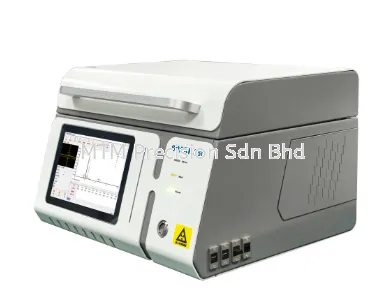
The TENMARS TM-380 Multi IAQ Monitor combines five important measurements:
CO₂
PM2.5
PM10
Temperature
Relative humidity
1. What Does CO₂ Tell You?
CO₂ measurement is particularly useful when investigating ventilation in occupied spaces.
People continuously generate carbon dioxide through respiration.
As occupancy increases, indoor CO₂ can increase if ventilation is insufficient relative to the number of people in the room.
CO₂ monitoring can therefore be useful in:
Offices
Meeting rooms
Classrooms
Conference rooms
Training rooms
Enclosed workplaces
The TENMARS TM-380 uses an NDIR sensor for CO₂ measurement.
Don't Interpret CO₂ Without Context
A CO₂ number becomes more useful when you also know:
Number of occupants
Room size
Duration of occupancy
Door and window condition
HVAC operation
Time of measurement
For example, measure a meeting room:
Before people enter
↓
During the meeting
↓
After people leave
The trend may provide more useful information than one isolated reading.
2. What Does PM2.5 Tell You?
PM2.5 refers to fine airborne particulate matter.
This parameter becomes particularly relevant when investigating:
Haze
Outdoor air pollution
Traffic-related pollution
Air purifier performance
Building filtration
Construction-related particles
In Malaysia, PM2.5 monitoring can be particularly useful during periods of elevated outdoor particulate pollution.
Outdoor AQI Is Not Your Indoor PM2.5 Reading
Outdoor API/AQI information is useful for understanding general outdoor conditions.
But it does not directly measure the PM2.5 concentration inside your particular office or classroom.
Indoor particle concentrations can be influenced by:
Doors
Windows
HVAC filtration
Ventilation
Building leakage
Air purifiers
Indoor activities
If you need to know what is happening indoors, measure indoors.
3. What Does PM10 Tell You?
PM10 represents a larger particulate fraction than PM2.5.
It can provide useful additional information in environments affected by:
Dust
Construction
Renovation
Cleaning
Road dust
Outdoor particle entry
The TENMARS TM-380 measures both PM2.5 and PM10 using a laser particulate matter sensor.
This gives users a broader view of particulate conditions.
PM2.5 and PM10 Are Not CO₂
Particulate matter and CO₂ represent different environmental conditions.
You can potentially have:
Low PM2.5 + High CO₂
or:
High PM2.5 + Low CO₂
This is why one parameter should not automatically be used to represent the others.
4. What Does Temperature Tell You?
Temperature provides information about thermal conditions.
It is one of the most obvious environmental measurements because occupants can immediately feel whether a room is too warm or too cold.
But comfortable temperature does not automatically mean good ventilation.
For example:
Temperature: Comfortable
CO₂: Increasing
This can occur because cooling and ventilation are not necessarily the same function.
A Cool Office Can Still Require Ventilation Investigation
An air-conditioned room may feel comfortable throughout the day.
However, if many people occupy an enclosed room, CO₂ may still increase.
Therefore, HVAC troubleshooting should not always stop after checking temperature.
CO₂ provides additional information when ventilation relative to occupancy is the concern.
5. What Does Relative Humidity Tell You?
Relative humidity provides information about moisture conditions in the indoor environment.
Together with temperature, it helps provide a broader picture of indoor environmental comfort.
When occupants report that a room feels uncomfortable, facility teams can investigate several parameters rather than relying only on subjective impressions.
Why Measure All Five Parameters Together?
Each parameter answers a different question.
CO₂
What is happening with ventilation relative to occupancy?
PM2.5
What are the fine particulate conditions?
PM10
Are larger airborne particles or dust also present?
Temperature
What are the thermal conditions?
Relative Humidity
What are the indoor moisture conditions?
When these measurements are considered together, users obtain a more complete picture of the indoor environment.
Scenario 1: High CO₂ + Low PM2.5
Imagine an enclosed meeting room.
Ten people are inside.
An air purifier is operating.
PM2.5 is relatively low, but CO₂ continues to increase.
This suggests that particulate conditions and ventilation-related conditions are telling different stories.
Further ventilation investigation may be required.
Scenario 2: Low CO₂ + High PM2.5
Now imagine an office receiving significant outdoor air during a period of elevated particulate pollution.
CO₂ may remain relatively low.
But PM2.5 may be elevated.
In this situation, facility teams may need to investigate:
Outdoor particle entry
Filtration
Building entrances
Other particulate sources
A CO₂-only meter would not show this issue.
Scenario 3: High PM10 Near Renovation
Suppose renovation work is taking place in a commercial building.
PM10 readings are higher near the work area than in other parts of the building.
Portable measurements can be used to compare:
Renovation Area
↓
Corridor
↓
Occupied Office
This can provide useful information about how particulate conditions vary across the building.
Scenario 4: Comfortable Temperature but High CO₂
This is a common situation that demonstrates why temperature alone is insufficient.
The air-conditioning may be cooling effectively.
But the occupied room may still require ventilation investigation.
Therefore:
Cool does not automatically mean well ventilated.
Scenario 5: Malaysia Haze
During haze, building operators may close windows and doors and operate air purifiers.
This may help reduce particulate entry.
However, occupied enclosed spaces still require appropriate ventilation.
A useful investigation therefore considers both:
PM2.5 / PM10 → Particulate conditions
and
CO₂ → Ventilation-related conditions
Temperature and humidity provide additional environmental context.
Scenario 6: Testing an Air Purifier
To check an air purifier, compare particulate readings:
Before operation
versus
After operation
Then repeat the measurement at different locations.
For example:
Near purifier
Centre of room
Occupied area
Near entrance
Opposite side of room
This provides more useful information than relying only on the purifier's built-in display.
One Reading Is Not Always Enough
Indoor environmental conditions change throughout the day.
Consider an office:
8:00 AM — Low occupancy
10:00 AM — Office becomes busy
12:00 PM — Doors open frequently
3:00 PM — Meeting rooms heavily occupied
5:00 PM — Occupancy decreases
CO₂, PM2.5, PM10, temperature and humidity can all change.
This is why observing trends can be more useful than relying only on one spot reading.
Manual and Automatic Recording
The TENMARS TM-380 supports manual and automatic recording.
This can be useful when investigating:
Occupancy changes
Meeting-room conditions
HVAC operation
Haze
Air purifier performance
Particulate infiltration
Measurements collected over time can reveal patterns that a quick inspection may miss.
Compare Locations as Well as Time
Another useful approach is to compare different locations.
For example:
Outdoor Area
↓
Building Entrance
↓
Lobby
↓
Open Office
↓
Meeting Room
↓
Air Purifier Area
This can help identify whether an environmental issue is building-wide or concentrated in a particular area.
Who Can Benefit from Multi-Parameter IAQ Monitoring?
Potential users include:
HVAC contractors
Facility managers
Building maintenance teams
M&E contractors
Environmental consultants
Safety personnel
Property management companies
Schools and universities
Commercial building operators
Industrial maintenance departments
Don't Reduce Indoor Air Quality to One Number
Indoor air quality is not simply:
“CO₂ is okay, therefore everything is okay.”
Nor is it:
“PM2.5 is low, therefore everything is okay.”
Different measurements describe different aspects of the environment.
The more useful approach is to understand what each parameter means and interpret it according to the actual building, occupancy and measurement objective.
TENMARS TM-380 Multi IAQ Monitor Malaysia
The TENMARS TM-380 provides five important indoor environmental measurements in one portable instrument:
CO₂ + PM2.5 + PM10 + Temperature + Relative Humidity
With NDIR CO₂ sensing, laser particulate measurement, warning indications and recording capability, it provides a practical solution for indoor air quality screening, troubleshooting and environmental monitoring applications in Malaysia.
For users investigating offices, classrooms, commercial buildings, HVAC systems, haze conditions or air purifier performance, measuring several relevant parameters can provide a much clearer picture than relying on one measurement alone.
Contact MTM Precision
MTM Precision Sdn. Bhd.
Showroom & Service Centre
No. 29-1 & 29-2, Jalan Bandar 18,
Pusat Bandar Puchong,
47160 Puchong, Selangor, Malaysia
🌐 Website: www.mtmpre.com.my
📧 Email: mtmpre@yahoo.com
📱 WhatsApp: +6016-660 7346
Contact MTM Precision for TENMARS TM-380 Multi IAQ Monitor enquiries in Malaysia.
13 Aug 2026


