





How to Build a Water Quality Monitoring Program with Linshang LS310 & LS311 Malaysia

How to Build a Water Quality Monitoring Program with Linshang LS310 & LS311 Malaysia
Water quality monitoring is more useful when measurements are taken consistently over time rather than as isolated tests.
Whether the application involves drinking water, RO systems, factories, groundwater, aquaculture or fish farms, a structured monitoring program can help users establish normal conditions and identify unusual changes.
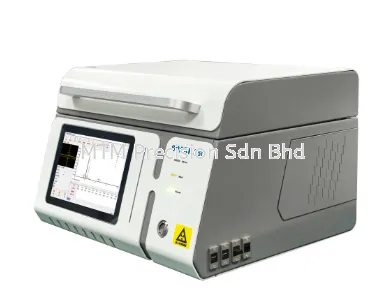
The Linshang LS310 and LS311 Water Quality Testers provide portable multi-parameter measurement for routine water quality screening.
The LS310 measures six parameters, while the LS311 measures nine.
Why Build a Water Quality Monitoring Program?
A single water measurement answers:
“What is the reading now?”
Regular monitoring can answer a more useful question:
“How has the water changed over time?”
This difference is important.
If a measurement suddenly changes, historical records provide context for deciding whether further investigation is necessary.
Step 1: Define the Purpose
Before taking measurements, decide what you want to monitor.
Examples include:
Drinking water
Tap water
RO system performance
Water filtration
Groundwater
Factory water
Fish ponds
Shrimp ponds
Seawater
Aquarium water
The application determines which parameters and sampling points are most relevant.
Step 2: Choose LS310 or LS311
The Linshang LS310 measures:
COD
TOC
TDS
UV275
EC
Temperature
It is suitable for general water quality screening applications such as drinking water, tap water, filtration systems, RO water and groundwater.
The Linshang LS311 adds:
Salinity
GH
Specific Gravity
It is therefore more suitable when applications include aquaculture, seawater, fish farms, shrimp farms or aquariums.
Step 3: Select Fixed Sampling Points
Consistency is important.
Instead of collecting samples randomly, establish fixed monitoring locations.
For a building:
Incoming Water → Storage Tank → Tap → Filtered Water
For an RO system:
Feed Water → Pre-Treatment → RO Product Water
For a factory:
Incoming Water → Treatment → Storage → Point of Use
For a fish farm:
Water Source → Inlet → Pond → Outlet
Using the same locations makes future comparisons more meaningful.
Step 4: Establish Baseline Readings
Before deciding whether a result is unusual, you need to know what normal looks like.
Take measurements during normal operating conditions and record the results.
This becomes the baseline.
Future measurements can then be compared against these values.
Step 5: Set a Monitoring Frequency
The correct frequency depends on the application.
Measurements may be taken:
Daily
Weekly
Monthly
Before maintenance
After maintenance
Before filter replacement
After filter replacement
Before water exchange
After water exchange
High-risk or rapidly changing applications may require more frequent monitoring than stable systems.
Step 6: Use a Consistent Sampling Method
Changing the sampling procedure can make results difficult to compare.
Try to keep the following reasonably consistent:
Sampling point
Sampling container
Sample handling
Measurement procedure
Timing
Instrument preparation
Consistency improves the value of trend data.
Step 7: Record the Results
Do not rely on memory.
For LS310, records can include:
Date
Time
Sampling location
COD
TOC
TDS
UV275
EC
Temperature
For LS311 applications, also record:
Salinity
GH
Specific gravity
Operational notes can also be valuable.
Step 8: Record Maintenance Activities
Water quality changes may be related to system maintenance.
Record events such as:
Filter replacement
RO membrane servicing
Storage tank cleaning
Water treatment changes
Water exchange
Equipment maintenance
This allows users to compare measurement changes with operational events.
Step 9: Look for Trends
One abnormal measurement does not always indicate a serious problem.
Look at the trend.
For example:
Normal → Normal → Normal → Slight Increase → Higher Increase
A consistent trend can be more meaningful than one isolated result.
Step 10: Investigate Significant Changes
If measurements change unexpectedly:
Repeat the test.
Check the sample container.
Confirm the sampling location.
Review the measurement procedure.
Compare with historical readings.
Check recent maintenance or operating changes.
Consider laboratory testing if the change persists.
This creates a structured troubleshooting process.
Example: RO Water Monitoring
An RO service company can establish:
Feed Water → RO Product Water
and record the LS310 readings during each service visit.
Over time, this creates a history of the system.
When results begin to change significantly, technicians have previous data for comparison.
Example: Factory Water Monitoring
A factory may establish several routine sampling points.
The maintenance or environmental team can measure water weekly or monthly and record the results.
This provides an internal monitoring record and may help identify changes before they become more significant.
Example: Fish Farm Monitoring
Using the LS311, a fish farm can assign a number to each pond.
For example:
Pond 01 / Pond 02 / Pond 03 / Pond 04
Each measurement round can record:
Temperature
Salinity
TDS
EC
GH
Specific gravity
Other LS311 parameters
Weather and water exchange information can also be recorded.
Why Reagent-Free Testing Helps Routine Monitoring
A monitoring program only works if measurements are practical enough to perform regularly.
The reagent-free approach of the LS310 and LS311 can make routine screening easier for their supported parameters.
This is especially valuable when users need to measure many sampling locations.
Portable Screening + Laboratory Testing
A strong monitoring strategy does not necessarily choose between portable and laboratory testing.
The two can work together.
A practical workflow is:
Routine Portable Screening → Detect Change → Repeat Measurement → Investigate → Laboratory Analysis When Required
This allows users to perform frequent monitoring while still using specialized laboratory methods when detailed analysis is necessary.
Water Quality Monitoring and ESG
Factories and commercial organizations are increasingly interested in structured environmental data and resource management.
Routine water monitoring can support internal environmental management and help organizations maintain better operational records.
However, portable measurements alone should not be presented as proof of ESG compliance or regulatory certification.
They are monitoring tools that can contribute data to a broader environmental management system.
Who Can Build a Water Quality Monitoring Program?
Potential users include:
Factories
Facility management companies
Water treatment companies
Water filtration suppliers
Property management companies
Fish farms
Shrimp farms
Aquaculture operators
Environmental consultants
Universities
Research institutions
Start Simple
A monitoring program does not need to be complicated.
Start with:
One Instrument + Fixed Sampling Points + Consistent Schedule + Measurement Records
As more data is collected, the monitoring program can be expanded.
The most important factor is consistency.
Water Quality Monitoring Equipment Malaysia
For Malaysian users looking to establish routine water quality screening, the Linshang LS310 and LS311 provide two portable multi-parameter options.
Choose the LS310 for general water quality applications.
Choose the LS311 when salinity, GH, specific gravity, aquaculture or seawater applications are involved.
Used consistently, these instruments can help organizations move from occasional water testing toward structured water quality trend monitoring.
Looking for Linshang LS310 or LS311 in Malaysia?
MTM Precision supplies professional water quality, environmental and industrial testing instruments in Malaysia.
Contact our team to discuss your application, required parameters and suitable water quality monitoring equipment.
Contact MTM Precision
MTM Precision Sdn. Bhd.
Showroom & Service Centre
No. 29-1 & 29-2, Jalan Bandar 18,
Pusat Bandar Puchong,
47160 Puchong, Selangor, Malaysia
🌐 Website: www.mtmpre.com.my
📧 Email: mtmpre@yahoo.com
📱 WhatsApp: +6016-660 7346
16 Aug 2026
