





How to Monitor RO Water Quality with Linshang LS310 Malaysia

How to Monitor RO Water Quality with Linshang LS310 Malaysia
Reverse osmosis, commonly known as RO, is widely used for drinking water filtration, commercial water treatment and industrial water systems.
One of the most common ways to check an RO system is by measuring TDS.
However, TDS is only one water quality parameter.
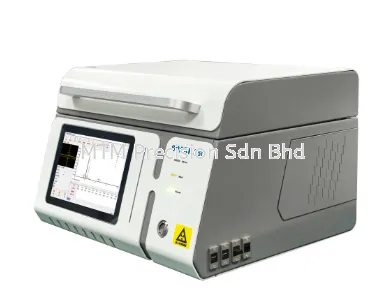
For users who want broader routine screening, the Linshang LS310 Water Quality Tester measures six parameters:
COD
TOC
TDS
UV275
EC
Temperature
This makes the LS310 useful for comparing feed water and RO-treated water while providing more information than a conventional TDS meter.
Why Monitor an RO System?
An RO system does not operate in isolation.
Its performance can be influenced by:
Incoming water quality
Membrane condition
Filter condition
Operating pressure
Maintenance
Water temperature
System configuration
Regular measurements can help users establish normal operating conditions and identify changes.
Why Is TDS Commonly Used for RO Water?
TDS measurement is popular for RO systems because reverse osmosis can significantly reduce dissolved substances.
A typical comparison is:
Feed Water TDS → RO Water TDS
This provides a convenient indicator of changes in dissolved solids.
For many basic applications, a TDS meter may be sufficient.
Why Measure More Than TDS?
TDS should not automatically be interpreted as a complete measurement of water quality.
The LS310 expands routine screening to:
COD + TOC + TDS + UV275 + EC + Temperature
This allows users to compare several indicators between the incoming and treated water.
How to Test RO Water with the LS310
A practical approach is to establish at least two sampling points.
Sample 1 – Feed Water
Collect water before it enters the RO treatment stage.
Sample 2 – RO Product Water
Collect the treated water after the RO system.
Measure both samples under reasonably consistent conditions.
Then compare the results.
Three-Point RO System Monitoring
For larger systems, users may establish additional sampling points.
For example:
Incoming Water → Pre-Treatment → RO Product Water
This can provide more information about how different stages of the treatment system affect measured water characteristics.
Record Baseline Readings
When an RO system is operating normally, record its typical readings.
These become the baseline.
Future measurements can then be compared with the established values.
A simple record may include:
Date
Feed water TDS
RO water TDS
EC
COD
TOC
UV275
Temperature
Filter replacement date
Membrane maintenance
Operating notes
Monitor Trends, Not Just One Reading
Suppose the RO water TDS changes slightly on one occasion.
This does not automatically mean the membrane has failed.
A better approach is to observe the trend:
Normal → Normal → Normal → Increasing → Increasing
A persistent change may provide a stronger reason to inspect the system.
Before and After Filter Replacement
The LS310 can also support comparisons around maintenance.
For example:
Before Filter Replacement → Replace Filter → After Filter Replacement
Recording the results creates a useful maintenance history.
The same approach can be used after membrane servicing or other water treatment work.
LS310 for Residential RO Systems
For residential applications, users may want to compare:
Tap water
Pre-filtered water
RO water
A basic TDS meter may be sufficient for simple household checks.
The LS310 becomes more relevant when a broader set of water quality indicators is required.
LS310 for Commercial RO Systems
Commercial buildings may operate RO systems for:
Drinking water
Restaurants
Offices
Hotels
Laboratories
Technical facilities
Maintenance teams can use portable screening equipment to establish routine measurement points and monitor changes over time.
LS310 for Industrial RO Systems
Factories may use RO water for process support, cleaning, utilities or other applications.
The LS310 can support preliminary monitoring of suitable water samples.
For applications requiring very specific water purity specifications, dedicated laboratory or process instrumentation may also be necessary.
Can LS310 Determine RO Membrane Rejection Rate?
RO membrane performance is commonly evaluated using conductivity or TDS measurements according to an appropriate calculation and operating procedure.
Because the LS310 provides TDS and EC, these measurements can support comparative monitoring.
However, users should follow the RO system manufacturer's recommended procedure when calculating or evaluating membrane performance.
Does Low RO TDS Mean the Water Is Safe to Drink?
Not necessarily.
Low TDS indicates a low level of dissolved solids according to the measurement, but drinking water safety involves more than TDS.
Microbiological and specific chemical contaminants may require separate testing.
Therefore:
Low TDS ≠ Complete drinking water safety certification
Where drinking water compliance is required, appropriate laboratory testing should be performed.
LS310 vs TDS Meter for RO Water
Choose a conventional TDS meter if:
You only need TDS.
You want the simplest measurement.
Budget is the main priority.
Consider the Linshang LS310 if:
You want TDS plus additional parameters.
You need routine multi-parameter screening.
You want before-and-after comparisons.
You maintain several water systems.
You need a portable professional testing instrument.
Why Reagent-Free Testing Helps RO Service Companies
Water treatment technicians may visit multiple customer sites every day.
A portable reagent-free tester can simplify routine measurements.
Potential users include:
RO system suppliers
Water filter companies
Maintenance contractors
Facility management teams
Water treatment service providers
The LS310 can be used as a screening and comparison tool during service visits.
Build a Professional RO Water Monitoring Program
A simple monitoring strategy can be:
1. Select fixed sampling points
2. Establish baseline readings
3. Test periodically
4. Record the results
5. Compare trends
6. Investigate persistent changes
7. Perform specialized or laboratory testing when required
This provides more useful information than taking occasional measurements without historical records.
RO Water Quality Tester Malaysia
For Malaysian users who want more than a basic TDS meter for RO water monitoring, the Linshang LS310 Water Quality Tester provides a convenient six-parameter solution.
Its combination of COD, TOC, TDS, UV275, EC and temperature makes it suitable for routine screening and comparison of feed water and treated water.
Looking for Linshang LS310 Water Quality Tester in Malaysia?
MTM Precision supplies professional water quality, environmental and industrial testing instruments in Malaysia.
Contact our team for product information, quotation and assistance selecting suitable equipment for RO systems, water filtration or general water quality monitoring.
Contact MTM Precision
MTM Precision Sdn. Bhd.
Showroom & Service Centre
No. 29-1 & 29-2, Jalan Bandar 18,
Pusat Bandar Puchong,
47160 Puchong, Selangor, Malaysia
🌐 Website: www.mtmpre.com.my
📧 Email: mtmpre@yahoo.com
📱 WhatsApp: +6016-660 7346
16 Aug 2026
