





Portable vs Laboratory Water Quality Testing – When to Use Linshang LS310 Malaysia

Portable vs Laboratory Water Quality Testing – When to Use Linshang LS310 Malaysia
Should you use a portable water quality tester or send the water sample to a laboratory?
The answer depends on what you need to know.
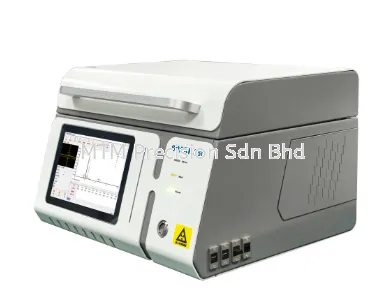
Portable instruments such as the Linshang LS310 Water Quality Tester are designed for rapid screening, routine monitoring and comparative measurements.
Laboratory analysis is more appropriate when users require specific contaminant identification, accredited results, regulatory compliance or detailed chemical and microbiological analysis.
Understanding the difference can help Malaysian users choose the correct water testing approach.
What Is Portable Water Quality Testing?
Portable water quality testing allows measurements to be performed close to the sampling location.
Instead of collecting every sample and immediately sending it to a laboratory, technicians can perform preliminary measurements on site.
The Linshang LS310 measures six parameters:
COD
TOC
TDS
UV275
EC
Temperature
Its portable and reagent-free approach makes it particularly useful for routine screening.
What Is Laboratory Water Testing?
Laboratory testing involves analyzing samples using specified analytical methods and laboratory equipment.
Depending on the required analysis, laboratories can test for parameters such as:
Heavy metals
Microorganisms
Specific chemicals
Nutrients
Organic compounds
Other regulated contaminants
Laboratory testing is particularly important when official or highly specific results are required.
Portable Testing vs Laboratory Testing
The key difference is not simply accuracy or price.
They serve different purposes.
Portable Water Quality Tester
Best suited for:
Rapid screening
Field measurement
Routine monitoring
Before-and-after comparison
Trend monitoring
Multiple sampling locations
Laboratory Water Testing
Best suited for:
Regulatory compliance
Accredited reports
Specific contaminant identification
Detailed chemical analysis
Microbiological analysis
Official documentation
In many cases, the best approach is to use both.
Example: Water Filtration System
Suppose a technician wants to evaluate changes before and after filtration.
A portable tester can quickly compare:
Incoming Water → Filtration System → Treated Water
Using the LS310, the technician can measure COD, TOC, TDS, UV275, EC and temperature.
If the objective is routine comparison, this can provide useful information.
If the customer needs certification that the treated water meets a particular drinking water standard, appropriate laboratory analysis may still be necessary.
Example: Factory Water Monitoring
A factory may have several routine sampling points:
Incoming Water → Storage Tank → RO System → Production Area
Sending every sample to a laboratory every day may not always be practical.
A portable instrument can support frequent internal screening.
If unusual readings are detected, selected samples can then be sent for detailed analysis.
Example: Groundwater
A site may have multiple groundwater wells.
Instead of treating every measurement as a full laboratory project, technicians can use portable screening to compare:
Well A → Well B → Well C
If one location shows a significant change from its historical baseline, further investigation can be carried out.
Example: Drinking Water
Portable testing can be useful for comparing:
Tap water
Filtered water
RO water
Water dispensers
Different buildings
However, drinking water safety involves parameters that cannot be determined from the LS310 alone.
Therefore, portable screening should not be used as the sole basis for declaring water safe to drink.
Why Portable Testing Is Useful for Trend Monitoring
One of the strongest applications of portable instruments is repeated measurement.
For example:
January → February → March → April
or:
Before Maintenance → After Maintenance
or:
Before Filter Replacement → After Filter Replacement
The objective is to identify changes.
Historical data can provide much more context than a single isolated measurement.
Why Laboratory Testing Is Still Important
A portable multi-parameter instrument cannot identify every contaminant.
For example, a user may specifically need to know the concentration of:
Lead
Arsenic
Specific bacteria
Pesticides
Particular industrial chemicals
These require suitable analytical methods.
Therefore, portable screening and laboratory analysis should be treated as complementary rather than competing technologies.
A Practical Two-Level Water Testing Strategy
Organizations can consider a two-level approach.
Level 1 – Routine Portable Screening
Use the LS310 for regular monitoring of suitable water samples.
Record:
COD
TOC
TDS
UV275
EC
Temperature
Compare results with established baseline values.
Level 2 – Detailed Investigation
If significant or persistent changes are detected, consider appropriate laboratory analysis.
This allows organizations to use laboratory resources more strategically while maintaining frequent internal monitoring.
When Should You Use the Linshang LS310?
The LS310 can be considered when you need:
Fast results
Portable measurement
Reagent-free routine screening
Multiple water parameters
Before-and-after comparisons
Water quality trend monitoring
Potential applications include:
Water filtration companies
Facility management
Factories
Groundwater monitoring
Drinking water screening
Building water systems
Environmental field work
When Should You Go Directly to a Laboratory?
Laboratory testing should be prioritized when:
Regulatory compliance is required.
Accredited results are required.
A specific contaminant must be measured.
Drinking water certification is required.
Legal or contractual documentation is required.
Microbiological analysis is necessary.
A standard method is specifically specified.
What About the Linshang LS311?
For users who also work with aquaculture and seawater, the Linshang LS311 expands the platform to nine parameters.
In addition to the six LS310 parameters, it measures:
Salinity
GH
Specific Gravity
This makes it more suitable for:
Fish farms
Shrimp farms
Aquaculture
Seawater
Marine aquariums
The same principle applies: portable screening is useful for routine monitoring, while specialized or regulatory testing may still require laboratory methods.
Portable Water Quality Tester Malaysia
The Linshang LS310 Water Quality Tester fills an important role between simple TDS-only measurement and full laboratory analysis.
It allows users to obtain six water quality indicators quickly for suitable samples, making it useful for routine screening and comparison.
Rather than asking whether portable testing can completely replace a laboratory, a better approach is to use each method for what it does best.
Portable tester for frequent screening.
Laboratory analysis for detailed, specific or official testing.
Together, they can form a more practical water quality monitoring strategy.
Looking for Linshang LS310 Water Quality Tester in Malaysia?
MTM Precision supplies professional water quality, environmental and industrial testing instruments in Malaysia.
Contact our team to discuss your water testing application and whether a portable water quality tester or another measurement solution is more suitable.
Contact MTM Precision
MTM Precision Sdn. Bhd.
Showroom & Service Centre
No. 29-1 & 29-2, Jalan Bandar 18,
Pusat Bandar Puchong,
47160 Puchong, Selangor, Malaysia
🌐 Website: www.mtmpre.com.my
📧 Email: mtmpre@yahoo.com
📱 WhatsApp: +6016-660 7346
16 Aug 2026
