





Linshang LS310 for Industrial Water and Factory Routine Monitoring Malaysia

Linshang LS310 for Industrial Water and Factory Routine Monitoring Malaysia
Industrial facilities may use water for production support, cleaning, cooling, RO systems, utilities and general facility operations.
When water conditions change, maintenance and environmental teams often need a fast way to perform preliminary checks before deciding whether more detailed analysis is necessary.
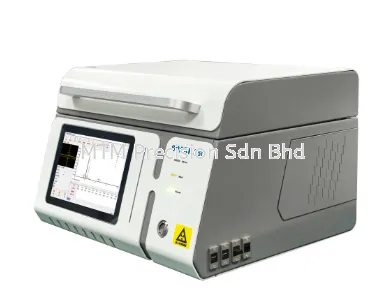
The Linshang LS310 Water Quality Tester is a portable multi-parameter instrument designed for routine screening of suitable water samples.
It measures six parameters:
COD
TOC
TDS
UV275
EC
Temperature
For factories that want to establish routine water quality monitoring points, the LS310 provides more information than a conventional TDS-only meter.
Why Monitor Industrial Water?
Industrial water conditions can change because of:
Incoming water variations
Filtration performance
RO system condition
Storage
Production changes
Maintenance activities
Treatment processes
Seasonal conditions
Routine measurements help factories establish normal baseline values and identify changes earlier.
Application: Incoming Factory Water
The incoming water supply is a useful starting point.
A factory can establish:
Point 01 – Incoming Water
and record normal LS310 readings.
Future measurements can then be compared against this baseline.
If several downstream locations change simultaneously, the incoming water can be checked first.
Application: Water Treatment System
Factories may use filtration or treatment systems before water reaches the final point of use.
A monitoring route might be:
Incoming Water → Pre-Treatment → RO System → Storage → Point of Use
The LS310 can be used at selected points to compare changes through the system.
Application: RO Water
Industrial RO systems are commonly monitored using TDS and conductivity.
The LS310 provides both TDS and EC, together with four additional parameters.
This allows maintenance teams to build a broader routine screening record.
A simple comparison is:
RO Feed Water → RO Product Water
Application: Storage Tanks
Water may remain in storage before use.
Routine measurements can compare:
Before Storage → Storage Tank → After Storage
If readings begin changing from their normal baseline, maintenance teams can investigate the system further.
Application: Utility Water
Factories may use utility water for:
Cleaning
Equipment support
General maintenance
Cooling-related applications
Facility operations
The required water specifications depend on the actual process.
The LS310 can support preliminary screening, while dedicated instruments or laboratory methods should be used when a specific process specification must be verified.
Application: Before and After Maintenance
Maintenance work can change system conditions.
For example:
Before Filter Replacement → Replace Filter → After Replacement
or:
Before RO Service → Service → After Service
Recording measurements before and after maintenance creates useful historical data.
Why Measure More Than TDS?
TDS is useful, but it represents only one aspect of water.
The LS310 provides:
COD + TOC + TDS + UV275 + EC + Temperature
This allows maintenance teams to observe several indicators instead of relying on one number.
COD for Industrial Water Screening
COD is commonly associated with water and wastewater analysis.
The LS310 provides a reagent-free COD-related measurement for suitable routine screening applications.
However, if regulatory compliance or a specified laboratory COD method is required, users should follow the required standard method.
Portable screening and compliance testing should not automatically be treated as interchangeable.
TOC for Routine Monitoring
TOC provides information related to organic carbon.
Tracking changes in TOC-related readings may provide useful additional information when comparing water samples over time.
The value is especially strong when the factory has established its own normal baseline.
EC and TDS for Treatment Systems
Electrical conductivity and TDS are commonly useful for comparing:
Incoming water
Treated water
RO feed water
RO product water
Rather than judging a system from one measurement, factories can record both parameters over time and observe trends.
Temperature as Operational Context
Water temperature can change with:
Production conditions
Time of day
Storage
Environmental temperature
Process conditions
Because the LS310 records temperature together with the other parameters, it provides useful context for historical comparison.
Build a Factory Water Monitoring Route
A simple monitoring system might use numbered sampling points:
W01 – Incoming Water
W02 – Pre-Treatment
W03 – RO Feed
W04 – RO Product
W05 – Storage Tank
W06 – Production Point
W07 – Utility Water
The maintenance team can then use the same locations during each monitoring round.
Establish Baseline Data
Baseline data is essential.
Without it, users may see a reading and ask:
“Is this high?”
But the more useful question is:
“Is this significantly different from the normal condition of this system?”
Historical data provides that context.
Example Monthly Monitoring Record
Factories can maintain a simple table containing:
Date
Sampling point
COD
TOC
TDS
UV275
EC
Temperature
Maintenance activity
Operator
Remarks
Over time, this becomes an internal water monitoring history.
What Happens When a Reading Changes?
A structured response can be:
Step 1: Repeat the measurement.
Step 2: Confirm the sampling point.
Step 3: Check the sample and container.
Step 4: Compare with historical readings.
Step 5: Check upstream and downstream sampling points.
Step 6: Review recent maintenance or process changes.
Step 7: Perform appropriate detailed or laboratory analysis if necessary.
This is more effective than making conclusions from one abnormal number.
Portable Screening and Laboratory Analysis
Factories do not necessarily need to choose one or the other.
A practical strategy is:
Routine Portable Screening → Identify Change → Investigate → Laboratory Analysis When Required
Portable instruments allow frequent internal monitoring.
Laboratories provide specialized analysis when more detailed or official results are needed.
Can LS310 Be Used for Wastewater Compliance?
The LS310 should not automatically be considered a replacement for regulatory wastewater testing.
Environmental compliance may require:
Specific sampling procedures
Recognized standard methods
Accredited laboratories
Official documentation
Users should follow the applicable Malaysian regulatory and contractual requirements.
The LS310 is better positioned as a routine screening and trend-monitoring tool.
Supporting ESG and Environmental Management
Factories are increasingly expected to maintain better environmental and operational records.
Routine water monitoring can contribute data to internal environmental management programs.
For example:
Water Point → Measurement → Date → Trend → Corrective Action
This creates better visibility into water-related operations.
However, portable measurements alone should not be described as proof of ESG or regulatory compliance.
Who May Use the Linshang LS310?
Potential industrial users include:
Manufacturing factories
Electronics plants
Food processing facilities
Industrial maintenance teams
Facility management departments
Water treatment contractors
Environmental service companies
Engineering companies
Technical laboratories
The suitability of the LS310 depends on the water sample and the required parameters.
Industrial Water Quality Tester Malaysia
For Malaysian factories looking for a convenient multi-parameter instrument for routine water screening, the Linshang LS310 Water Quality Tester provides six parameters in one portable platform.
Its main value is helping industrial users establish a structured monitoring process:
Sampling Points → Baseline → Routine Testing → Trend Analysis → Investigation
For factories moving toward more systematic preventive maintenance and environmental monitoring, this approach can be more useful than occasional testing only after a problem appears.
Looking for Linshang LS310 Water Quality Tester in Malaysia?
MTM Precision supplies professional water quality, environmental and industrial testing instruments in Malaysia.
Contact our team to discuss your factory water, RO system, industrial water treatment or routine monitoring application.
Contact MTM Precision
MTM Precision Sdn. Bhd.
Showroom & Service Centre
No. 29-1 & 29-2, Jalan Bandar 18,
Pusat Bandar Puchong,
47160 Puchong, Selangor, Malaysia
🌐 Website: www.mtmpre.com.my
📧 Email: mtmpre@yahoo.com
📱 WhatsApp: +6016-660 7346
16 Aug 2026
