





OTDR Buying Guide for Fiber Optic Contractors Malaysia

OTDR Buying Guide for Fiber Optic Contractors Malaysia
For a fiber optic contractor, an OTDR can become one of the most useful troubleshooting instruments in the toolbox.
Basic instruments such as an Optical Power Meter and Visual Fault Locator are valuable for everyday fiber work, but they cannot provide all the information needed when troubleshooting long or hidden fiber links.
When contractors need to determine where an abnormal event occurs along a fiber cable, an OTDR becomes much more important.
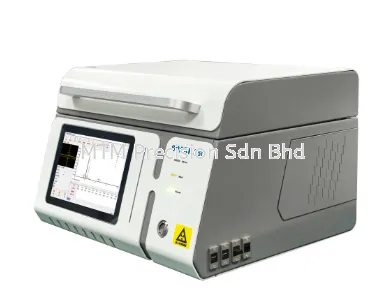
This guide explains what Malaysian fiber contractors should consider when choosing an OTDR and where a multifunction tester such as the Noyafa NF-981 fits into everyday field work.
When Should a Contractor Buy an OTDR?
You should consider adding an OTDR when your jobs regularly involve:
Long fiber links
Underground fiber
FTTH installation
Fiber fusion splicing
CCTV fiber backbones
Factory fiber networks
Building backbone fiber
Inter-building connections
Fiber fault troubleshooting
Telecom maintenance
The more difficult the cable route is to inspect physically, the more valuable OTDR distance information becomes.
OPM and VFL May Not Be Enough
Suppose a customer reports that a 1.5 km fiber link is not working.
An Optical Power Meter confirms that the received signal is missing.
A VFL does not reveal anything because most of the cable is underground.
What happens next?
Without an OTDR, the contractor may have very little information about where to begin looking.
With an OTDR, the technician can analyse the link and estimate the distance to the suspected fault.
That can turn a large search area into a much more targeted inspection.
What Does an OTDR Measure?
An OTDR sends optical pulses through the fiber and analyses the returned signal.
Depending on the link and instrument, technicians can obtain information about:
Fiber length
Connector events
Fusion splice events
Reflective events
Loss events
Fiber endpoint
Possible breaks
The OTDR trace effectively provides a distance-based view of the physical fiber path.
Factor 1: Wavelength
For single-mode fiber, two commonly used OTDR wavelengths are:
1310nm
and
1550nm
The Noyafa NF-981 supports both.
Dual-wavelength testing provides more information about the fiber condition.
For example, certain bending-related losses can become more noticeable at 1550nm.
For contractors working regularly with single-mode fiber, having both wavelengths is useful.
Factor 2: Dynamic Range
Dynamic range is one of the specifications buyers often compare.
The NF-981 is specified at approximately:
24 dB at 1310nm
22 dB at 1550nm
Dynamic range relates to how much optical loss the OTDR can handle while still obtaining useful information.
Do not select an OTDR only by asking:
"How many kilometres can it test?"
A shorter network with significant loss can sometimes be more demanding than a longer low-loss point-to-point fiber.
Factor 3: Test Distance
The NF-981 has a specified maximum OTDR test distance of approximately:
60 km
This can cover many general contractor applications.
However, maximum distance should never be interpreted as a guarantee that every 60 km optical network can be analysed equally well.
Actual performance depends on:
Fiber attenuation
Connector loss
Splice loss
Splitters
Network architecture
OTDR settings
Distance and dynamic range should always be considered together.
Factor 4: Dead Zone
Dead zone determines how well an OTDR can distinguish events located close together.
This becomes important for:
Short fiber links
Patch panels
Closely spaced connectors
Building networks
Data center fiber
Contractors should consider both:
Event Dead Zone
and
Attenuation Dead Zone
An OTDR with a long maximum distance is not automatically ideal for short, connector-dense networks.
Factor 5: Event Analysis
Experienced fiber technicians may be comfortable reading conventional OTDR traces.
New users may find them difficult.
Intelligent event analysis can simplify the detected events and present the fiber link in a more understandable way.
The NF-981 includes intelligent event analysis, which can help users identify:
Event distance
Event sequence
Loss events
Reflective events
Fiber endpoint
This is particularly useful when a company is introducing OTDR testing to technicians who previously used only OPM and VFL instruments.
Factor 6: Optical Power Meter
Contractors frequently need to check optical power during installation and troubleshooting.
The NF-981 includes a built-in OPM with a specified range of approximately:
-50 dBm to +26 dBm
This allows technicians to perform common optical power checks without necessarily carrying another basic OPM for every job.
Factor 7: Visual Fault Locator
A VFL is still useful even when you own an OTDR.
The tools answer different questions.
OTDR → Approximately where is the event?
VFL → Can I visually identify accessible damage?
The NF-981 includes both functions.
For example, the OTDR may indicate a problem close to a communication cabinet.
The technician can then use the VFL to inspect accessible fiber and patch cords.
Factor 8: Optical Laser Source
An optical laser source can be used with an appropriate Optical Power Meter for optical loss testing.
Having the source integrated into the same instrument can add convenience for field contractors.
It reduces the number of separate electronic instruments required for certain routine jobs.
Factor 9: File Storage
For contractors, test records can be valuable.
OTDR measurements can help document:
Fiber length
Event locations
Link condition
Baseline measurements
The NF-981 supports SOR file storage.
Keeping OTDR records from the installation stage can be useful if the customer later reports a problem.
Technicians can compare current measurements with earlier results.
Factor 10: Copper Network Testing
Many fiber contractors also work with Ethernet cabling.
A typical project may use:
Fiber Backbone → Network Switch → Cat6 → End Equipment
The NF-981 includes RJ45 wire mapping for basic copper cable checks.
This does not replace a professional cable certifier, but it can be convenient for everyday continuity and wiring troubleshooting.
What Accessories Does an OTDR Contractor Need?
Buying the OTDR alone is not enough.
Contractors should also consider appropriate accessories such as:
OTDR launch cable
Receive cable
Fiber adapters
Fiber cleaning tools
Connector cleaning supplies
Suitable patch cords
Protective carrying equipment
Connector cleanliness is particularly important.
Testing through contaminated connectors can produce poor results and may contaminate other interfaces.
Why Use an OTDR Launch Cable?
An OTDR produces a dead zone near strong reflective events.
If the fiber under test is connected directly to the OTDR, the first connector may be difficult to evaluate properly.
A launch cable creates additional fiber distance:
OTDR → Launch Cable → First Connector → Fiber Under Test
This allows the OTDR to evaluate the first connection more effectively.
For more complete link testing, a receive cable can also be placed at the far end.
OTDR for FTTH Contractors
FTTH technicians may use:
OPM → Optical power checking
VFL → Accessible fault inspection
OTDR → Distance-based fault location
For technicians who perform maintenance as well as installation, OTDR capability can significantly improve troubleshooting.
OTDR for CCTV Contractors
Large CCTV installations may use fiber to connect remote network switches.
If a group of cameras goes offline because of a fiber backbone problem, OTDR testing can help determine where the abnormal event occurs.
This is especially useful on:
Factories
Campuses
Warehouses
Residential developments
Large commercial sites
OTDR for Network Contractors
Network contractors increasingly encounter mixed infrastructure.
A project may contain:
Single-mode fiber
Fiber patch panels
SFP modules
Network switches
Cat6 cabling
A multifunction instrument such as the NF-981 can therefore be useful because it combines fiber diagnostic functions with basic RJ45 wire mapping.
OTDR for Industrial Contractors
Factories and industrial sites often have long cable routes between buildings.
If fiber passes through underground ducts or inaccessible areas, manual inspection can be difficult.
OTDR distance measurement allows technicians to narrow the troubleshooting area before opening cabinets, manholes or cable routes.
Should You Buy the Cheapest OTDR?
Price matters, especially for contractors.
But purchasing solely on price can be expensive in another way.
If an OTDR cannot handle the type of network you regularly test, technicians may still need to rent or purchase another instrument.
Before comparing prices, define your application:
What fiber do we normally test?
How long are the links?
Do they contain splitters?
Do we mainly troubleshoot or perform certification?
What reports do our customers require?
Then select the instrument.
Is Noyafa NF-981 Suitable for Contractors?
The NF-981 is particularly relevant for contractors who want a portable multifunction instrument for general fiber installation and troubleshooting.
Its main combination is:
OTDR + OPM + VFL + Optical Laser Source + RJ45 Wire Mapping
This can make it a practical upgrade for teams currently carrying only basic fiber testers.
For complex PON, specialised telecom networks or formal certification work, contractors should evaluate whether more advanced equipment is required.
OTDR Buying Checklist for Contractors
Before purchasing an OTDR, check:
Fiber type
Required wavelength
Typical fiber distance
Dynamic range
Dead zone
Network architecture
Splitter requirements
Event analysis
OPM function
VFL function
File storage
Required reports
Launch cable availability
After-sales support
Choosing according to actual jobs is more important than selecting the instrument with the longest advertised range.
Noyafa NF-981 OTDR Malaysia
For Malaysian fiber contractors who are moving beyond basic optical power and VFL testing, the Noyafa NF-981 provides a practical entry into OTDR-based troubleshooting.
Its main advantage is the ability to combine several frequently used field functions in one tester.
Instead of only determining:
"The fiber is not working."
the contractor can move toward answering:
"Where along the fiber should we investigate?"
For installation and maintenance teams, that can save valuable troubleshooting time.
Contact MTM Precision
For Noyafa NF-981 OTDR Fiber Tester Malaysia, OTDR selection, fiber optic contractor equipment and technical enquiries, contact MTM Precision.
MTM Precision Sdn Bhd
No. 29-1 & 29-2, Jalan Bandar 18,
Pusat Bandar Puchong,
47160 Puchong, Selangor, Malaysia.
Website: www.mtmpre.com.my
WhatsApp: +6016-660 7346
Email: mtmpre@yahoo.com
24 Aug 2026


