





VFL vs OTDR: Which Fiber Fault Locator Do You Need Malaysia

VFL vs OTDR: Which Fiber Fault Locator Do You Need Malaysia
A fiber optic link stops working.
Should you use a Visual Fault Locator (VFL) or an OTDR (Optical Time Domain Reflectometer)?
Both instruments can help troubleshoot fiber problems, but they work very differently.
A VFL is simple, fast and useful for visible or accessible faults.
An OTDR becomes much more valuable when the cable is long, hidden or difficult to inspect because it can estimate the distance to events along the fiber.
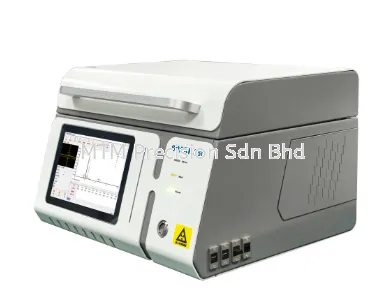
For Malaysian fiber contractors, FTTH technicians, CCTV installers and maintenance teams, understanding the difference helps determine when a basic VFL is enough and when it is time to use an OTDR such as the Noyafa NF-981.
What Is a Visual Fault Locator?
A Visual Fault Locator sends visible red laser light through an optical fiber.
When the fiber has a severe bend, break or other accessible problem, red light may escape from the damaged area.
This allows technicians to visually identify certain faults.
A VFL is commonly used for:
Patch cord checking
Fiber identification
Short-distance continuity checks
Severe bend detection
Accessible fiber breaks
Connector troubleshooting
Its simplicity makes it one of the most useful basic tools for fiber technicians.
What Is an OTDR?
An OTDR works differently.
It sends optical pulses into the fiber and analyses the light returning to the instrument.
From this information, an OTDR can estimate:
Fiber length
Event distance
Connector locations
Splice events
High-loss events
Reflective events
Fiber endpoint
Possible break location
An OTDR therefore provides a distance-based view of what is happening along the fiber.
VFL vs OTDR: The Simple Difference
A useful way to remember the difference is:
VFL → Can I see the fault?
OTDR → How far away is the event?
This distinction explains why both tools remain useful.
An OTDR does not make the VFL obsolete.
And a VFL does not replace an OTDR.
Example 1: Broken Patch Cord
Suppose a 3-metre fiber patch cord is not working.
Using an OTDR may be unnecessary.
A VFL can be connected to the patch cord.
If red light escapes from a damaged section, the fault may be immediately visible.
For short and accessible fiber, VFL is often the faster choice.
Example 2: Underground Fiber Cable
Now consider a 2 km fiber cable running underground between two factory buildings.
The network suddenly fails.
A VFL is connected.
But most of the cable is inside an underground conduit.
Even if red light escapes from the damaged fiber, the technician cannot see it.
An OTDR is much more useful.
If it indicates a major event at approximately:
1.25 km
the maintenance team can compare that distance with the underground cable route and investigate the corresponding area.
Example 3: CCTV Fiber Backbone
A CCTV system uses fiber between the control room and a remote PoE switch.
All cameras connected to that switch go offline.
The fiber route is approximately 800 metres.
A VFL may help check patch cords and accessible cabinet connections.
If no visible fault is found, an OTDR can analyse the longer fiber route.
This demonstrates how the tools can be used together.
When Is a VFL Better?
A VFL is particularly useful when:
Fiber is short
Fiber is accessible
You need to identify a fiber
You are checking patch cords
You suspect a severe bend
You need a quick continuity check
For these tasks, the simplicity of a VFL is an advantage.
When Is an OTDR Better?
An OTDR becomes more useful when:
Fiber is long
Cable is underground
Cable passes through conduits
The route is difficult to access
Multiple splices are present
Fault location by distance is required
You need to analyse events
You need fiber length information
The longer and more inaccessible the cable becomes, the more valuable OTDR information is.
Can a VFL Measure Fault Distance?
No.
A VFL does not normally tell you:
"The fault is 750 metres away."
It simply sends visible light through the fiber.
The technician needs physical access to see where the light escapes.
An OTDR is specifically useful when distance information is required.
Can an OTDR Visually Show the Break?
No.
An OTDR does not normally produce visible red light at the fault location for the technician to see.
It analyses optical events and estimates their distance.
This is why having both functions can be useful.
Why NF-981 Combines OTDR and VFL
The Noyafa NF-981 includes both:
OTDR
and
Visual Fault Locator
This allows technicians to change troubleshooting methods without changing instruments.
For example:
Step 1 — OTDR
Locate a suspicious event at approximately 120 metres.
Step 2 — Check Cable Route
Determine where the 120-metre fiber distance corresponds physically.
Step 3 — VFL
If the suspected fiber section is accessible, use visible red light to help inspect the cable.
This combination can make troubleshooting more efficient.
OTDR for Connector and Splice Events
A VFL provides limited information about optical loss.
An OTDR can provide more detailed event information.
For example, it can help technicians identify:
Reflective connector events
Non-reflective splice events
High-loss points
Fiber endpoints
This makes OTDR more useful for analysing an installed fiber network rather than simply identifying a visible break.
VFL for Fiber Identification
VFL still has a major advantage for fiber identification.
Imagine a cabinet contains many fibers.
A technician needs to determine which fiber corresponds to a particular connection at the other end.
Sending visible red light through the fiber can help identify the correct strand when the setup and connector type permit it.
This is a simple task where OTDR may not be the most convenient tool.
OTDR for Fiber Length Measurement
Another advantage of OTDR is fiber distance measurement.
If a technician does not know the approximate length of a fiber link, an OTDR can help estimate it.
This can be useful for:
Network documentation
Maintenance
Fault location
Cable route investigation
A VFL cannot provide this information.
What About an Optical Power Meter?
An Optical Power Meter provides another type of information.
A simple comparison is:
VFL → Visible fault checking
OPM → Optical power measurement
OTDR → Event and distance analysis
Professional troubleshooting may involve all three.
The NF-981 integrates these functions into one instrument.
Noyafa NF-981 Main Fiber Functions
The NF-981 provides:
1310nm / 1550nm OTDR
Optical Power Meter
Visual Fault Locator
Optical laser source
Intelligent event analysis
SOR file storage
It also includes basic RJ45 wire mapping for copper network cable checks.
This combination makes it suitable for technicians who handle mixed fiber and Ethernet infrastructure.
VFL vs OTDR for FTTH
For FTTH technicians:
Use VFL When:
Checking short drop fiber
Identifying fibers
Looking for accessible breaks
Checking severe bends
Use OTDR When:
Fault distance is unknown
Fiber route is long
Splice events need investigation
Hidden cable damage is suspected
Both tools can therefore be valuable.
VFL vs OTDR for CCTV
For CCTV contractors, VFL is useful around:
Network cabinets
Patch cords
Fiber termination points
OTDR becomes more valuable for:
Underground fiber
Inter-building fiber
Long CCTV backbones
Factory perimeter networks
A contractor working regularly on large CCTV systems may benefit from carrying both.
VFL vs OTDR for Factories
Industrial sites often contain long fiber routes between buildings.
Many sections may be underground or installed inside cable trays.
A VFL can help around accessible cabinets.
An OTDR can help investigate the long-distance physical link.
This is another situation where the tools complement each other.
Do You Need an OTDR If You Already Have a VFL?
If most of your work involves short and accessible fiber, perhaps not.
But if you increasingly encounter:
Long fiber cables
Underground links
Multiple splices
Hidden faults
Inter-building networks
then a VFL alone may become limiting.
The question is not whether the VFL still works.
The question is whether it provides enough information for the jobs you are now handling.
When Should You Upgrade from VFL to OTDR?
Consider adding OTDR capability when technicians frequently say:
"We know the fiber has a problem, but we don't know where."
That is precisely the problem an OTDR is designed to help solve.
A multifunction OTDR such as the Noyafa NF-981 can be particularly useful because the VFL remains available in the same tester.
VFL vs OTDR Malaysia: Which Should You Buy?
Choose a VFL if your main requirement is:
Short-distance visual fiber troubleshooting.
Choose an OTDR if your main requirement is:
Locating and analysing events by distance along a fiber link.
Choose a multifunction tester such as the Noyafa NF-981 if you regularly need:
OTDR + OPM + VFL + Optical Laser Source
in one portable field instrument.
The correct choice depends on the complexity of your fiber work.
Noyafa NF-981 OTDR Malaysia
For Malaysian fiber installers, FTTH technicians, CCTV contractors and maintenance teams moving from basic fiber troubleshooting into longer and more complex networks, OTDR capability can be a significant upgrade.
The Noyafa NF-981 allows technicians to use the VFL when the problem is visible and accessible, then switch to OTDR when they need distance-based fault information.
That combination makes the tester useful across a much wider range of fiber troubleshooting situations.
Contact MTM Precision
For Noyafa NF-981 OTDR Fiber Tester Malaysia, VFL, Optical Power Meter, fiber fault locator and technical enquiries, contact MTM Precision.
MTM Precision Sdn Bhd
No. 29-1 & 29-2, Jalan Bandar 18,
Pusat Bandar Puchong,
47160 Puchong, Selangor, Malaysia.
Website: www.mtmpre.com.my
WhatsApp: +6016-660 7346
Email: mtmpre@yahoo.com
24 Aug 2026


