





How to Choose a Thermal Imaging Camera: Buying Guide & Noyafa NF-522 Malaysia

How to Choose a Thermal Imaging Camera: Buying Guide & Noyafa NF-522 Malaysia
Choosing a thermal imaging camera can be confusing.
Product specifications may include thermal resolution, thermal sensitivity, temperature range, emissivity, frame rate and display size—but the highest specification is not automatically the best choice for every user.
An electrician inspecting distribution boards has different requirements from an HVAC technician checking ducts or a building inspector investigating moisture-related temperature patterns.
The best approach is to select a thermal camera according to the actual inspection application.
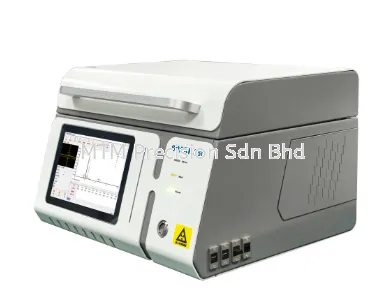
The Noyafa NF-522 Thermal Imaging Camera, featuring 200 × 150 infrared resolution, 65mK thermal sensitivity and a -40°C to 330°C measurement range, is one option for general electrical, industrial, HVAC and building inspection.
1. Start with Your Application
Before comparing specifications, answer one question:
What do you want to inspect?
Common thermal imaging applications include:
Electrical panels
Circuit breakers
Motors
Bearings
Pumps
Compressors
HVAC systems
Building surfaces
Water-leak investigations
Automotive equipment
Solar PV systems
Facility maintenance
The application determines which specifications matter most.
2. Understand Thermal Resolution
Thermal resolution is one of the most important specifications.
Common detector resolutions may include:
80 × 60
96 × 96
120 × 90
160 × 120
200 × 150
256 × 192
Higher professional resolutions
The Noyafa NF-522 provides:
200 × 150 thermal resolution
which equals approximately:
30,000 thermal pixels
More native thermal pixels generally provide more spatial thermal information.
3. Is 200 × 150 Resolution Enough?
For many routine applications, 200 × 150 can be a practical resolution.
Examples include:
DB board inspection
Motor inspection
HVAC troubleshooting
Pump maintenance
Building inspection
General preventive maintenance
However, users inspecting very small targets from longer distances or requiring advanced professional thermography may benefit from higher thermal resolution.
Target size and working distance should always be considered.
4. Check Thermal Sensitivity
Thermal sensitivity describes how well the thermal imaging system can distinguish relatively small temperature differences.
The NF-522 is specified at:
65mK
A lower NETD or thermal sensitivity value generally indicates better ability to distinguish subtle temperature differences under the specified test conditions.
This can be useful for:
HVAC
Building inspection
Insulation assessment
Preventive maintenance
Subtle thermal-pattern comparison
5. Do Not Confuse Sensitivity with Accuracy
A common mistake is assuming that 65mK means ±0.065°C measurement accuracy.
It does not.
Thermal sensitivity relates to distinguishing small temperature differences.
Measurement accuracy relates to how close the displayed temperature is to the actual target temperature under specified conditions.
Always treat these as separate specifications.
6. Check the Temperature Range
The thermal camera must cover the expected temperatures of your application.
The NF-522 provides a specified range of:
-40°C to 330°C
This is suitable for many general:
Electrical
Mechanical
HVAC
Building
Automotive
Maintenance
applications.
However, if your target regularly exceeds 330°C, you should select an instrument designed for a higher temperature range.
7. Do You Need Adjustable Emissivity?
For serious temperature measurement, emissivity matters.
Different surfaces emit infrared radiation differently.
The NF-522 provides adjustable emissivity from:
0.1 to 1.0
This is useful when working with different materials.
Examples may include:
Painted surfaces
Plastic
Rubber
Concrete
Wood
Oxidized metal
Metallic surfaces
Reflective bare metals require particular care.
8. Consider Reflective Surfaces
Thermal cameras do not behave equally well on every surface.
Polished metals can reflect infrared energy from surrounding objects.
This can produce misleading temperature readings.
For electrical and industrial applications, users should understand:
Emissivity
Reflections
Viewing angle
Surface condition
A good thermal camera still requires good measurement technique.
9. Consider Target Size
A large motor is easier to inspect than a tiny electrical terminal at the same distance.
As the target becomes smaller or the working distance increases, fewer thermal pixels represent the target.
Therefore, consider:
Target Size + Distance + Thermal Resolution
together.
Do not choose a thermal camera based on resolution alone.
10. Electrical Inspection Requirements
For electrical work, a thermal camera should help technicians quickly locate abnormal hot spots.
Potential targets include:
Distribution boards
Breakers
Terminals
Contactors
Relays
Busbars
Motor control panels
The NF-522's 200 × 150 thermal image provides significantly more visual information than a conventional spot infrared thermometer when searching for unknown hot spots.
11. Factory Maintenance Requirements
For factory maintenance, versatility is important.
One thermal camera may be used to inspect:
Electrical Panels + Motors + Bearings + Pumps + Compressors + HVAC
This is where a general-purpose thermal camera can provide good value.
The maintenance team can use the same instrument across multiple inspection routes.
12. HVAC Requirements
HVAC applications often involve temperature distribution rather than extremely high temperatures.
Possible inspection areas include:
Air-conditioning equipment
Ducts
Air vents
Insulated surfaces
Motors
Pumps
Electrical components
Thermal sensitivity can be particularly relevant because some HVAC temperature differences may be subtle.
13. Building Inspection Requirements
Building inspectors may use thermal imaging to locate temperature anomalies around:
Walls
Ceilings
Floors
Insulation
HVAC areas
Suspected moisture locations
Remember:
Thermal cameras do not directly see water through walls.
They show surface-temperature differences that may help locate areas for further investigation.
14. Thermal Camera vs Infrared Thermometer
If you already know exactly where to measure, an infrared thermometer may be sufficient.
For example:
“What is the temperature of this motor housing?”
If you need to locate the problem first, thermal imaging is more useful.
For example:
“Which motor is overheating?”
The difference is:
IR Thermometer → Measure a Point
Thermal Camera → Find the Pattern
15. Consider Battery Capacity
Field technicians may use a thermal camera throughout the working day.
The NF-522 features a 5000mAh battery, supporting portable inspection work.
Battery capacity is worth considering if the camera will be used for long maintenance routes or multiple job sites.
16. Consider Durability
Industrial instruments are often used in demanding environments.
The NF-522 is specified with up to 2-metre drop resistance.
This can be useful for technicians working in:
Factories
Plant rooms
Construction environments
Building maintenance
Field service
Durability should still be combined with proper instrument handling.
17. Consider Display and Usability
The NF-522 uses a 2.8-inch TFT display.
A thermal camera should allow the technician to:
View temperature patterns clearly
Identify hot and cold areas
Navigate settings efficiently
Adjust emissivity when required
Ease of use is particularly important for maintenance teams where several technicians may share the same instrument.
18. Do You Need a High Frame Rate?
Frame rate affects how frequently the thermal image updates.
The NF-522 is specified at:
9Hz
For routine inspection of relatively stationary electrical, mechanical, HVAC and building targets, this can be suitable.
Applications involving rapidly moving targets or specialized thermography may require different performance.
19. Do You Need Professional Thermography or Routine Troubleshooting?
This is an important buying question.
Some users need:
Routine troubleshooting and maintenance screening.
Others need:
Advanced professional thermography, detailed analysis and specialized reporting.
These are not necessarily the same requirement.
The NF-522 is better positioned as a practical handheld thermal camera for general inspection and troubleshooting.
For specialized thermography projects, users should select equipment according to the applicable technical and reporting requirements.
20. Avoid Buying by Specification Alone
Do not automatically choose a thermal camera because it has:
The highest temperature range
The largest display
The lowest price
The highest advertised resolution
Instead, ask:
What problem am I trying to solve?
Then select the specifications that solve that problem.
Thermal Camera Buying Checklist
Before purchasing, ask:
[ ] What equipment will I inspect?
[ ] What thermal resolution do I need?
[ ] What is the target size?
[ ] What is the working distance?
[ ] What temperature range is required?
[ ] How important is thermal sensitivity?
[ ] Do I need adjustable emissivity?
[ ] Will I inspect reflective metals?
[ ] Do I need long battery life?
[ ] Will the camera be used in industrial environments?
[ ] Is this for routine troubleshooting or professional thermography?
[ ] What is my budget?
Answering these questions makes product selection much easier.
Who Is the Noyafa NF-522 Suitable For?
The NF-522 can be considered by:
Electricians
Electrical contractors
Factory maintenance teams
HVAC technicians
Facility managers
M&E contractors
Building inspectors
Automotive workshops
Solar maintenance teams
Engineering service companies
Noyafa NF-522 Key Specifications
The NF-522 offers:
Infrared resolution: 200 × 150
Thermal pixels: Approximately 30,000
Thermal sensitivity: 65mK
Temperature range: -40°C to 330°C
Frame rate: 9Hz
Adjustable emissivity: 0.1–1.0
Display: 2.8-inch TFT
Battery capacity: 5000mAh
Drop resistance: Up to 2 metres
This combination makes it a practical option for many general inspection and maintenance applications.
Is the Noyafa NF-522 Worth Considering?
If your main applications involve:
Electrical + HVAC + Motors + Pumps + Building Maintenance
the NF-522 offers a useful balance of thermal resolution, sensitivity, measurement range and portability.
Its biggest advantage is that one instrument can support multiple maintenance applications.
Instead of buying a thermal camera solely for one task, factories and facility teams can use it across several inspection routes.
Best Thermal Camera for Your Application
There is no single “best thermal camera” for everyone.
A better question is:
“What is the best thermal camera for my application and budget?”
For routine troubleshooting and preventive maintenance, the Noyafa NF-522 is one model worth evaluating.
For specialized or higher-end thermography, different equipment may be appropriate.
Looking for a Thermal Imaging Camera in Malaysia?
MTM Precision supplies testing and measurement instruments for electrical inspection, factory maintenance, HVAC, facility management and building inspection.
If you are unsure which thermal camera specifications you need, tell us:
Application + Target + Temperature Range + Working Distance + Budget
and we can help you evaluate a suitable option.
Contact us for Noyafa NF-522 Thermal Imaging Camera availability, quotation and application advice.
Contact MTM Precision
MTM Precision Sdn Bhd
No. 29-1 & 29-2, Jalan Bandar 18,
Pusat Bandar Puchong,
47160 Puchong, Selangor, Malaysia.
Website: www.mtmpre.com.my
WhatsApp: +6016-660 7346
Email: mtmpre@yahoo.com
25 Aug 2026

