






What Does 65mK Thermal Sensitivity Mean? Noyafa NF-522 Thermal Camera Guide Malaysia

What Does 65mK Thermal Sensitivity Mean? Noyafa NF-522 Thermal Camera Guide Malaysia
When comparing thermal imaging cameras, most buyers immediately look at thermal resolution and temperature range.
However, another important specification is thermal sensitivity, often associated with NETD.
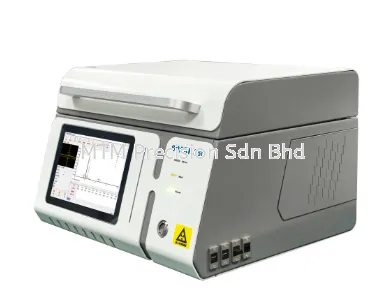
The Noyafa NF-522 Thermal Imaging Camera is specified with 65mK thermal sensitivity, together with 200 × 150 infrared resolution and a -40°C to 330°C temperature measurement range.
But what does 65mK actually mean, and why does it matter for electrical, HVAC, building and industrial inspections?
What Is Thermal Sensitivity?
Thermal sensitivity describes how well a thermal imaging system can distinguish relatively small temperature differences in a scene.
It is commonly expressed in:
mK — millikelvin
A smaller thermal sensitivity figure generally indicates that the thermal imaging system can distinguish finer temperature differences, subject to the test conditions and overall camera design.
This can affect how clearly subtle thermal patterns appear in an image.
What Does 65mK Mean?
The NF-522 is specified with:
65mK thermal sensitivity
Since:
1 K = 1°C of temperature difference
and:
1 mK = 0.001 K
65mK corresponds to approximately:
0.065°C of temperature difference
This should not be confused with temperature measurement accuracy.
Thermal sensitivity and accuracy are different specifications.
Is 65mK the Same as ±0.065°C Accuracy?
No.
This is an important distinction.
A thermal sensitivity of 65mK does not mean that every temperature reading is accurate to ±0.065°C.
Thermal sensitivity describes the ability to distinguish small thermal differences in the image.
Temperature accuracy describes how close a measured temperature is to the actual temperature under specified conditions.
Therefore:
Thermal Sensitivity ≠ Temperature Accuracy
Why Does Thermal Sensitivity Matter?
Imagine two surfaces with only a small temperature difference.
A thermal imaging system with suitable sensitivity may display clearer separation between those areas.
This can help when looking for subtle thermal patterns.
Applications where this may matter include:
HVAC troubleshooting
Building inspection
Insulation assessment
Electrical inspection
Motor inspection
Preventive maintenance
Moisture-related screening
Not every useful thermal anomaly is extremely hot or cold.
Thermal Sensitivity for Electrical Inspection
Electrical faults can sometimes produce obvious hot spots.
In these cases, even a relatively large temperature difference may be easy to see.
However, developing conditions may initially create smaller thermal differences.
Thermal sensitivity can help technicians distinguish these patterns.
For example, during an electrical panel inspection, several comparable connections may appear close in temperature.
One connection showing a subtle but consistent thermal difference may justify closer investigation.
Thermal Sensitivity for HVAC Inspection
HVAC applications can involve relatively gradual temperature differences.
A technician may be looking at:
Air ducts
Ceiling areas
Walls
Insulated pipes
HVAC equipment
Air-conditioning components
The temperature contrast may not always be dramatic.
Good thermal sensitivity helps reveal finer thermal patterns across these surfaces.
Thermal Sensitivity for Building Inspection
Building inspection is another application where small temperature differences can matter.
Possible targets include:
Walls
Ceilings
Floors
Insulation
Areas around windows
HVAC-related surfaces
Suspected moisture areas
Thermal imaging does not directly see moisture or insulation behind a wall.
Instead, it detects surface-temperature patterns.
The ability to distinguish subtle temperature differences can therefore be valuable.
Thermal Sensitivity for Motor Inspection
Motors and rotating equipment generate heat during normal operation.
Maintenance technicians often compare similar components rather than simply looking for extremely hot areas.
For example:
Motor A → normal thermal pattern
Motor B → normal thermal pattern
Motor C → slightly different bearing-area pattern
The thermal difference may provide an early clue that Motor C deserves further inspection.
65mK vs Thermal Resolution
Thermal sensitivity and thermal resolution should not be confused.
The NF-522 has:
Thermal Resolution: 200 × 150
Thermal Sensitivity: 65mK
These specifications answer different questions.
Thermal Resolution
How many infrared detector pixels are available?
For the NF-522:
200 × 150 = approximately 30,000 thermal pixels
Thermal Sensitivity
How well can the thermal imaging system distinguish small temperature differences?
Both contribute to image usefulness.
Thermal Sensitivity vs Temperature Range
Temperature range is another separate specification.
The NF-522 covers:
-40°C to 330°C
This tells you the temperatures the instrument is designed to measure within its specified operating modes.
It does not tell you how much thermal image detail the camera can distinguish.
Therefore, when comparing thermal cameras, consider:
Resolution + Sensitivity + Temperature Range
rather than looking at only one number.
Is Lower mK Always Better?
In general, a lower thermal sensitivity figure indicates better ability to distinguish small temperature differences under the stated test conditions.
However, buying a thermal camera should not be based on NETD alone.
Other important factors include:
Thermal resolution
Measurement accuracy
Temperature range
Optics
Target size
Working distance
Emissivity adjustment
Imaging modes
Application
Budget
A camera with excellent sensitivity but unsuitable resolution or temperature range may still be the wrong choice for a particular application.
Why Image Quality Depends on More Than NETD
A useful thermal image depends on the complete imaging system.
Factors can include:
Detector resolution
Thermal sensitivity
Lens and optics
Image processing
Focus characteristics
Measurement distance
Target size
Environmental conditions
User technique also matters.
Even a good thermal camera can produce misleading results if the target is reflective or the measurement setup is poor.
Environmental Conditions Matter
Thermal sensitivity does not remove environmental influences.
For example, thermal inspections can be affected by:
Sunlight
Wind
Rain
Reflections
Nearby heat sources
Rapidly changing temperatures
For outdoor building or solar inspections, these conditions can significantly affect the thermal pattern.
The user must still interpret the image properly.
Emissivity Still Matters
The NF-522 provides adjustable emissivity from:
0.1 to 1.0
Thermal sensitivity does not eliminate emissivity-related measurement issues.
A highly reflective metal surface can still be difficult to measure accurately.
Users should consider:
Material
Surface finish
Reflection
Emissivity
Viewing angle
This is especially important for electrical and industrial inspections.
Why Comparison Is Powerful
For many maintenance applications, relative comparison can be extremely useful.
For example:
Bearing A vs Bearing B
Phase L1 vs L2 vs L3
Motor 1 vs Motor 2
Vent A vs Vent B
When comparable targets operate under similar conditions, subtle differences become easier to interpret.
Good thermal sensitivity can help make these differences more visible.
Example: HVAC Inspection
Suppose an office has uneven cooling.
The technician scans the ceiling and air vents using the NF-522.
One area shows a subtle thermal difference.
That area becomes the priority for further investigation.
The technician may then inspect:
Airflow
Duct condition
Insulation
HVAC operation
Thermal imaging has helped answer:
“Where should I look first?”
Example: Electrical Inspection
A technician scans three similar cable connections.
Two show similar thermal patterns.
The third appears slightly warmer.
The technician then checks:
Current
Load balance
Connection condition
Again, the thermal camera is a screening tool.
Example: Building Moisture Investigation
A thermal image shows a subtle cool pattern on a ceiling.
This does not prove water leakage.
The technician should then use an appropriate moisture meter or physical inspection method.
The workflow is:
Thermal Anomaly → Moisture Check → Find Cause
Good thermal sensitivity can help locate the initial anomaly.
Is 65mK Good for General Maintenance?
For many routine inspection applications, 65mK is a useful thermal sensitivity specification, particularly when combined with the NF-522's 200 × 150 detector.
Potential applications include:
Electrical troubleshooting
HVAC inspection
Motor inspection
Facility maintenance
Building inspection
Preventive maintenance
Users with specialized professional thermography requirements should compare equipment according to the standards, measurement performance and reporting requirements of their application.
Noyafa NF-522 Key Specifications
The NF-522 includes:
Infrared resolution: 200 × 150
Thermal pixels: Approximately 30,000
Thermal sensitivity: 65mK
Temperature range: -40°C to 330°C
Frame rate: 9Hz
Adjustable emissivity: 0.1–1.0
Display: 2.8-inch TFT
Battery: 5000mAh
Drop resistance: Up to 2 metres
Who Should Consider the NF-522?
Potential users include:
Electricians
HVAC technicians
Factory maintenance teams
Facility managers
M&E contractors
Building inspectors
Property maintenance teams
Mechanical technicians
Preventive maintenance providers
Engineering companies
What Specifications Should You Compare Before Buying?
When comparing thermal cameras, do not choose based only on the highest temperature range.
A more useful checklist is:
1. Thermal Resolution
How much spatial thermal detail do you need?
2. Thermal Sensitivity
Do you need to distinguish subtle temperature differences?
3. Temperature Range
What are the minimum and maximum temperatures in your application?
4. Accuracy
How important is absolute temperature measurement?
5. Emissivity
Can the instrument accommodate different target surfaces?
6. Application
Are you inspecting electrical panels, motors, HVAC systems or buildings?
These questions lead to a more meaningful product selection.
Is the Noyafa NF-522 Worth Considering?
The NF-522 combines two useful thermal-imaging specifications:
200 × 150 Thermal Resolution + 65mK Thermal Sensitivity
The resolution provides approximately 30,000 thermal pixels, while the sensitivity helps distinguish relatively small temperature differences.
For routine electrical, mechanical, HVAC and building inspection, this combination makes the NF-522 a practical option to consider.
Looking for a Thermal Imaging Camera in Malaysia?
MTM Precision supplies thermal imaging cameras and testing instruments for electrical inspection, HVAC troubleshooting, factory maintenance, building inspection and condition monitoring.
If you are comparing thermal camera specifications and are unsure what resolution, thermal sensitivity or temperature range you actually need, contact MTM Precision with your application.
We can help you select equipment according to the inspection requirement rather than simply choosing the biggest specification number.
Contact MTM Precision
MTM Precision Sdn Bhd
No. 29-1 & 29-2, Jalan Bandar 18,
Pusat Bandar Puchong,
47160 Puchong, Selangor, Malaysia.
Website: www.mtmpre.com.my
WhatsApp: +6016-660 7346
Email: mtmpre@yahoo.com
25 Aug 2026

