





Why Does TVOC Increase Indoors? Common Causes & Testing Guide Malaysia

Why Does TVOC Increase Indoors? Common Causes & Testing Guide Malaysia
If your indoor air quality meter shows a higher TVOC reading, you may immediately wonder:
Why is TVOC increasing indoors?
TVOC stands for Total Volatile Organic Compounds. Indoor TVOC readings can be influenced by many sources and environmental conditions, including renovation materials, new furniture, paint, adhesives, cleaning products and ventilation.
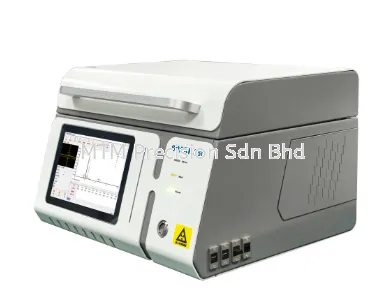
For preliminary investigation, a portable instrument such as the NOYAFA JMS17 Indoor Air Quality Tester can help users compare TVOC, HCHO, temperature and humidity across different locations and times.
What Does TVOC Mean?
TVOC = Total Volatile Organic Compounds.
It is a broad screening indicator associated with volatile organic compounds in the surrounding air.
Importantly, a TVOC reading generally does not tell you exactly which individual VOC is present.
Specific chemical identification may require professional sampling and laboratory analysis.
1. New Furniture
New furniture is one possible reason for changes in indoor TVOC readings.
Potential sources may include:
MDF
Particle board
Engineered wood
Laminates
Adhesives
Coatings
Varnishes
Finishing materials
If a reading changes after installing new wardrobes, cabinets or office furniture, compare the area with other parts of the room.
2. Recent Renovation
Renovation introduces multiple new materials at the same time.
These can include:
Paint
Flooring
Sealants
Adhesives
Cabinets
Wall finishes
Furniture
Coatings
This makes post-renovation indoor air quality screening one of the most practical applications for a TVOC meter.
3. Paint and Coatings
Freshly applied paint and other coatings can release volatile compounds while drying or curing.
If a room has recently been painted, readings may differ from an older, unaffected room.
Rather than drawing a conclusion from one measurement, monitor the area over time.
4. Adhesives and Sealants
Adhesives and sealants are widely used during:
Flooring installation
Cabinet installation
Furniture assembly
Interior fitting
Construction
Renovation
These materials may contribute to changes in indoor VOC conditions depending on their composition and use.
5. Cleaning Products
Not every TVOC change is caused by building materials.
Cleaning agents, fragrances and other household or workplace products can also influence readings.
If a TVOC reading suddenly changes, consider what activities occurred shortly before the measurement.
6. Poor Ventilation
Indoor pollutants can accumulate when air exchange is limited.
This is why you may observe different readings between:
Closed Room vs Ventilated Room
or:
Enclosed Meeting Room vs Open Workspace
A useful screening test is to compare measurements before and after ventilation under documented conditions.
7. Temperature and Humidity Changes
Environmental conditions can affect both indoor emissions and sensor behaviour.
For meaningful comparisons, record temperature and relative humidity together with TVOC.
This is particularly relevant in Malaysia, where conditions may differ substantially between air-conditioned and naturally ventilated rooms.
Why Did My TVOC Reading Suddenly Increase?
Do not immediately assume that a sudden increase means one particular material is responsible.
First consider whether anything changed:
Was the room recently cleaned?
Was new furniture installed?
Was something painted?
Were windows closed?
Was air-conditioning turned off?
Were adhesives or chemicals used nearby?
Did temperature or humidity change?
Was the meter moved to another location?
Systematic comparison is more useful than guessing.
How to Investigate a High TVOC Reading
A simple screening approach is:
Step 1: Record the current TVOC reading.
Step 2: Record HCHO, temperature and humidity.
Step 3: Note the room and ventilation conditions.
Step 4: Check another location.
Step 5: Improve ventilation where appropriate.
Step 6: Repeat the measurement.
Step 7: Monitor whether the pattern persists.
This turns a single number into useful comparative information.
Why Measure HCHO Separately?
HCHO refers specifically to formaldehyde.
TVOC is a broader indicator.
Therefore:
High TVOC does not automatically mean high formaldehyde.
Likewise, a TVOC reading should not be used as a substitute for an HCHO measurement.
The NOYAFA JMS17 provides both HCHO and TVOC measurements, allowing users to observe them separately.
NOYAFA JMS17 for TVOC Monitoring
The NOYAFA JMS17 Indoor Air Quality Tester measures:
TVOC
HCHO / Formaldehyde
Temperature
Relative Humidity
This combination is useful when investigating indoor environmental changes in:
Homes
Offices
Newly renovated properties
New furniture areas
Meeting rooms
Bedrooms
Kitchens
Commercial premises
Its portability also makes room-to-room comparison easier.
Is a High TVOC Reading Enough to Identify the Problem?
No.
A portable TVOC meter is primarily a screening tool.
It can help identify:
Where readings differ
When readings change
Whether ventilation changes the reading
Whether a pattern persists
But it generally cannot identify every individual compound or prove which material is responsible.
For detailed chemical identification, formal compliance or occupational exposure assessment, appropriate professional sampling and laboratory methods may be required.
TVOC Meter Malaysia
If you are investigating indoor VOCs after renovation, installation of new furniture or changes in office air quality, a portable TVOC meter can provide useful preliminary information.
The key is to measure systematically:
Measure → Record → Compare → Ventilate → Recheck → Monitor
The NOYAFA JMS17 combines TVOC + HCHO + Temperature + Humidity, providing a practical starting point for basic indoor air quality screening.
Contact MTM Precision
For NOYAFA JMS17 TVOC Meter, HCHO Formaldehyde Detector and Indoor Air Quality Tester Malaysia, contact:
MTM Precision Sdn Bhd
No. 29-1 & 29-2, Jalan Bandar 18,
Pusat Bandar Puchong,
47160 Puchong, Selangor, Malaysia.
Website: www.mtmpre.com.my
WhatsApp: +6016-660 7346
Email: mtmpre@yahoo.com
Meta Description: Why does TVOC increase indoors? Learn common causes including renovation, new furniture, paint, cleaning products and ventilation, plus how to screen TVOC with the NOYAFA JMS17 in Malaysia.
29 Aug 2026
