






Where Should Environmental Sensors Be Installed in a Factory Malaysia

Where Should Environmental Sensors Be Installed in a Factory Malaysia
The performance of a factory environmental monitoring system depends heavily on sensor placement. Even a suitable monitor may produce misleading results when installed too close to a doorway, fresh-air outlet, exhaust fan or pollution source.
Correct placement should represent the factory’s actual working conditions and support the intended objective, such as worker safety, ventilation control, pollution detection or environmental recordkeeping.
Define the Monitoring Objective First
Before deciding where to install a sensor, determine what the factory wants to monitor.
Common objectives include:
-
Measuring general workplace air quality
-
Detecting pollution near a production process
-
Monitoring worker exposure
-
Activating an exhaust or ventilation system
-
Detecting abnormal gas concentrations
-
Recording temperature and humidity
-
Monitoring a chemical storage room
-
Investigating worker complaints
A sensor intended for general indoor air-quality monitoring may require a different location from one intended to detect a specific leak.
Monitor the Worker Breathing Zone
For workplace environmental monitoring, sensors should normally be positioned where readings can represent the air workers are likely to breathe.
Avoid installing the sensor:
-
Too close to the ceiling without a specific reason
-
Directly on the floor
-
Inside an enclosed cabinet
-
Behind large machinery
-
In a corner with little air movement
-
In an area that workers do not normally occupy
The appropriate mounting height and location depend on the contaminant being measured, the production process and the monitoring objective.
For gas monitoring, the expected behaviour of the gas must also be considered. Some gases may accumulate near lower areas, while others may rise or disperse according to temperature, ventilation and surrounding conditions.
Avoid Fresh-Air Supply Outlets
A sensor installed directly beside an air-conditioning outlet or fresh-air supply may show cleaner and cooler readings than the rest of the factory.
This can result in:
-
Artificially low dust readings
-
Lower carbon dioxide readings
-
Lower temperature readings
-
Incorrect humidity representation
-
Delayed detection of pollution
The monitor should be placed where incoming clean air does not directly influence the sensor unless the purpose is specifically to measure the supply air.
Consider Exhaust and Airflow Direction
Factories often use extraction hoods, exhaust fans and ventilation ducts to remove dust, fumes or gases.
Before installing a monitor, check:
-
Where the pollutant is generated
-
Which direction the air normally moves
-
Where workers stand
-
Where air leaves the room
-
Whether doors or windows affect airflow
-
Whether machinery produces heat that changes air movement
A monitor placed upstream of the pollution source may not detect what workers experience downstream.
Portable instruments such as an anemometer, air-quality monitor or gas detector can help investigate airflow and pollution patterns before permanent sensors are installed.
Do Not Install Every Sensor Beside the Pollution Source
Positioning a sensor very close to a machine, exhaust pipe or chemical container may produce high readings that do not represent the overall workplace.
However, source-level monitoring can still be useful when the objective is:
-
Early leak detection
-
Process control
-
Confirming extraction performance
-
Monitoring a known hazardous point
-
Activating local ventilation
Factories may therefore require more than one monitoring point:
-
A source-monitoring point near the process
-
A worker-exposure point near the occupied area
-
A general room-monitoring point for overall conditions
Sensor Placement for Dust Monitoring
Dust and particulate matter may spread differently depending on particle size, production activity and ventilation.
Consider placing dust monitors near:
-
Cutting or grinding operations
-
Powder handling and mixing areas
-
Packing stations
-
Worker walkways
-
Locations receiving repeated dust complaints
-
Areas outside local extraction coverage
Avoid locations where the sensor inlet can easily become blocked by heavy deposits, water droplets or production material.
For an initial assessment, portable instruments such as the Temtop P600, M2000 2nd or LKC-1000S+ 2nd may help compare different locations before a permanent system is planned.
Sensor Placement for CO₂ Monitoring
Carbon dioxide monitoring can help factories assess occupancy and ventilation conditions.
A CO₂ monitor should represent the occupied area and should not be placed:
-
Directly beside an open door
-
Beside a fresh-air outlet
-
Immediately next to a worker’s face
-
Near combustion exhaust
-
In an unoccupied corner
-
Where machinery heat affects the reading
If CO₂ is being used as an indicator of ventilation, readings should be interpreted together with occupancy, room volume and air movement.
Sensor Placement for VOC and Formaldehyde Monitoring
VOC and formaldehyde sources may include:
-
Paint
-
Adhesives
-
Solvents
-
Coatings
-
Furniture materials
-
Cleaning chemicals
-
Production chemicals
Monitoring points may be selected near the work process and within occupied areas. A sensor placed too close to an open chemical container may detect a local concentration that does not represent the entire room.
The factory should distinguish between source investigation and general workplace monitoring.
Sensor Placement in Chemical Storage Rooms
Chemical storage areas may require fixed monitoring when a leak could occur outside inspection periods.
Installation planning should consider:
-
Types of chemicals stored
-
Expected vapour or gas behaviour
-
Ventilation location
-
Possible leak points
-
Entry and exit routes
-
Worker access
-
Alarm visibility and audibility
-
Required communication or relay outputs
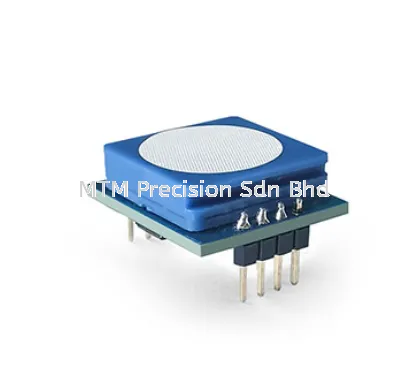
A Fosensor FS11301-based monitoring arrangement may be considered where continuous environmental supervision is required. The correct sensor configuration, measurement range, alarm function and outputs must be confirmed according to the actual application.
Sensor Placement in Battery-Charging Areas
Battery-charging locations may have changing environmental conditions during charging.
Monitoring points should be selected based on:
-
Battery type
-
Charging arrangement
-
Room design
-
Ventilation pattern
-
Potential accumulation zones
-
Ignition sources
-
Worker locations
The sensor should not be installed without first confirming which gas or environmental parameter must be monitored.
Use Multiple Points in Large Factories
One monitor may not represent a large production floor containing different machines, heat sources, ventilation zones and work activities.
Multiple monitoring points may be necessary when:
-
The factory floor is divided into separate production zones.
-
Pollution sources are widely distributed.
-
Airflow is uneven.
-
Different chemicals are used in different areas.
-
Workers report problems only at specific locations.
-
Conditions change significantly between shifts.
Factories can begin with portable measurements to identify differences before deciding how many fixed monitoring points are required.
Protect the Sensor Without Blocking It
Environmental sensors should be protected from accidental impact, water, excessive dust and production debris. However, the protective enclosure must not restrict airflow to the sensor.
Installation should allow:
-
Free air movement
-
Routine visual inspection
-
Sensor cleaning
-
Functional checks
-
Safe maintenance access
-
Replacement without stopping production unnecessarily
The monitor should also be positioned where workers cannot easily disconnect, cover or damage it.
Review Placement After Installation
Sensor placement should be reviewed after the system begins operating.
Check whether:
-
Readings change logically with production activity.
-
Alarms occur at appropriate times.
-
Portable measurements agree reasonably with fixed readings.
-
Ventilation changes are reflected in the data.
-
The sensor is affected by dust deposits or moisture.
-
Workers or machinery obstruct the airflow.
-
Changes to factory layout have affected the location.
A monitoring point that was suitable during installation may become unsuitable after machines, partitions or ventilation systems are moved.
Conclusion
Factory environmental sensors should be installed according to the monitoring objective, worker location, pollution source and airflow pattern.
Avoid choosing a location based only on convenient wiring. Use portable measurements to evaluate different areas, identify representative points and determine whether the factory requires source monitoring, worker-area monitoring or general room monitoring.
Correct sensor placement improves the reliability of environmental readings and helps the factory make better decisions about ventilation, alarms and workplace safety.
Meta Description: Learn where to install environmental sensors in factories in Malaysia. Understand placement for dust, CO₂, VOC, chemical storage and continuous monitoring systems.
Contact MTM Precision
MTM Precision Sdn. Bhd.
Showroom & Service Centre
No. 29-1 & 29-2, Jalan Bandar 18,
Pusat Bandar Puchong,
47160 Puchong, Selangor, Malaysia
🌐 Website: www.mtmpre.com.my
📧 Email: mtmpre@yahoo.com
📱 WhatsApp: +6016-660 7346
01 Sep 2026
