






Factory Maintenance Tools and Inspection Equipment Guide Malaysia

Factory Maintenance Tools and Inspection Equipment Guide Malaysia
Effective factory maintenance requires more than repairing machinery after it fails. Maintenance teams need suitable instruments to inspect equipment, detect abnormal conditions, investigate worker complaints and record changes over time.
A complete factory maintenance toolkit may include instruments for:
-
Machine-condition monitoring
-
Electrical inspection
-
Thermal inspection
-
Environmental and air-quality monitoring
-
Gas detection
-
Ventilation and airflow testing
-
Water-quality testing
-
Temperature and humidity recording
-
Building and structural inspection
-
Network and CCTV troubleshooting
The correct equipment depends on the factory’s machinery, production processes, environmental risks and preventive-maintenance plan.
1. Vibration Meters for Rotating Machinery
A vibration meter helps maintenance teams identify changes in rotating equipment before the fault becomes more serious.
Common applications include:
-
Motors
-
Pumps
-
Fans
-
Compressors
-
Bearings
-
Gearboxes
-
Generators
-
HVAC equipment
Possible instruments include:
-
Landtek VM6310
-
Landtek VM6360
-
Landtek VM6380
-
Benetech GM63B
-
Smart Sensor AR63B
-
Wintact WT63A
-
Wintact WT63B
A single vibration reading should not be interpreted alone. Record readings at the same machine point, direction and operating condition to establish a useful trend.
2. Thermal Cameras for Hotspot Detection
A thermal camera displays temperature patterns across electrical or mechanical equipment.
It can help inspect:
-
Electrical panels
-
Switchgear
-
Transformers
-
Motors
-
Bearings
-
Cable connections
-
Busbars
-
Pumps
-
Cooling systems
-
Server and network racks
Possible models include:
-
Noyafa NF-522
-
Wintact WT3090
-
Wintact WT3160
-
Wintact WT3220
-
Wintact WT3320
Thermal images may reveal abnormal temperature differences, but the result should be interpreted together with equipment load, emissivity, inspection distance and surrounding conditions.
3. Infrared Thermometers
An infrared thermometer is suitable for fast, non-contact surface-temperature checks.
Typical applications include:
-
Motor casing
-
Bearing housing
-
Electrical enclosure
-
Pipe surface
-
HVAC outlet
-
Production equipment
-
Hot or cold storage surfaces
An infrared thermometer measures a smaller target area. A thermal camera shows a wider temperature pattern and is generally more useful for locating an unknown hotspot.
4. Clamp Meters and Digital Multimeters
Electrical troubleshooting often begins with a clamp meter or digital multimeter.
A clamp meter is useful when current must be measured without disconnecting the conductor.
A digital multimeter may be used to measure:
-
Voltage
-
Resistance
-
Continuity
-
Frequency
-
Capacitance
-
Current within the instrument’s rating
The available functions depend on the model.
Neither instrument automatically replaces specialised equipment for insulation resistance, earth resistance or power-quality analysis.
5. Insulation-Resistance Testers
An insulation-resistance tester applies a suitable test voltage to evaluate insulation condition.
Possible applications include:
-
Motors
-
Cables
-
Transformers
-
Generators
-
Control panels
-
Electrical installations
Insulation-resistance testing should be conducted by qualified personnel following appropriate isolation and discharge procedures.
A normal multimeter resistance function is not an equivalent substitute.
6. Earth-Resistance Testers
An earth-resistance tester is used to evaluate grounding or earthing systems.
Potential applications include:
-
Factory electrical installations
-
Lightning-protection systems
-
Equipment grounding
-
Substations
-
Generator systems
-
Outdoor electrical facilities
Earth-resistance testing and insulation-resistance testing serve different purposes and require different test arrangements.
7. Tachometers for Rotational Speed
A tachometer helps verify the operating speed of:
-
Motors
-
Fans
-
Shafts
-
Rollers
-
Conveyors
-
Spindles
-
Production machinery
A laser tachometer measures speed without contacting the rotating component. A contact tachometer touches the moving part using a suitable adaptor.
Select the method according to access, surface condition, safety and the required measurement.
8. Ultrasonic Thickness Gauges
An ultrasonic thickness gauge helps measure the remaining thickness of suitable materials from one accessible side.
Applications may include:
-
Pipes
-
Tanks
-
Pressure vessels
-
Steel plates
-
Corroded structures
-
Industrial equipment
The result can be affected by material type, surface condition, geometry, coating and couplant application.
An ultrasonic thickness gauge measures material thickness. A coating-thickness gauge measures the coating layer and should not be treated as the same instrument.
9. Coating-Thickness Gauges
Coating-thickness gauges may be used to evaluate paint, protective coating or plating on suitable substrates.
Possible instruments include:
-
Landtek CM8820
-
Landtek CM8828
-
Benetech GT1201
-
Selected Linshang coating-thickness gauges
Before purchasing, confirm:
-
Substrate material
-
Coating type
-
Expected thickness
-
Measurement range
-
Probe requirement
-
Flat or curved surface
-
Data-storage requirement
10. Airflow and Ventilation Instruments
An anemometer helps maintenance teams inspect:
-
Exhaust fans
-
Air-conditioning outlets
-
Ventilation ducts
-
Cooling systems
-
Fume extraction
-
Production airflow
-
Low-airflow areas
The Benetech GM8903 may be considered for general airflow inspection.
A hot-wire anemometer is useful for lower airflow and confined outlets, while a vane anemometer is convenient for general airflow checks.
11. Portable Air-Quality Monitors
Portable air-quality monitors allow technicians to compare different factory zones.
Depending on the model, they may measure:
-
PM2.5
-
PM10
-
Particle concentration
-
CO₂
-
Formaldehyde
-
TVOC
-
Temperature
-
Humidity
Possible models include:
-
Temtop P600
-
Temtop M2000 2nd
-
Temtop LKC-1000S+ 2nd
These instruments are useful for walkthrough inspections and troubleshooting. Confirm the exact parameters and data functions before choosing a model.
12. Fixed Environmental Monitoring Systems
Fixed systems are suitable for areas requiring:
-
Continuous readings
-
Audible or visual alarms
-
Remote monitoring
-
Historical records
-
Multiple monitoring points
-
Ventilation control
-
Monitoring outside working hours
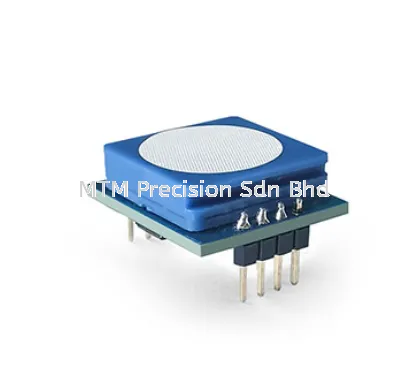
A Fosensor FS11301-based monitoring arrangement may be considered according to the required sensors and system design.
Confirm the measurement parameters, ranges, alarm stages, communication outputs, data-recording functions and installation conditions before ordering.
13. Dedicated Gas Detectors
A general air-quality monitor should not replace a dedicated gas detector when a known toxic, combustible or oxygen-related risk exists.
Possible instruments include:
-
Wintact WT8812 four-gas detector
-
Wintact WT8822 hydrogen sulphide detector
-
Smart Sensor AT8500 ammonia detector
-
Smart Sensor AT8100 oxygen detector
Gas-detector selection must begin with the exact gas, expected range, application and alarm requirement.
14. Temperature and Humidity Data Loggers
Data loggers record environmental conditions automatically.
Typical applications include:
-
Cold rooms
-
Warehouses
-
Food storage
-
Pharmaceutical storage
-
Product transportation
-
Production rooms
-
Overnight environmental investigations
Possible models include:
-
Elitech RC-5
-
Elitech GSP-6 Pro
Confirm the sensor configuration, measurement range, recording interval, memory capacity and data-export method.
15. Sound-Level Meters and Noise Dosimeters
A sound-level meter helps compare noise around:
-
Compressors
-
Pumps
-
Motors
-
Generators
-
Cutting machines
-
Stamping machinery
-
Production lines
A sound-level meter is useful for area surveys and troubleshooting. A noise dosimeter is worn by an individual to evaluate changing noise exposure over a longer period.
These instruments serve related but different purposes.
16. Lux Meters
A lux meter measures workplace illumination.
Possible inspection areas include:
-
Assembly stations
-
Quality-control tables
-
Warehouses
-
Loading bays
-
Walkways
-
Maintenance rooms
-
Production lines
-
Offices
Measurements should be taken at the actual working surface under normal lighting conditions.
17. Water-Quality Instruments
Factories may require water-quality measurements for:
-
Incoming water
-
Production processes
-
Cooling towers
-
Boiler systems
-
Wastewater treatment
-
Cleaning systems
-
Storage tanks
Common parameters include:
-
pH
-
Conductivity
-
TDS
-
Salinity
-
Turbidity
-
Dissolved oxygen
-
Temperature
The correct instrument, probe and sampling method depend on the application.
18. Moisture Meters
Material-moisture inspection may be relevant to:
-
Wood products
-
Building materials
-
Concrete
-
Storage areas
-
Packaging
-
Finished products
-
Water-damage investigation
Possible instruments include selected models from:
-
Tramex
-
Landtek
-
UNI-T
-
Wintact
-
Mestek
Pin, pinless and multi-material moisture meters use different measurement approaches. Select according to the material and required inspection depth.
19. Building and Structural Inspection Tools
Factory maintenance may also involve floors, walls, foundations and structural components.
Useful instruments may include:
-
Rebound hammer
-
Rebar scanner
-
Crack-width gauge
-
Ultrasonic concrete tester
-
Coating-thickness gauge
-
Ultrasonic material-thickness gauge
-
Anchor pull-out tester
-
Total station
-
Monitoring prism
-
Auto level
-
Levelling staff
Possible structural products include the Langry RH225A, RH225B and LR-series anchor pull-out testers, according to the application.
20. Network and CCTV Maintenance Tools
Modern factories depend on network, CCTV and communication infrastructure.
Possible inspection equipment includes:
-
Noyafa NF-8209 Pro network cable tester
-
Noyafa NF-8506 network and cable testing tools
-
Noyafa NF-IPC728HSO CCTV tester
-
Optical power meter
-
Visual fault locator
-
Optical light source
-
OTDR
These tools help investigate cable continuity, cable location, network faults, optical loss and CCTV installation issues.
Portable, Logging or Fixed Equipment?
| Factory Requirement | Recommended Approach |
|---|---|
| Inspect many locations | Portable instrument |
| Find an unknown problem | Portable instrument |
| Record changes over several hours or days | Data logger |
| Receive continuous alarms | Fixed monitoring system |
| Control ventilation or equipment | Fixed system with suitable outputs |
| Analyse machine-condition trends | Repeatable portable measurements or permanent sensors |
| Produce historical environmental records | Data logger or fixed recording system |
Some instruments combine more than one function. Confirm the actual specifications before purchasing.
Suggested Basic Factory Maintenance Toolkit
A practical basic toolkit may include:
-
Digital multimeter
-
Clamp meter
-
Insulation-resistance tester
-
Infrared thermometer
-
Thermal camera
-
Vibration meter
-
Tachometer
-
Anemometer
-
Portable air-quality monitor
-
Suitable gas detector
-
Temperature and humidity meter
-
Data logger
-
Sound-level meter
-
Lux meter
Factories can then add specialised tools for water quality, structural inspection, coating inspection, ultrasonic testing or network maintenance.
How to Select the Correct Instrument
Before requesting a quotation, provide:
-
Type of factory
-
Machinery or process
-
Problem to be investigated
-
Parameter to be measured
-
Expected measurement range
-
Portable or fixed requirement
-
Data-recording requirement
-
Alarm requirement
-
Number of inspection areas
-
Operating environment
-
Required quantity
-
Approximate budget
Clear application information helps prevent the purchase of an unsuitable instrument.
Build a Preventive-Maintenance Record
For every inspection, record:
-
Machine or factory area
-
Instrument used
-
Measurement point
-
Date and time
-
Operating condition
-
Reading and unit
-
Previous reading
-
Abnormal observation
-
Corrective action
-
Responsible person
-
Follow-up date
Trend data is generally more valuable than isolated measurements.
Conclusion
A complete factory maintenance toolkit should cover machinery, electrical systems, environmental conditions, ventilation, gases, water quality, structures and communication infrastructure.
Begin with portable instruments for inspection and troubleshooting. Add data loggers when historical records are required and fixed monitoring systems where continuous alarms or automatic control are necessary.
Choosing tools according to the actual factory application helps maintenance teams detect problems earlier, plan corrective work and reduce unnecessary equipment purchases.
Meta Description: Complete guide to factory maintenance tools in Malaysia, including vibration meters, thermal cameras, electrical testers, gas detectors, air-quality monitors, data loggers and structural inspection equipment.
Contact MTM Precision
MTM Precision Sdn. Bhd.
Showroom & Service Centre
No. 29-1 & 29-2, Jalan Bandar 18,
Pusat Bandar Puchong,
47160 Puchong, Selangor, Malaysia
🌐 Website: www.mtmpre.com.my
📧 Email: mtmpre@yahoo.com
📱 WhatsApp: +6016-660 7346
01 Sep 2026


