





RF Meter for Wi-Fi Router and Access Point Site Survey Malaysia

RF Meter for Wi-Fi Router and Access Point Site Survey Malaysia
Wi-Fi routers and wireless access points are now installed throughout offices, schools, hotels, factories, retail outlets and commercial buildings.
When technicians want to understand the RF field around wireless equipment, an RF field strength meter can be used to compare measurements at different locations.
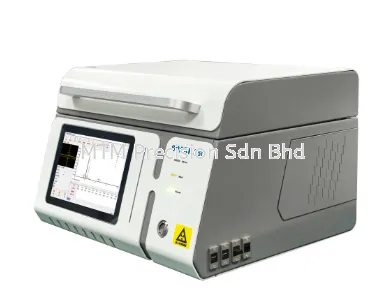
The TENMARS TM-195 3-Axis RF Field Strength Meter is designed for broadband RF electromagnetic field measurements from 50 MHz to 3.5 GHz.
It can be useful for general RF surveys around compatible Wi-Fi and wireless equipment.
However, an RF field survey is not the same as a Wi-Fi network site survey.
Understanding this difference is important before selecting the instrument.
What Does an RF Meter Measure Around Wi-Fi?
An RF field strength meter measures the electromagnetic field present at the measurement location.
For example, a technician may compare RF measurements:
Near router
Near access point
At workstation
Inside meeting room
Along corridor
At reception
This helps show how the measured RF field changes across the building.
What Does TM-195 Not Measure?
The TM-195 is not a Wi-Fi network analyser.
It should not be selected when the main requirement is to measure:
Wi-Fi download speed
Internet speed
SSID
Wi-Fi channel
Network throughput
Packet loss
Individual access point identity
Network authentication
Exact RF frequency spectrum
These applications require different network or RF analysis tools.
RF Site Survey vs Wi-Fi Network Site Survey
The terms can sound similar but they answer different questions.
RF Field Survey
Typical question:
"How does the RF field measurement change across this building?"
An RF field strength meter such as the TM-195 may be useful.
Wi-Fi Network Site Survey
Typical questions:
"Is Wi-Fi coverage strong enough here?"
"Which access point is this device connected to?"
"Which channel is congested?"
"What is the network signal quality?"
These questions normally require Wi-Fi network survey or analysis tools.
The TM-195 is not designed to replace those tools.
Check the Wi-Fi Frequency First
Before using the TM-195 around Wi-Fi equipment, confirm the operating frequency.
The TM-195 has a specified frequency range of:
50 MHz to 3.5 GHz
Therefore, compatible Wi-Fi frequencies within this range may be measured as part of a general broadband RF field survey.
However:
5 GHz Wi-Fi is outside the TM-195 specified frequency range.
Modern wireless networks may use multiple frequency bands.
Always check which frequencies are actually operating before selecting the meter.
Why Measure Around a Wi-Fi Access Point?
A wireless access point may be installed:
On a ceiling
On a wall
Inside an office
Along a corridor
Inside a meeting room
In a factory
Inside a commercial building
The RF field measured at different locations can vary because of:
Distance
Antenna characteristics
Walls
Partitions
Metal structures
Reflections
Equipment activity
Multiple RF sources
Measurement position
This is why one measurement directly beside the access point does not describe the entire building.
How to Plan a Basic RF Survey
A practical RF survey should use several measurement points.
For example:
Point A - Directly below access point
Point B - Nearby workstation
Point C - Meeting room
Point D - Corridor
Point E - Reception
Point F - Reference location farther away
Record the measurements at each point.
This provides a basic RF field map of the surveyed locations.
Keep Measurement Height Consistent
Measurement height can influence the result.
For better comparison, try to measure at approximately the same height at each location.
For example, if the purpose is to compare normal workstation areas, take measurements at a representative and consistent height.
Do not measure one point near the floor and another above your head unless there is a specific reason.
Keep Measurement Time Consistent
Wi-Fi and other wireless signals can fluctuate.
If you observe one location for only a few seconds but another for much longer, the results may not be directly comparable.
Use a similar observation period at each point where practical.
This is especially useful when recording MAX or AVG measurements.
Use MAX for Fluctuating RF Fields
Wireless activity can change over time.
The MAX function can help capture the highest observed measurement during the selected observation period.
A simple record may include:
Location A - Current + MAX
Location B - Current + MAX
Location C - Current + MAX
This can make comparison easier when readings fluctuate.
Use AVG for Additional Comparison
AVG can provide additional information about the average measurement during the observation period.
For some surveys, recording both:
MAX
and
AVG
can provide a better description of the RF environment than relying on one instantaneous reading.
Why 3-Axis Measurement Helps
RF fields can arrive from different directions.
Inside a building, signals can also be reflected by:
Walls
Metal structures
Furniture
Equipment
Other surfaces
The TENMARS TM-195 uses a 3-axis RF measurement system.
This makes general RF measurements more convenient when the field direction is not known.
Example - Office Wi-Fi RF Survey
An office has several wireless access points.
The facility team wants to compare RF field measurements in different occupied areas.
The survey could include:
Access Point Area
Workstation Zone A
Workstation Zone B
Meeting Room
Manager Office
Reception
Corridor
For each point, record:
Location
Measurement unit
Current reading
MAX reading
AVG reading if required
Date and time
Nearby equipment
Remarks
This provides a repeatable measurement record.
Example - School RF Survey
A school may have wireless access points installed in classrooms and corridors.
A general RF survey could compare:
Classroom A
Classroom B
Computer room
Teacher room
Corridor
Library
However, remember that the TM-195 frequency range must match the Wi-Fi frequencies being investigated.
If the network uses frequencies above 3.5 GHz, the TM-195 does not cover those frequencies.
Example - Hotel Wi-Fi Survey
Hotels can contain many wireless access points across multiple floors.
Possible RF measurement locations include:
Lobby
Guest corridor
Meeting room
Business centre
Reception
Common area
The TM-195 can help compare broadband RF measurements from compatible sources.
It cannot tell the user which hotel access point or SSID produced each reading.
Example - Factory Wireless Network
Factories increasingly use wireless systems for communication and industrial applications.
A survey may compare:
Control room
Production area
Operator position
Maintenance area
Warehouse
Near wireless equipment
Before measuring, identify the wireless system and operating frequency.
Industrial wireless equipment does not automatically use the same frequency as normal office Wi-Fi.
Can TM-195 Tell Which Access Point Is Strongest?
Not directly.
The TM-195 is a broadband RF field strength meter.
If several compatible RF sources are operating in the area, the displayed measurement can reflect the RF environment within the instrument's supported range.
It does not automatically identify:
Access point name
SSID
Wi-Fi channel
Individual transmitter
Network device
Exact RF frequency
For access point identification and Wi-Fi network analysis, use appropriate Wi-Fi survey tools.
Can TM-195 Find Wi-Fi Dead Zones?
Not in the same way as a Wi-Fi network analyser.
A Wi-Fi dead zone normally refers to an area where network coverage or communication quality is poor.
Determining this may require information such as:
Network signal level
Access point identity
Channel information
Connection quality
Throughput
Network performance
The TM-195 measures broadband RF field strength.
A low RF reading alone does not automatically prove that an area is a Wi-Fi dead zone.
Can a High RF Reading Mean Good Wi-Fi?
Not necessarily.
A higher broadband RF field reading does not automatically mean better Wi-Fi performance.
There may be:
Multiple RF sources
Interference
Other wireless equipment
Network configuration issues
Channel congestion
RF field strength and network performance are different measurements.
Common Wi-Fi RF Survey Mistakes
Avoid these common mistakes:
Assuming TM-195 is a Wi-Fi analyser
Expecting the meter to show SSID
Expecting it to identify individual access points
Using it to test internet speed
Assuming high RF means good Wi-Fi performance
Assuming low RF means a Wi-Fi dead zone
Ignoring the operating frequency
Trying to measure 5 GHz Wi-Fi with TM-195
Taking only one measurement
Changing measurement units between locations
Measuring each point for very different periods
Understanding the purpose of the instrument prevents incorrect conclusions.
Simple RF Site Survey Record
A practical record can include:
Building:
Floor:
Date:
Time:
Measurement Location:
Wireless Equipment:
Operating Frequency:
Instrument: TENMARS TM-195
Measurement Unit:
Current Reading:
MAX Reading:
AVG Reading:
Remarks:
Use the same format throughout the survey.
Which Tool Do You Need?
Ask yourself what information you need.
Need to Measure RF Field Strength?
Consider:
TENMARS TM-195, provided the frequency is within 50 MHz to 3.5 GHz.
Need to Identify Wi-Fi SSID and Channel?
Use:
Wi-Fi network analysis equipment or software.
Need to Test Internet Speed?
Use:
Network performance testing tools.
Need to Identify Exact RF Frequencies?
Consider:
Spectrum analysis or frequency-selective RF equipment.
Choosing the correct tool starts with defining the question.
TENMARS TM-195 for Wi-Fi RF Survey Malaysia
The TENMARS TM-195 3-Axis RF Field Strength Meter can be useful for general RF field surveys around compatible Wi-Fi routers, access points and wireless equipment.
Its specified frequency range is:
50 MHz to 3.5 GHz
It is suitable when the objective is to compare broadband RF field measurements between locations.
It should not be confused with a Wi-Fi network analyser.
Before purchasing, tell MTM Precision:
What wireless equipment do you want to measure?
What frequency does it operate at?
Do you need RF field measurement or Wi-Fi network analysis?
Where will the survey be carried out?
We can help you identify the appropriate test instrument.
Contact MTM Precision Sdn Bhd
Showroom & Service Centre: Puchong, Selangor, Malaysia
Operating Hours: Monday-Friday, 9:00 AM-6:00 PM
Tel: 03-8080 7172
WhatsApp: +6016-660 7346
Email: mtmpre@yahoo.com
Website: www.mtmpre.com.my
Serving customers throughout Malaysia, including Selangor, Kuala Lumpur, Johor, Penang, Melaka, Negeri Sembilan, Perak, Pahang, Kelantan, Terengganu, Kedah, Perlis, Sabah and Sarawak.
Keywords: Wi-Fi RF Meter Malaysia | Wi-Fi Router RF Meter | Access Point RF Survey Malaysia | TENMARS TM-195 Malaysia | RF Field Strength Meter Malaysia | Wireless RF Testing | 3-Axis RF Meter Malaysia
20 Sep 2026


