






Why RF Meter Readings Change When You Move the Meter Malaysia

Why RF Meter Readings Change When You Move the Meter Malaysia
A common question when using an RF field strength meter is:
"Why does the reading change when I move the meter?"
Another common question is:
"Why is the RF reading not stable?"
This does not automatically mean that the meter is faulty.
RF electromagnetic fields can vary significantly with position, distance, direction, reflections, transmitter activity and surrounding objects.
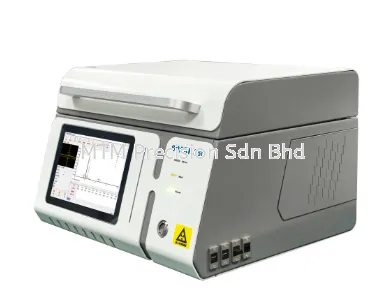
The TENMARS TM-195 3-Axis RF Field Strength Meter is designed for broadband RF measurements from 50 MHz to 3.5 GHz.
Understanding why readings change can help users carry out more repeatable RF measurements.
Reason 1 - Distance from the RF Source
Distance is one of the first factors to consider.
If you move the meter closer to an RF transmitter, the measured field may increase.
If you move farther away, the measured field may decrease.
However, real indoor RF environments can be more complicated than a simple distance relationship because reflections and multiple RF sources may also affect the measurement.
This is why measurement position should always be recorded.
Reason 2 - RF Signals Can Reflect
RF energy can reflect from surrounding surfaces and structures.
Examples include:
Metal walls
Machinery
Cabinets
Building structures
Ceilings
Floors
Equipment
Other reflective surfaces
Because of these reflections, two locations only a short distance apart may produce different measurements.
This is particularly common inside buildings and industrial environments.
Reason 3 - Multiple RF Sources May Be Present
Modern workplaces may contain many RF sources.
For example:
Wireless access points
Wireless communication equipment
RF transmitters
Telecommunications signals
Industrial wireless systems
Other RF devices
The TENMARS TM-195 is a broadband RF field strength meter.
Therefore, compatible RF sources within its measurement range can contribute to the RF environment at the measurement location.
Moving the meter can change how these fields combine.
Reason 4 - The RF Source May Not Transmit Continuously
Some RF equipment does not produce exactly the same field continuously.
Wireless communication systems may change their transmission activity depending on:
Data traffic
Equipment operation
Communication demand
Network activity
Transmitter behaviour
As a result, the meter reading may rise and fall even when the meter itself is not moving.
Reason 5 - Your Body Can Affect the Measurement Environment
The person holding the meter is also part of the measurement environment.
Your body may affect how RF energy reaches the sensor.
For better repeatability:
Hold the meter consistently
Avoid unnecessarily covering the sensor
Keep your body position reasonably consistent
Avoid changing your measurement technique between locations
This becomes especially important when comparing small differences.
Reason 6 - Meter Height Changes
Moving the meter upward or downward can also change the reading.
For example, measuring:
Near floor level
and then:
At desk height
and then:
Above head height
may produce different results.
For comparative surveys, use a consistent measurement height unless vertical variation is specifically what you want to investigate.
Reason 7 - Antenna Direction and Installation
RF transmitters and antennas do not necessarily produce exactly the same field in every direction.
The measured field may depend on:
Antenna design
Antenna orientation
Installation position
Building layout
Obstacles
Measurement direction
Therefore, moving around an antenna or access point may produce different measurements even at similar distances.
Reason 8 - Doors, Walls and Equipment Matter
The path between the RF source and meter can influence the measurement.
For example:
Direct line to RF source
may produce a different result from:
RF source behind wall
or:
RF source behind machinery
Building materials and equipment can affect RF propagation.
This is why actual field measurement can provide useful information that cannot be determined from distance alone.
Reason 9 - Small Position Changes Can Matter
Sometimes moving the meter only a short distance can change the displayed value.
This may be caused by the interaction of direct and reflected RF signals.
Therefore, do not assume that two nearby measurement points must produce identical results.
If a reading appears unusual, repeat the measurement and compare nearby points.
Why 3-Axis Measurement Helps
RF fields have direction.
The TENMARS TM-195 uses a 3-axis RF measurement system.
This helps reduce the need to manually rotate the meter continuously to search for different field orientations.
However, 3-axis measurement does not mean that readings will remain constant when the meter is moved.
The RF field itself can change from one location to another.
Why Does the Reading Change Even When the Meter Is Stationary?
Movement is not the only reason readings fluctuate.
Even with the TM-195 held in one position, the displayed value may change because of:
Changing transmitter activity
Wireless data traffic
Multiple RF sources
People moving nearby
Equipment switching
Environmental reflections
This is where MAX and AVG measurements can be useful.
Use MAX for Fluctuating Readings
MAX records the highest observed measurement during the measurement period.
Instead of trying to remember the highest number while the display changes, use MAX to help capture it.
For comparative surveys:
Point A - MAX
Point B - MAX
Point C - MAX
Use a similar observation period at each point.
Use AVG for a More Representative Comparison
AVG can provide additional information about the average measurement during the observation period.
When readings fluctuate significantly, recording:
Current
MAX
AVG
can provide more information than recording one random instantaneous value.
Example - Wi-Fi Access Point
Suppose a compatible wireless access point is installed on the ceiling.
You measure directly below it.
Then you move two metres away.
Then you move into a meeting room.
The readings may all be different.
This can happen because of:
Distance
Antenna pattern
Walls
Reflections
Other RF sources
Wireless activity
The changing reading is not automatically evidence of meter instability.
Example - Factory RF Measurement
A factory may contain metal structures, machinery and wireless equipment.
A technician measures:
Control Room
Production Area
Operator Position
Near Wireless Equipment
Maintenance Area
The RF environment can be different at each location.
Metal structures and machinery may also affect RF propagation.
Therefore, record each measurement point clearly.
Example - Telecom Equipment
A technician measuring around compatible telecommunications equipment may observe that the reading changes when walking around the site.
Instead of searching for one "correct" number, use a structured survey.
Record measurements at defined points such as:
Reference Point
Occupied Area
Intermediate Point
Near Equipment
Then compare the results.
How to Get More Repeatable RF Measurements
For better repeatability:
1. Use defined measurement locations
Mark or describe each measurement point.
2. Keep the measurement height consistent
Avoid random changes in meter height.
3. Use the same measurement unit
Do not change units halfway through the survey.
4. Use similar observation periods
This is especially important for MAX and AVG comparison.
5. Keep meter handling consistent
Avoid covering the sensor or changing your holding position unnecessarily.
6. Record equipment operating conditions
RF activity may change with equipment operation.
7. Repeat unusual readings
Do not rely on one unexpected number.
Do Not Chase One Perfect Number
RF environments are dynamic.
Trying to obtain exactly the same number every time may not be realistic.
A better approach is to create a repeatable measurement procedure and compare results under similar conditions.
The purpose is often to understand the pattern of RF measurements, not to force the display to remain fixed.
Can Changing Readings Mean the Meter Is Faulty?
Not necessarily.
Fluctuating readings are normal in many RF environments.
However, if the instrument produces obviously abnormal behaviour under controlled conditions, users can check:
Battery condition
Measurement mode
Selected unit
Meter condition
Measurement procedure
Nearby RF sources
If there is still concern about instrument performance, the meter can be inspected or checked according to the appropriate service procedure.
Does TM-195 Identify Why the Reading Changed?
No.
The TM-195 measures the broadband RF field.
It does not automatically tell you:
Which exact frequency changed
Which access point transmitted
Which mobile operator produced the signal
Which individual transmitter caused the increase
If detailed frequency identification is required, a spectrum analyser or other frequency-selective RF instrument may be necessary.
Check the Frequency Range
The TENMARS TM-195 has a specified frequency range of:
50 MHz to 3.5 GHz
Always confirm that the RF source of interest falls within this range.
For example, 5 GHz Wi-Fi is outside the TM-195 specified frequency range.
Moving the meter or changing the measurement unit does not extend the instrument's frequency coverage.
Common RF Measurement Mistakes
Avoid these common mistakes:
Expecting the reading to remain perfectly constant
Moving the meter while expecting the same reading
Comparing measurements taken at different heights
Changing units between locations
Ignoring nearby RF sources
Ignoring transmitter activity
Taking only one reading
Assuming every change means the meter is faulty
Assuming the meter identifies the RF source
Measuring frequencies outside the specified range
Good measurement technique is essential for useful RF survey results.
Simple Troubleshooting Checklist
If your RF reading keeps changing, check:
Is the RF source transmitting continuously?
Did the distance change?
Did the measurement height change?
Are there walls or metal structures nearby?
Are multiple RF sources present?
Are people moving around the measurement area?
Are you using the same measurement unit?
Are you holding the meter consistently?
Have you tried MAX or AVG?
Have you repeated the measurement?
These checks can explain many apparently unstable RF measurements.
TENMARS TM-195 RF Measurement Malaysia
Changing RF readings are not automatically a problem with the instrument.
In many cases, they reflect the actual behaviour of the RF environment.
The TENMARS TM-195 3-Axis RF Field Strength Meter can be used to compare broadband RF field measurements at different locations for compatible sources within 50 MHz to 3.5 GHz.
For better results, use a consistent measurement procedure and record the measurement location, unit, MAX, AVG and operating conditions.
If you are unsure whether your TM-195 reading is normal, send MTM Precision details of:
The equipment being measured
Operating frequency
Measurement location
Measurement unit
How the reading changes
We can help determine whether the issue is related to the application, measurement method or instrument.
Contact MTM Precision Sdn Bhd
Showroom & Service Centre: Puchong, Selangor, Malaysia
Operating Hours: Monday-Friday, 9:00 AM-6:00 PM
Tel: 03-8080 7172
WhatsApp: +6016-660 7346
Email: mtmpre@yahoo.com
Website: www.mtmpre.com.my
Serving customers throughout Malaysia, including Selangor, Kuala Lumpur, Johor, Penang, Melaka, Negeri Sembilan, Perak, Pahang, Kelantan, Terengganu, Kedah, Perlis, Sabah and Sarawak.
Keywords: RF Meter Reading Changes | RF Meter Unstable Reading | TENMARS TM-195 Malaysia | RF Measurement Troubleshooting | RF Field Strength Meter Malaysia | 3-Axis RF Meter | RF Testing Malaysia
20 Sep 2026


