





TENMARS TM-195 RF Measurement Troubleshooting Guide Malaysia

TENMARS TM-195 RF Measurement Troubleshooting Guide Malaysia
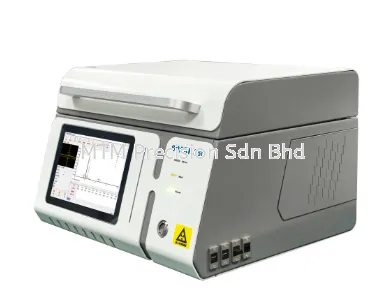
The TENMARS TM-195 3-Axis RF Field Strength Meter is designed for broadband RF electromagnetic field measurements from 50 MHz to 3.5 GHz.
When using an RF meter, users sometimes experience situations such as:
No obvious reading
Reading seems too low
Reading seems too high
Reading keeps changing
Different readings at different locations
Different results when repeating the test
Alarm activates unexpectedly
Measurement does not match expectations
These situations do not automatically mean that the meter is faulty.
RF measurement depends on the source, frequency, distance, environment and measurement method.
This troubleshooting guide explains what to check before sending the instrument for service.
Problem 1 - TM-195 Shows Very Low Reading
If the reading appears lower than expected, first check the RF source.
Ask:
Is the RF equipment operating?
Is it transmitting continuously?
What frequency does it use?
How far is the meter from the source?
A low reading may simply mean that the RF field at the measurement location is low.
Do not assume that every RF source must produce a high reading.
Check the Frequency First
This is one of the most important troubleshooting steps.
The TM-195 is designed for:
50 MHz to 3.5 GHz
If the RF source is outside this frequency range, the TM-195 should not be expected to provide the required measurement.
For example:
5 GHz Wi-Fi is outside the specified TM-195 frequency range.
If a customer tries to use the TM-195 specifically for 5 GHz Wi-Fi and receives an unexpected result, the first issue is instrument selection rather than instrument failure.
Problem 2 - No Obvious Change Near the RF Source
If moving closer to the suspected source does not produce the expected change, check:
Source operating frequency
Whether the source is actually transmitting
Transmission activity
Measurement unit
Measurement position
Nearby RF sources
Distance
Whether the application is suitable for TM-195
Do not assume the equipment is transmitting continuously.
Some wireless systems change their transmission activity according to communication demand.
Problem 3 - Reading Keeps Changing
Fluctuating readings are common in RF measurements.
Possible causes include:
Changing transmitter activity
Wireless data traffic
Multiple RF sources
People moving nearby
Reflections
Antenna direction
Equipment operation
Small changes in meter position
A changing reading does not automatically indicate a faulty meter.
Try using MAX and AVG to better understand the measurement over an observation period.
Problem 4 - Reading Changes When I Move the Meter
This is also normal in many RF environments.
RF fields can change significantly with location.
Moving the meter may change:
Distance from source
Field direction
Reflected signal pattern
Relationship to nearby structures
Contribution from multiple RF sources
For comparative measurements, define specific measurement points rather than continuously moving the meter.
Problem 5 - Reading Changes When I Rotate the Meter
RF electromagnetic fields have direction.
The TM-195 uses a 3-axis measurement system, which reduces the need for repeated manual orientation compared with a single-axis measurement approach.
However, the surrounding RF environment can still change with meter position and handling.
Keep your measurement technique as consistent as possible.
Problem 6 - Reading Is Much Higher in One Location
A higher reading at one point does not automatically mean there is a meter problem.
Check whether the location is:
Closer to the RF source
In front of an antenna
Near wireless equipment
Near another RF transmitter
Affected by reflections
Surrounded by metal structures
Repeat the measurement at the same point.
Then compare nearby locations.
If the higher reading is repeatable, it may reflect the actual RF environment.
Problem 7 - Reading Seems Too High
If the reading appears unexpectedly high:
Step 1 - Check the measurement unit
Step 2 - Repeat the measurement
Step 3 - Move to a reference location
Step 4 - Identify nearby RF sources
Step 5 - Check the measurement distance
Step 6 - Record MAX and AVG if required
Step 7 - Confirm that the application is within the instrument frequency range
Do not immediately conclude that the environment is unsafe.
A measurement must be interpreted in context.
Problem 8 - Different Measurement Units Show Different Numbers
This is normal.
The TM-195 can express RF measurements using different measurement quantities and units.
Changing the unit can change the displayed numerical value.
This does not necessarily mean the actual RF field changed.
When comparing measurements:
Use the same unit throughout the survey.
Always record the measurement unit together with the value.
Problem 9 - Alarm Keeps Activating
First check the selected alarm threshold.
Ask:
What threshold has been set?
What measurement unit is being used?
Why was that threshold selected?
If the alarm threshold is set close to the normal RF level in the environment, the alarm may activate frequently.
The alarm simply indicates that the selected threshold has been reached.
It does not automatically mean that a safety limit has been exceeded.
Problem 10 - Alarm Does Not Activate
If you expect the alarm to activate but it does not, check:
Alarm setting
Threshold value
Measurement unit
Current RF level
Instrument mode
RF source frequency
Whether the source is transmitting
The measured field must reach the selected threshold for the alarm function to be relevant.
Problem 11 - TM-195 Does Not Identify the Wi-Fi Network
This is not a fault.
The TM-195 is not a Wi-Fi network analyser.
It does not identify:
SSID
Wi-Fi password
Wi-Fi channel
Individual access point
Network speed
Internet performance
The TM-195 measures broadband RF field strength.
For Wi-Fi network information, use appropriate network analysis equipment or software.
Problem 12 - TM-195 Does Not Show the Exact RF Frequency
This is also not a fault.
The TM-195 is a broadband RF field strength meter.
It measures RF fields within its supported frequency range but does not function as a spectrum analyser.
If you need to identify:
Exact frequency
Individual RF signal
Specific transmitter
Detailed RF spectrum
a spectrum analyser or other frequency-selective instrument may be required.
Problem 13 - Customer Wants to Measure 5 GHz Wi-Fi
The TM-195 has an upper specified frequency of:
3.5 GHz
Therefore, 5 GHz Wi-Fi is outside the specified measurement range.
This is an application mismatch.
Select an RF meter with suitable higher-frequency coverage.
Problem 14 - Customer Wants to Measure a Transformer
This is another possible application mismatch.
The TM-195 is designed for RF electromagnetic field measurement.
Transformers and power-related electrical equipment normally involve low-frequency electromagnetic field measurement.
A suitable low-frequency electric or magnetic field meter should be considered instead.
Do not use the term "EMF meter" alone when selecting equipment.
Identify the source and frequency.
Problem 15 - Customer Wants to Measure a Power Cable
The same principle applies.
Power cable electromagnetic field measurement is different from RF communication field measurement.
The TM-195 is not automatically suitable simply because both applications involve electromagnetic fields.
Use an instrument designed for the required low-frequency measurement.
Problem 16 - Different Users Get Different Results
Check whether both users are following the same procedure.
Differences can occur because of:
Measurement height
Distance
Observation time
Measurement unit
Meter position
User body position
Equipment operating condition
Different measurement locations
Create a standard procedure before comparing results.
Problem 17 - Results Are Different on Different Days
RF environments can change over time.
Possible reasons include:
Different network activity
Equipment operating conditions
Different transmitter activity
Building occupancy
Additional RF equipment
Different measurement time
Different measurement position
For trend comparison, try to repeat the test under similar conditions.
Record the date, time and operating condition.
Problem 18 - Reading Changes When Someone Walks Nearby
People can influence the RF measurement environment.
The human body can interact with RF propagation.
If you are performing a controlled comparison:
Keep unnecessary people away from the measurement point
Keep the operator position consistent
Avoid unnecessary movement
Repeat the measurement if someone passes close to the meter
This improves repeatability.
Problem 19 - TM-195 Reading Does Not Match Another Meter
Before deciding that one instrument is wrong, compare:
Frequency range
Sensor type
Measurement quantity
Measurement unit
Calibration status
Measurement position
Observation period
Instrument specifications
Measurement method
Two different RF meters may not produce directly comparable results if their specifications and measurement methods are different.
Problem 20 - Can I Confirm Safety from One Reading?
A single spot reading should not automatically be used to declare an environment safe or unsafe.
Formal RF exposure assessment may require consideration of:
Frequency
Applicable guideline
Exposure category
Averaging period
Instrument specifications
Calibration
Measurement procedure
Reporting method
The TM-195 can provide useful RF measurement information, but interpretation depends on the purpose of the test.
Quick TM-195 Troubleshooting Checklist
Before requesting repair or service, check:
1. Is the battery condition normal?
2. Is the RF source operating?
3. What frequency is being measured?
4. Is the frequency within 50 MHz to 3.5 GHz?
5. What measurement unit is selected?
6. What is the distance from the source?
7. Does the reading change at another location?
8. Have you repeated the measurement?
9. Have you tried MAX or AVG?
10. Are there other RF sources nearby?
11. Is the application actually RF measurement?
12. Are you expecting functions that require a spectrum analyser or Wi-Fi analyser?
This checklist can resolve many apparent measurement problems.
When Should the Meter Be Checked?
If the instrument continues to produce unusual results after:
Confirming the correct application
Confirming the frequency
Checking the measurement procedure
Checking the settings
Repeating the test under controlled conditions
then further instrument inspection may be appropriate.
Provide as much information as possible when requesting technical assistance.
Information to Send MTM Precision
If you need help troubleshooting a TENMARS TM-195, send:
Instrument model: TENMARS TM-195
Equipment being measured:
Equipment frequency:
Measurement unit:
Approximate distance:
Displayed reading:
MAX reading:
AVG reading if available:
What problem are you experiencing?
Photos or a short video of the measurement setup can also help explain the application.
This allows the technical team to distinguish between:
Application issue
Measurement method issue
Setting issue
and
Possible instrument issue
before unnecessary repair work is arranged.
TENMARS TM-195 Technical Support Malaysia
The TENMARS TM-195 is a 3-axis broadband RF field strength meter covering 50 MHz to 3.5 GHz.
Many apparent RF measurement problems can be traced to:
Wrong frequency range
Wrong instrument type
Changing RF environment
Inconsistent measurement method
Incorrect expectations about broadband RF measurement
Understanding the application first can save considerable troubleshooting time.
For product selection, technical support, inspection or service enquiries, contact MTM Precision with your application details.
Contact MTM Precision Sdn Bhd
Showroom & Service Centre: Puchong, Selangor, Malaysia
Operating Hours: Monday-Friday, 9:00 AM-6:00 PM
Tel: 03-8080 7172
WhatsApp: +6016-660 7346
Email: mtmpre@yahoo.com
Website: www.mtmpre.com.my
Serving customers throughout Malaysia, including Selangor, Kuala Lumpur, Johor, Penang, Melaka, Negeri Sembilan, Perak, Pahang, Kelantan, Terengganu, Kedah, Perlis, Sabah and Sarawak.
Keywords: TENMARS TM-195 Troubleshooting | RF Meter Troubleshooting Malaysia | RF Meter Unstable Reading | RF Meter No Reading | TENMARS TM-195 Malaysia | RF Field Strength Meter Malaysia | RF Meter Service Malaysia
20 Sep 2026


