






Does Closing Windows Reduce PM2.5? Temtop S1-UP Haze Guide Malaysia

Does Closing Windows Reduce PM2.5? Temtop S1-UP Haze Guide Malaysia
Does closing the windows reduce indoor PM2.5?
Will haze stop entering the room?
How long does PM2.5 take to decrease after the windows are closed?
Should you switch on the air conditioner?
Do you still need an air purifier?
The answer depends on the room, building and indoor particle sources.
Closing windows may help reduce the entry of outdoor particles.
However:
Closing the windows does not automatically remove PM2.5 already inside the room.
Particles may also continue entering through:
Doors.
Building gaps.
Ventilation openings.
Air leakage points.
Other connected rooms.
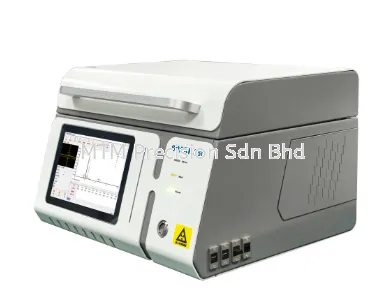
The Temtop S1-UP can help Malaysian users observe what happens before and after closing the windows.
It monitors:
PM2.5
AQI
Temperature
Humidity
Why Do People Close Windows During Haze?
During Malaysian haze, outdoor air may contain elevated levels of fine particles.
People commonly:
Close windows.
Close balcony doors.
Limit the opening of external doors.
Switch on air conditioning.
Operate air purifiers.
Spend more time indoors.
Closing windows can reduce direct outdoor-air entry.
However, the result inside each room may be different.
Monitoring helps users see what is actually happening.
Outdoor AQI Is Not the Same as Indoor PM2.5
Outdoor AQI reports provide information about the wider outdoor area.
They do not show the exact conditions inside your:
Bedroom.
Living room.
Office.
Classroom.
Tuition centre.
Clinic.
Shop.
Indoor PM2.5 depends on:
Outdoor conditions.
Window and door positions.
Building leakage.
Indoor particle sources.
Air purifier operation.
Room size.
Air movement.
The S1-UP provides information about the air around the monitor inside the room.
What Happens Immediately After Closing the Windows?
PM2.5 may not decrease immediately.
Possible reasons include:
Particles are already inside.
Cooking or smoking continues.
Dust is being disturbed.
The room is connected to another area.
The air purifier is not operating.
The building has significant leakage.
The monitor is positioned beside another particle source.
Closing the windows mainly changes future outdoor-air entry.
It does not instantly remove the particles already suspended inside.
What Can Remove PM2.5 Already Inside?
Depending on the conditions, indoor PM2.5 may decrease through:
Appropriate air purification.
Particle settling.
Reduced indoor particle generation.
Air exchange when outdoor air is cleaner.
Filtration within suitable building systems.
The reduction rate depends on:
Room size.
Initial PM2.5 concentration.
Purifier capacity.
Purifier speed.
Filter condition.
Air leakage.
Continuing particle sources.
Simple Window Open vs Closed Test
The S1-UP can be used for a basic before-and-after comparison.
Step 1: Choose One Room
Select a room such as:
Bedroom.
Living room.
Home office.
Meeting room.
Classroom.
Keep the comparison within one room.
Step 2: Position the S1-UP Correctly
Place the monitor in a representative occupied area.
Avoid placing it:
Directly beside the window.
Under the air conditioner.
Beside the air purifier outlet.
Next to the external door.
Near cooking smoke.
In direct sunlight.
The monitor should represent the room rather than the immediate window area.
Step 3: Record the Initial Condition
Before closing the window, record:
PM2.5.
AQI.
Temperature.
Humidity.
Time.
Window position.
Door position.
Air-conditioner status.
Air-purifier status.
Number of occupants.
Indoor activities.
Outdoor haze condition.
Step 4: Close the Window
Close the selected window without changing several other conditions.
For a clearer comparison:
Keep the S1-UP in the same place.
Keep the door condition consistent.
Do not start cooking.
Do not begin cleaning.
Keep the purifier status recorded.
Do not move the monitor.
Step 5: Observe the Trend
Record the readings at consistent intervals.
For example:
Before closing the window.
After 10 minutes.
After 20 minutes.
After 30 minutes.
After 60 minutes.
Observe whether PM2.5:
Decreases.
Remains stable.
Continues increasing.
Fluctuates.
The overall trend is more useful than one momentary reading.
Why Might PM2.5 Decrease?
Possible reasons include:
Less polluted outdoor air is entering.
The air purifier is removing particles.
The indoor particle source has stopped.
Particles are settling.
The room has become more isolated from another polluted area.
Do not automatically attribute the entire decrease to the window if several conditions changed at the same time.
Why Might PM2.5 Remain High?
Possible reasons include:
Particles remain suspended inside.
The air purifier is off.
The purifier is too small.
The filter needs attention.
Cooking continues.
Smoking or incense continues.
The room has significant air leakage.
The door opens frequently.
Polluted air enters from another room.
The monitoring period is too short.
Check the full room arrangement before reaching a conclusion.
Why Might PM2.5 Continue Increasing?
Possible causes include:
Cooking smoke.
Cigarette smoke.
Burning incense.
Cleaning.
Dust disturbance.
Outdoor particles entering through another opening.
Particles entering from the corridor.
The monitor being moved.
The purifier switching to a lower speed.
Closing one window does not control every possible particle source.
Does Closing Curtains Help?
Curtains are not a substitute for proper particle control.
They may affect airflow around a window, but they should not automatically be treated as fine-particle filters.
Curtains may also collect dust.
When moved or cleaned, they may disturb particles.
Use the S1-UP to observe the room PM2.5 instead of assuming that closing curtains solves the problem.
Do Closed Windows Make the Room Too Stuffy?
A closed, occupied room may experience increasing CO2 when fresh-air exchange is limited.
People continuously exhale CO2.
This can happen even if PM2.5 decreases.
The room may show:
PM2.5 decreasing after the windows are closed and the purifier starts
while:
CO2 increases because people remain inside
There is no contradiction.
PM2.5 and CO2 describe different processes.
Can the S1-UP Measure CO2?
No.
The S1-UP measures:
PM2.5.
AQI.
Temperature.
Humidity.
It does not show whether CO2 is increasing.
If your main concern involves:
Bedroom ventilation.
Meeting-room occupancy.
Classroom occupancy.
Training-room ventilation.
Long periods inside a closed office.
consider a CO2-capable monitor.
Should You Open the Windows During Haze?
There is no single answer suitable for every building and moment.
The decision may depend on:
Current outdoor particle conditions.
Indoor PM2.5.
Indoor CO2.
Building ventilation.
Occupancy.
Air purifier operation.
Health and safety requirements.
Outdoor air may help reduce indoor CO2, but it may also introduce more PM2.5 during haze.
Monitoring the relevant parameters helps users understand this trade-off.
Should You Switch On the Air Conditioner?
An air conditioner mainly controls temperature.
Depending on the system and filter, it may influence particle conditions.
However:
Air conditioning should not automatically be treated as dedicated PM2.5 filtration.
A room can become cool while PM2.5 remains high.
The S1-UP allows users to view temperature and PM2.5 separately.
Should You Use an Air Purifier?
An appropriate air purifier may help reduce airborne particles already inside the room.
Actual performance depends on:
Purifier capacity.
Room size.
Filter type.
Filter condition.
Fan speed.
Purifier position.
Air leakage.
Continuing particle sources.
The S1-UP can help users observe whether PM2.5 decreases after the purifier starts.
Closing Windows Plus Air Purifier
During haze, a common arrangement is:
Close the windows.
Limit external door opening.
Switch on the air conditioner.
Operate the air purifier.
Monitor indoor PM2.5.
This may support lower indoor particle levels.
However, remember to consider CO2 when people remain in the closed room for long periods.
The S1-UP does not measure CO2.
Bedroom Application
A typical bedroom comparison may include:
Record PM2.5 with the window open.
Close the window.
Keep the bedroom door condition recorded.
Operate the air purifier.
Keep the S1-UP away from direct airflow.
Record PM2.5 over time.
Record temperature and humidity.
If two people remain inside overnight, consider separate CO2 monitoring.
Living-Room Application
A living room may be affected by:
Main-door movement.
Balcony doors.
Kitchen smoke.
Smoking.
Incense.
Visitors.
Open-plan connections.
Closing the windows may reduce outdoor particle entry, but indoor activities may still cause PM2.5 to increase.
Record room activity together with the reading.
Home-Office Application
A home office may remain closed and occupied for many hours.
The S1-UP can help monitor:
PM2.5 during haze.
Temperature under air conditioning.
Humidity.
Air purifier performance.
A CO2-capable monitor may also be relevant because of continuous occupancy.
Office Application
An office may have fixed windows that cannot be opened.
Particle entry may occur through:
Building entrances.
Ventilation systems.
Doors.
Air leakage.
People moving between indoor and outdoor areas.
The S1-UP can support general PM2.5 screening, but the building’s ventilation and filtration system may require separate professional assessment.
Classroom Application
Closing classroom windows may help reduce outdoor haze entry.
However, classrooms have high occupancy.
CO2 may rise when fresh-air exchange is limited.
The S1-UP can monitor PM2.5, temperature and humidity.
It cannot provide CO2 or ventilation-related information.
A broader monitoring plan may require both particle and CO2 measurements.
Tuition-Centre Application
A tuition centre in a shop lot may have:
Closed windows.
Air conditioning.
Frequent classes.
Many students.
Roadside exposure.
Repeated door opening.
Closing the windows may help reduce direct traffic or haze entry.
However, external doors and occupancy can still affect the room.
Record:
Class schedule.
Door movement.
PM2.5.
Temperature.
Humidity.
Purifier operation.
Consider CO2 monitoring when ventilation is also a concern.
Shop and Clinic Application
Shops and clinics often have entrances that open frequently.
Even if the windows remain closed, PM2.5 may enter when customers arrive.
A monitor placed directly beside the entrance may show a local condition.
For general room monitoring, place the S1-UP farther inside the occupied area.
What If There Are No Openable Windows?
Some offices, clinics and commercial buildings have sealed windows.
In these spaces, outdoor air may enter through:
Mechanical ventilation.
Central air-conditioning systems.
Building entrances.
Doors.
Leakage.
The S1-UP can show indoor PM2.5 at its location.
However, identifying the exact entry path may require building-system investigation.
What If the Room Has an Exhaust Fan?
An exhaust fan changes airflow and pressure.
It may remove indoor air while causing replacement air to enter through:
Doors.
Windows.
Gaps.
Ventilation openings.
If the replacement air contains outdoor particles, PM2.5 may change.
Record the exhaust-fan condition during any comparison.
What If PM2.5 Rises When the Window Closes?
Possible explanations include:
An indoor particle source started.
Cooking smoke entered from another area.
The door remained open.
Cleaning disturbed dust.
Air movement changed.
The purifier switched off.
The monitor was moved.
The room was already experiencing a rising particle trend.
Do not assume that closing the window itself created the particles.
Review all changes in the environment.
What If PM2.5 Falls When the Window Opens?
Outdoor air may sometimes have a lower particle concentration than the indoor room.
Possible indoor sources include:
Cooking.
Smoking.
Incense.
Cleaning.
Dust disturbance.
The result depends on actual indoor and outdoor conditions at that time.
Do not assume that opening windows always increases or always decreases PM2.5.
Monitor the real situation.
Does Window Type Matter?
Particle entry may be influenced by:
How well the window closes.
Gaps around the frame.
Sliding-window design.
Seals.
Ventilation openings.
Building age.
Installation quality.
A closed window with significant leakage may not provide the same result as a well-sealed system.
The S1-UP can show the room trend but cannot directly measure the window’s leakage rate.
S1-UP Placement During Window Testing
For normal room monitoring:
Place the S1-UP away from the window.
For investigating the window area:
Take a separate reading near the window.
Do not mix the two objectives.
A window-area reading answers:
“What is happening near this opening?”
A room-area reading answers:
“What is happening where people are staying?”
Both may be useful, but they should be labelled correctly.
ECO Mode or A Mode?
ECO Mode
ECO Mode prioritises longer battery endurance.
According to Temtop, standby duration may reach approximately 60 days, depending on use and battery condition.
It is suitable for longer general observation.
A Mode
A Mode provides more immediate monitoring.
According to Temtop, standby duration may reach approximately 20 days, depending on use and battery condition.
A Mode may be more suitable for actively checking changes after opening or closing a window.
Common Window-Monitoring Mistakes
Mistake 1: Placing the S1-UP on the Window Ledge
This may show the local window condition rather than the room.
Mistake 2: Changing the Purifier and Window Simultaneously
You may not know which action caused the PM2.5 change.
Mistake 3: Ignoring the Door
Particles may continue entering through the door.
Mistake 4: Cooking During the Comparison
Cooking may increase indoor PM2.5.
Mistake 5: Treating One Reading as the Final Result
Observe the trend over time.
Mistake 6: Ignoring CO2
Closed occupied rooms may experience increasing CO2.
Mistake 7: Assuming Air Conditioning Removes All Particles
Cooling and fine-particle filtration are different functions.
Mistake 8: Moving the Monitor During the Test
Keep its position consistent.
Window Open vs Closed Monitoring Checklist
Before the comparison:
Choose one room.
Place the S1-UP in a representative position.
Record the purifier status.
Record the air-conditioner status.
Record the door position.
Stop unnecessary particle-producing activities.
During the comparison:
Record PM2.5 and AQI.
Record temperature and humidity.
Keep the monitor in the same position.
Use consistent time intervals.
When interpreting:
Check for indoor particle sources.
Consider air leakage.
Consider outdoor haze.
Do not use PM2.5 as a substitute for CO2.
Does Closing Windows Reduce PM2.5? Final Answer
Closing windows may reduce the direct entry of outdoor PM2.5.
However, the final indoor result depends on:
Particles already inside.
Other openings.
Building leakage.
Indoor particle sources.
Air purifier operation.
Room size.
Air movement.
Closing the windows does not instantly remove existing particles.
During Malaysian haze, a practical strategy may include:
Closing external openings
Reducing unnecessary door movement
Operating an appropriate air purifier
Monitoring PM2.5 with the Temtop S1-UP
Considering CO2 separately in occupied closed rooms
The Temtop S1-UP helps users answer the most important practical question:
“After I close the windows, is indoor PM2.5 actually decreasing?”
Contact MTM Precision
Contact MTM Precision for Temtop S1-UP Malaysia price and quotation, or for assistance selecting an air-quality monitor for PM2.5, haze, air purifiers, bedrooms, offices, classrooms and closed-room monitoring.
MTM Precision Sdn Bhd
Showroom & Service Centre:
No. 29-1 & 29-2, Jalan Bandar 18,
Pusat Bandar Puchong,
47160 Puchong, Selangor, Malaysia
Tel: 03-8080 7172
WhatsApp: +6016-660 7346
Email: mtmpre@yahoo.com
Website: www.mtmpre.com.my
03 Oct 2026


