






FNIRSI HRM-10 Solar Battery Internal Resistance and LiFePO4 Testing Guide Malaysia

FNIRSI HRM-10 Solar Battery Internal Resistance and LiFePO4 Testing Guide Malaysia
Introduction
Solar energy storage systems are increasingly used in residential, commercial and industrial applications throughout Malaysia.
Battery storage allows electricity generated by solar panels to be stored for later use, helping support energy management and backup power requirements.
Common battery technologies include lithium iron phosphate (LiFePO4) and lead acid batteries.
For technicians working with compatible individual battery cells, internal resistance measurement can provide useful information about electrical characteristics and cell consistency.
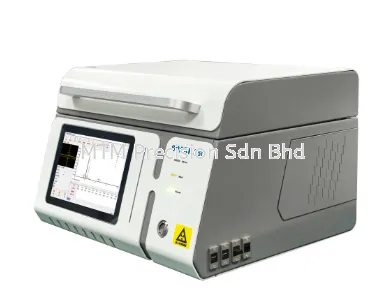
The FNIRSI HRM-10 Battery Internal Resistance Tester measures battery internal resistance and DC voltage using a four-wire Kelvin connection.
This article explains how the HRM-10 may support individual battery cell inspection in solar energy storage applications, the differences between LiFePO4 and lead acid batteries, and the important safety limitations of testing complete energy storage systems.
What Is a Solar Energy Storage Battery?
A solar energy storage battery stores electrical energy generated by a solar photovoltaic system.
The stored energy may be used when solar generation is insufficient or during designated backup power operation.
Solar battery systems commonly contain:
-
Battery cells
-
Battery modules
-
Battery management systems
-
Electrical protection devices
-
Power conversion equipment
-
Monitoring and control systems
Battery systems can be designed for different voltage levels and energy capacities.
Some systems operate at relatively low nominal voltages, while others use high-voltage battery architectures.
A handheld battery resistance tester should not be assumed suitable for measuring complete solar battery systems.
Common Battery Types Used in Solar Energy Storage
1. LiFePO4 Batteries
Lithium iron phosphate batteries, commonly called LiFePO4 or LFP batteries, are widely used in energy storage applications.
They are valued for characteristics such as long cycle-life potential and comparatively stable lithium-ion chemistry when operated within specified conditions.
However, their performance depends on battery design, temperature, operating limits and battery management.
2. Lead Acid Batteries
Lead acid batteries are used in some backup and off-grid energy systems.
Common constructions include:
-
Flooded Lead Acid
-
AGM
-
Gel
-
VRLA
Lead acid battery performance can be influenced by state of charge, temperature, ageing and maintenance conditions.
LiFePO4 vs Lead Acid Battery - Main Differences
| Feature | LiFePO4 Battery | Lead Acid Battery |
|---|---|---|
| Battery Chemistry | Lithium Iron Phosphate | Lead Acid |
| Nominal Cell Voltage | Approximately 3.2V | Approximately 2V |
| Energy Density | Generally Higher | Generally Lower |
| Weight for Similar Energy | Generally Lower | Generally Higher |
| Cycle-Life Potential | Often Longer | Often Shorter |
| Battery Management | BMS Normally Required | Depends on System Design |
| Internal Resistance | Model Dependent | Model Dependent |
| Solar Storage Application | Common | Also Used |
Actual performance varies significantly between products.
Battery internal resistance should be compared using suitable specifications for the particular cell or battery model.
Why Is Battery Internal Resistance Important in Solar Storage?
Battery internal resistance influences electrical behaviour during charging and discharging.
Increased internal resistance can contribute to:
-
Greater voltage drop under load
-
Additional internal heating
-
Reduced high-current performance
-
Uneven electrical behaviour between cells
In battery modules containing multiple cells, differences between cells may become relevant during inspection and quality control.
However, internal resistance is only one part of battery condition assessment.
Battery capacity, temperature, cell balance, insulation condition and BMS operation may also require evaluation.
What Is the FNIRSI HRM-10?
The FNIRSI HRM-10 is a handheld battery internal resistance tester designed to measure resistance and DC voltage.
It uses an approximately 1kHz AC resistance measurement method and four-wire Kelvin measurement.
FNIRSI HRM-10 Main Specifications
| Parameter | Description |
|---|---|
| Model | FNIRSI HRM-10 |
| Instrument Type | Battery Internal Resistance Tester |
| Internal Resistance Range | Up to 200 Ohms |
| DC Voltage Range | Up to +/-100V DC |
| Resistance Test Method | Approximately 1kHz AC |
| Measurement Connection | Four-Wire Kelvin |
| Main Measurements | Battery Internal Resistance and DC Voltage |
| Additional Functions | Battery Sorting and Measurement Recording |
Important: The published voltage range does not mean the HRM-10 is approved for testing energized solar battery banks, inverter connections or high-voltage energy storage systems.
Always follow the manufacturer's safety instructions and approved testing procedures.
Can FNIRSI HRM-10 Test LiFePO4 Batteries?
The FNIRSI HRM-10 may be used to measure internal resistance and DC voltage on compatible individual LiFePO4 cells under safe testing conditions.
LiFePO4 cells commonly have a nominal voltage of approximately 3.2V per cell.
However, LiFePO4 batteries are available in many configurations.
For example:
-
Individual 3.2V LiFePO4 cells
-
12.8V nominal battery assemblies
-
25.6V nominal battery assemblies
-
48V-class energy storage systems
-
Higher-voltage industrial storage systems
These configurations are not equivalent from a testing or safety perspective.
Testing an individual cell is different from testing an assembled battery module or complete energy storage system.
The HRM-10 should not be treated as a universal solar battery analyzer.
How to Test an Individual LiFePO4 Cell with FNIRSI HRM-10
The following procedure applies only to compatible individual cells that can be safely tested.
Step 1 - Identify the Battery Cell
Confirm the manufacturer, model, chemistry, nominal voltage and rated capacity.
Step 2 - Inspect the Battery
Check for visible damage, leakage, deformation or signs of overheating.
Do not test visibly unsafe cells.
Step 3 - Confirm Safe Testing Conditions
Ensure the cell is safely isolated and suitable for measurement according to the manufacturer's instructions.
Do not disconnect or open an operating energy storage system without appropriate authorization and qualifications.
Step 4 - Prepare the FNIRSI HRM-10
Connect the Kelvin measurement probes according to the instrument's operating instructions.
Step 5 - Measure Cell Voltage
Record the DC voltage.
Step 6 - Measure Internal Resistance
Record the displayed internal resistance reading.
Step 7 - Repeat the Measurement
If the result appears unusual, verify probe contact and repeat the measurement.
Step 8 - Compare with Reference Data
Compare the result with the cell manufacturer's specifications or suitable baseline measurements.
Do not use a universal milliohm threshold for every LiFePO4 cell.
Example - Comparing Four LiFePO4 Cells
Consider four individual LiFePO4 cells of the same model.
| Cell ID | Voltage | Internal Resistance | Observation |
|---|---|---|---|
| LFP-01 | 3.30V | 0.45mΩ | Similar to Reference |
| LFP-02 | 3.30V | 0.47mΩ | Similar to Reference |
| LFP-03 | 3.30V | 0.46mΩ | Similar to Reference |
| LFP-04 | 3.30V | 1.20mΩ | Further Investigation |
Illustrative values only. These are not universal acceptance limits. Confirm that the instrument's specified resolution and accuracy are adequate before using it to distinguish sub-milliohm readings.
The first three cells show similar resistance values.
The fourth cell has a higher resistance reading.
A technician should verify measurement repeatability, temperature, state of charge and contact quality before drawing conclusions.
If the difference remains, additional testing may be required.
Internal resistance alone cannot establish whether a LiFePO4 cell is suitable for continued service.
Why Four-Wire Kelvin Measurement Matters for LiFePO4 Cells
Some large-format LiFePO4 cells have very low internal resistance.
When resistance is extremely low, test lead resistance can significantly influence the measurement.
The four-wire Kelvin method reduces the influence of current-carrying lead resistance.
However, the instrument must have sufficient resolution and accuracy for the resistance being measured.
For very low resistance cells, a dedicated professional battery impedance instrument may be more appropriate.
Can FNIRSI HRM-10 Test a Complete 48V Solar Battery?
A complete 48V-class solar battery may contain multiple cells, a battery management system and substantial stored energy.
Although its nominal voltage may fall within the published DC voltage measurement range of the HRM-10, that alone does not establish measurement suitability or safety.
Additional considerations include:
-
Maximum operating voltage
-
Transient voltage exposure
-
Available fault current
-
Battery management system design
-
Measurement connection requirements
-
Electrical isolation
-
Manufacturer-approved procedures
Do not connect the HRM-10 directly to an energized solar battery bank or inverter system without explicit manufacturer authorization for that configuration.
For complete energy storage systems, use appropriately rated professional battery and electrical testing equipment.
Battery Internal Resistance vs Battery Capacity in Solar Storage
Battery internal resistance and battery capacity measure different characteristics.
| Measurement | Purpose | Typical Equipment |
|---|---|---|
| Internal Resistance | Evaluates Electrical Resistance | Battery Resistance Tester |
| DC Voltage | Checks Terminal Voltage | Suitable Voltage Tester |
| Capacity | Measures Available Charge | Battery Capacity Tester |
| Cell Balance | Evaluates Cell Voltage Differences | BMS or Approved Diagnostic Equipment |
| Insulation Resistance | Evaluates Insulation Integrity | Appropriately Rated Insulation Tester |
| System Performance | Evaluates Energy Storage Operation | Manufacturer-Approved System Diagnostics |
The FNIRSI HRM-10 does not directly measure battery capacity, insulation resistance or complete solar energy storage system performance.
Applications in Solar Battery Maintenance
Application 1 - Incoming Battery Cell Inspection
Technicians may compare individual cells before they are incorporated into a battery assembly.
Resistance measurement can support quality inspection when combined with appropriate specifications and other tests.
Application 2 - Battery Cell Sorting
The HRM-10 may support resistance comparison between compatible cells of the same model.
However, safe cell matching also requires capacity, voltage and manufacturer compatibility considerations.
Application 3 - Engineering Laboratories
The instrument can support educational and technical experiments involving compatible individual battery cells.
Application 4 - Battery Service Workshops
Qualified technicians may use resistance measurements as supplementary information when evaluating safely isolated cells.
Application 5 - Solar Equipment Service Providers
Solar service businesses may use battery testing instruments during approved workshop-level inspection.
However, field maintenance of connected energy storage systems requires appropriately rated equipment and qualified personnel.
Common Mistakes When Testing Solar Batteries
Mistake 1 - Assuming Every Solar Battery Is a 12V Battery
Solar energy storage systems are available in many voltage and capacity configurations.
Recommendation: Identify the exact battery architecture before selecting testing equipment.
Mistake 2 - Measuring Only Battery Voltage
Voltage does not establish complete battery health or capacity.
Recommendation: Use additional manufacturer-approved testing methods.
Mistake 3 - Comparing Different Battery Chemistries
LiFePO4 and lead acid batteries have different electrical characteristics.
Recommendation: Compare batteries using chemistry-specific reference values.
Mistake 4 - Treating Internal Resistance as Remaining Capacity
Internal resistance is not a direct measurement of battery capacity.
Recommendation: Use an appropriate capacity testing method when required.
Mistake 5 - Testing Energized Battery Banks with Unsuitable Equipment
Energy storage systems can contain hazardous voltage and very high available current.
Recommendation: Follow approved electrical safety procedures and use suitably rated instruments.
Who Should Consider FNIRSI HRM-10 in Malaysia?
The FNIRSI HRM-10 may be useful for:
Battery Cell Inspection Workshops
For comparing compatible individual lithium battery cells.
Electronics Repair Businesses
For rechargeable battery resistance and voltage measurements.
Engineering Laboratories
For technical experiments involving battery electrical characteristics.
Battery Pack Assembly Businesses
For supplementary incoming cell inspection.
Industrial Maintenance Workshops
For battery testing applications within the instrument's approved limits.
Frequently Asked Questions
Q1. Can FNIRSI HRM-10 test LiFePO4 batteries?
It may be used to measure voltage and internal resistance on compatible individual LiFePO4 cells under safe conditions.
Q2. Can FNIRSI HRM-10 measure solar battery capacity?
No. The HRM-10 does not directly measure capacity in Ah or kWh.
Q3. Can FNIRSI HRM-10 test a complete 48V solar battery system?
Do not assume that it can. Complete systems require compatibility assessment, manufacturer-approved procedures and appropriately rated equipment.
Q4. Why is internal resistance important for LiFePO4 batteries?
It can provide information about electrical resistance and differences between comparable cells, but it does not independently determine battery health.
Q5. Is FNIRSI HRM-10 suitable for high-voltage energy storage systems?
It should not be treated as a high-voltage energy storage system tester.
Q6. Can FNIRSI HRM-10 replace a solar battery analyzer?
No. It measures battery internal resistance and DC voltage, not complete energy storage system performance.
Conclusion
Solar energy storage batteries require appropriate testing and maintenance to support reliable operation.
The FNIRSI HRM-10 Battery Internal Resistance Tester provides a practical method for measuring internal resistance and DC voltage on compatible individual battery cells.
Its four-wire Kelvin measurement method can support cell comparison and selected workshop inspection applications.
For battery technicians, engineering laboratories and battery service businesses in Malaysia, the HRM-10 may complement other battery testing equipment.
However, complete solar energy storage systems require appropriately rated professional instruments, qualified personnel and manufacturer-approved procedures.
Internal resistance testing should be treated as one part of a broader battery evaluation process.
Where to Buy FNIRSI HRM-10 in Malaysia?
MTM Precision Sdn Bhd supplies electrical testing instruments, battery inspection equipment and industrial measuring tools in Malaysia.
Customers searching for FNIRSI HRM-10 Solar Battery Internal Resistance Tester Malaysia can contact MTM Precision for product information, quotations and availability.
We support customers across Kuala Lumpur, Selangor, Johor, Penang, Melaka, Negeri Sembilan, Perak, Pahang, Kedah, Kelantan, Terengganu, Perlis, Sabah and Sarawak.
Contact MTM Precision Sdn Bhd
MTM Precision Sdn Bhd
Showroom & Service Centre
No. 29-1 & 29-2, Jalan Bandar 18,
Pusat Bandar Puchong,
47160 Puchong, Selangor, Malaysia.
Tel: 03-8080 7172
WhatsApp: +6016-660 7346
Email: mtmpre@yahoo.com
Website: www.mtmpre.com.my
Contact MTM Precision today for FNIRSI HRM-10 product information, quotations and availability in Malaysia.
10 Oct 2026
