






Chemical Anchor Pull-Out Testing for Construction QA/QC Malaysia

Chemical Anchor Pull-Out Testing for Construction QA/QC Malaysia
Chemical Anchor Testing for Construction Quality Control Malaysia
Chemical anchors are widely used in modern construction for fixing structural and non-structural components to concrete.
Typical applications include:
Structural steel brackets
Façade and curtain wall systems
M&E supports
Machinery and equipment bases
Handrails and barriers
Retrofit construction
Building extensions
Post-installed threaded rods
Suitable post-installed steel bars
Where required by the project specification, consultant or engineer, chemical anchor pull-out testing can form part of the construction QA/QC process.
The purpose is not simply to “pull the anchor as hard as possible.”
A professional test should have a clearly defined test load, test method, acceptance criteria and reporting procedure.
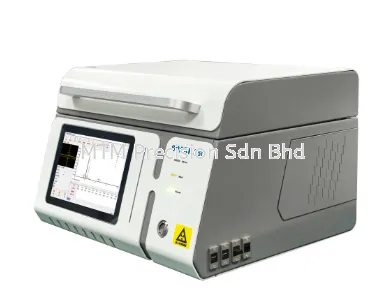
For suitable applications requiring up to 200kN measurement range, the Langry APT200 Anchor Pull-Out Tester provides a professional field-testing option.
What Is Chemical Anchor Pull-Out Testing?
Chemical anchor pull-out testing involves applying a controlled tensile force to an installed anchoring component.
The test may be performed to verify selected installed anchors according to an approved project procedure.
Depending on the test objective, the procedure may involve:
Proof loading
Holding a specified load
Monitoring movement where required
Recording maximum applied force
Observing anchor behaviour
Documenting the result
The test requirement should be established before testing begins.
Why Is Chemical Anchor Testing Important for QA/QC?
A chemical anchor system does not depend only on the adhesive product.
The completed installation involves several elements:
Concrete + Drilled Hole + Adhesive + Threaded Rod/Rebar + Installation Workmanship
A problem with any part of this system can affect performance.
Pull-out testing therefore provides one method of checking selected completed installations where required by the project.
Chemical Anchor Installation Quality Starts with Drilling
The drilled hole is an important part of the anchoring system.
Before adhesive installation, the installer should follow the approved system requirements relating to:
Drill diameter
Drilling method
Hole depth
Hole condition
An incorrectly prepared hole can affect the completed anchor.
Hole Cleaning Is Critical
Drilling concrete produces dust and debris.
Where the approved chemical anchor system specifies a cleaning procedure, it should be followed carefully.
Depending on the system, this may involve specified combinations of:
Blowing
Brushing
Additional blowing or cleaning cycles
Always follow the anchor manufacturer's approved installation instructions rather than applying one generic cleaning procedure to every product.
Check Hole Depth
The drilled hole must provide the required embedment for the approved anchor installation.
Insufficient depth may result in:
Reduced embedment
Incorrect anchor position
Improper adhesive distribution
Depth should be checked during installation QA/QC rather than discovered during pull-out testing.
Adhesive Installation Matters
Chemical anchoring materials must be installed according to the approved system instructions.
Potential installation problems can include:
Incorrect mixing
Insufficient adhesive
Air pockets
Poor injection technique
Contaminated material
Incorrect installation conditions
A pull-out test performed later cannot correct poor installation.
Check the Chemical Anchor Expiry Date
Before installation, check:
Product identification
Expiry date
Cartridge condition
Storage requirements
Batch information where required
QA/QC should begin before the material enters the drilled hole.
Curing Time Must Be Respected
Chemical anchors require sufficient curing before they are loaded.
The required curing time may depend on:
Product formulation
Base-material temperature
Ambient conditions
Installation conditions
Do not assume the anchor is ready simply because the adhesive appears hard externally.
Follow the approved chemical anchor system requirements.
What Should Be Checked Before Pull-Out Testing?
Before the testing team arrives, confirm:
Anchor type
Anchor diameter
Thread size
Embedment where required
Installation date and time
Chemical anchor product
Curing status
Required test load
Test method
Acceptance criteria
Test quantity
Test locations
Good preparation reduces site delays.
Who Determines the Chemical Anchor Test Load?
The test operator should not decide the load simply by looking at the anchor.
The required test load may come from:
Structural engineer
Project consultant
Façade consultant
Approved method statement
Project specification
Anchor design documentation
The testing equipment provides the force.
The engineering requirement determines how much force should be applied.
Proof Testing Chemical Anchors
Many construction QA/QC applications involve a defined proof load rather than intentionally loading the anchor until failure.
For example, if an approved procedure specifies a particular proof load, the operator applies that load according to the defined procedure.
The test may then evaluate:
Whether the load was reached
Whether it was maintained
Whether unacceptable movement occurred
Whether visible failure occurred
Acceptance should follow the project's criteria.
Proof Test Does Not Mean Pull Until Failure
This distinction is important.
A contractor may say:
“We need a pull-out test.”
But the actual requirement may be:
“Proof load the selected anchor to the specified force.”
These are not necessarily the same as an ultimate destructive test.
Clarify the objective before testing.
Chemical Anchor Failure Testing
Some projects or investigations may require testing toward failure.
This can help evaluate:
Maximum load
Failure behaviour
Failure mode
Such testing can be destructive and should follow a clearly defined test method with appropriate safety controls.
Common Chemical Anchor Failure Modes
During testing, different failure behaviours may be observed.
These can include:
Anchor Pull-Out
The anchoring component is pulled from the installed system.
Bond-Related Failure
Failure occurs along part of the bonded anchorage.
Concrete Failure
The surrounding base material fails.
Steel Failure
The threaded rod or steel component fails.
Test Connection Failure
The adapter or connection fails before the anchor is properly evaluated.
The failure mode should be documented, not just the force reading.
What Does a Failed Chemical Anchor Test Mean?
A failed test does not automatically prove that the adhesive brand is defective.
Possible causes may involve:
Incorrect drilling
Poor hole cleaning
Insufficient embedment
Incorrect adhesive installation
Inadequate curing
Weak concrete
Anchor positioning
Installation workmanship
Incorrect test setup
The result should be investigated systematically.
What Should QA/QC Do After a Failed Test?
A sensible process may include:
Stop and document the result
Record the maximum load
Photograph the test location
Record the failure behaviour
Review installation records
Check curing information
Review the test setup
Inform the responsible project team
Follow the approved failure procedure
Do not simply remove the failed anchor and pretend the test did not occur.
Should More Anchors Be Tested After a Failure?
Possibly.
Additional testing may be required to determine whether the issue is isolated or more widespread.
However, the number and location of additional tests should follow the project requirements or responsible engineer's instructions.
Do not randomly increase the test quantity without a defined plan.
How Many Chemical Anchors Should Be Pull-Out Tested?
There is no universal percentage that applies to every project.
Do not automatically assume:
5%
10%
or any other percentage.
The required sampling quantity should follow the applicable:
Project specification
Approved method statement
Consultant requirement
Engineer requirement
Testing procedure
Anchor Identification Is Important
Every tested anchor should be traceable.
A project may use IDs such as:
CA-L08-G3-01
or another project-specific system.
The test report should make it possible to identify the exact tested location later.
What Should a Chemical Anchor Test Report Include?
A professional report may contain:
Project name
Test location
Anchor ID
Anchor type
Anchor diameter
Chemical anchor system where required
Required test load
Applied load
Holding time
Movement where required
Observations
Pass/fail result
Test date
Equipment identification
Calibration information where required
Photographs
The exact reporting requirement should be agreed before testing.
Why Equipment Calibration Matters
Professional QA/QC relies on measured force.
Depending on the project, the customer may require information such as:
Tester model
Serial number
Calibration status
Calibration certificate
Measurement traceability
These requirements should be confirmed before mobilisation.
Langry APT200 for Chemical Anchor QA/QC
For suitable chemical anchor testing applications, the Langry APT200 provides a maximum measurement range of:
0–200kN
approximately:
20-ton class capacity
Key features include:
Digital force measurement
Portable hydraulic testing configuration
Up to 500 stored measurement records
Suitable adapter/converter configuration for supported anchor sizes
EN ISO 7500-1 Class 1 accuracy classification
Actual suitability should always be checked against the required test load and anchor configuration.
Is APT200 the Correct Capacity?
Not always.
Langry offers different capacities:
ModelMaximum RangeApproximate ClassAPT100100kN10 TonAPT200200kN20 TonAPT300300kN30 Ton
The correct model should be selected according to the maximum required testing range.
Why 200kN Can Be Useful for QA/QC Companies
Testing companies and contractors may encounter different project requirements over time.
One project may require relatively low proof loads.
Another may require more than 100kN.
For companies expecting mixed construction applications within 200kN, the APT200 can provide useful additional capacity compared with a 100kN system.
Do Not Buy Based Only on Anchor Size
A common purchasing mistake is:
“We normally test M16 anchors, so what ton tester should we buy?”
Anchor diameter alone does not determine the required test load.
Two M16 anchoring systems may have different:
Products
Embedments
Base materials
Designs
Project test requirements
Always determine the required force.
Site Test Setup Is Part of QA/QC
Even good equipment can produce questionable testing if the physical setup is poor.
Before loading, check:
Correct adapter
Secure connection
Appropriate reaction setup
Axial alignment
Equipment stability
Concrete condition
Safe working area
The tester and the test setup should be treated as one complete measurement system.
Chemical Anchor Testing at Height
Façade and M&E applications may require testing:
On scaffolding
On elevated platforms
Near slab edges
Across multiple floors
Access and equipment handling should be planned before testing.
Safety requirements take priority over convenience.
Construction QA/QC Should Start Before Testing
Pull-out testing should not become the only quality-control measure.
A stronger QA/QC process begins during installation.
Useful records can include:
Anchor product
Batch information
Installation location
Hole diameter
Embedment
Installation date
Installer
Curing information
If a test fails later, these records can help identify the cause.
Simple Chemical Anchor QA/QC Workflow
A practical project workflow can be:
Step 1 – Approve Anchor System
Confirm the specified product and design.
Step 2 – Control Installation
Monitor drilling, cleaning, adhesive application and embedment.
Step 3 – Allow Required Cure
Follow the approved curing requirements.
Step 4 – Select Test Points
Follow the project sampling plan.
Step 5 – Confirm Test Load
Obtain the approved requirement.
Step 6 – Perform Testing
Use suitable equipment and setup.
Step 7 – Record Results
Document readings, observations and photographs.
Step 8 – Review Failures
Follow the project's corrective-action procedure where necessary.
Frequently Asked Questions
Why are chemical anchors pull-out tested?
Where required, testing provides verification of selected installed anchors as part of construction QA/QC.
Does every chemical anchor need to be tested?
Not necessarily. The quantity should follow the applicable project requirements.
How long should I wait before testing?
Follow the curing requirements of the approved chemical anchoring system under the relevant installation conditions.
Who decides the test load?
The appropriate engineer, consultant or approved project documentation should define it.
Is a chemical anchor pull-out test always destructive?
No. Many applications involve proof loading rather than intentionally testing to ultimate failure.
Can poor hole cleaning cause problems?
Yes. Where cleaning is required by the approved anchoring system, incorrect preparation can negatively affect the installed anchorage.
What should happen after a failed test?
Document the result, investigate the installation and test setup, and follow the approved project procedure.
Is Langry APT200 suitable for chemical anchor testing?
It can be suitable for professional applications where the required load and test configuration fall within its 200kN measurement range.
Where can I buy a chemical anchor pull-out tester in Malaysia?
Contact MTM Precision Sdn. Bhd. for Langry anchor pull-out testing equipment, model selection and quotation in Malaysia.
Chemical Anchor Pull-Out Tester Supplier Malaysia
MTM Precision supplies professional construction, civil engineering and testing equipment for contractors, QA/QC teams and inspection companies throughout Malaysia.
For equipment selection, provide:
Chemical Anchor Type + Anchor Diameter + Required Test Load + Application
For unusual installations, send a clear photograph of the actual anchor and surrounding area.
This allows the equipment configuration to be reviewed before purchase or site testing.
Contact MTM Precision
MTM Precision Sdn. Bhd.
Showroom & Service Centre
No. 29-1 & 29-2, Jalan Bandar 18,
Pusat Bandar Puchong,
47160 Puchong, Selangor, Malaysia
🌐 Website: www.mtmpre.com.my
📧 Email: mtmpre@yahoo.com
📱 WhatsApp: +6016-660 7346
For Langry APT200 Chemical Anchor Pull-Out Tester for Construction QA/QC Malaysia, current quotation, model selection and professional construction testing equipment enquiries, contact MTM Precision.
11 Aug 2026
