





When Should a Factory Upgrade from Portable to Fixed Environmental Monitoring Malaysia

When Should a Factory Upgrade from Portable to Fixed Environmental Monitoring Malaysia
Portable environmental monitors are practical for routine inspections, troubleshooting and comparing different factory areas. However, they only provide information while an employee is present and carrying out the inspection.
When environmental conditions can change unexpectedly, a factory may need to upgrade to a fixed continuous monitoring system with alarms, data records or equipment-control functions.
The decision should be based on the frequency, severity and predictability of the environmental risk.
Portable Monitoring Is Suitable for Initial Investigation
A portable monitor is usually a good starting point when:
-
The pollution source is unknown.
-
Several factory areas must be compared.
-
The complaint occurs only occasionally.
-
The factory is conducting an initial assessment.
-
There is no confirmed need for permanent monitoring.
-
One instrument must be shared between departments.
-
The maintenance team needs immediate readings.
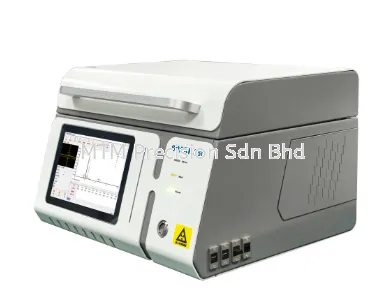
Depending on the required parameters, models such as the Temtop P600, M2000 2nd or LKC-1000S+ 2nd may be considered for portable environmental inspection.
Sign 1: Abnormal Readings Keep Returning
A fixed system should be considered when portable inspections repeatedly identify abnormal conditions in the same area.
Examples include:
-
Dust increases during every production shift.
-
CO₂ rises when occupancy is high.
-
VOC readings increase during painting or chemical use.
-
Temperature or humidity regularly leaves the desired range.
-
A gas reading appears whenever a process starts.
-
Ventilation performance changes unexpectedly.
Repeated problems indicate that occasional inspections may no longer provide enough information.
Sign 2: The Problem Occurs Between Inspections
Some factory problems disappear before the maintenance team arrives.
For example:
-
A dust peak lasts only a few minutes.
-
A ventilation fan stops intermittently.
-
A chemical vapour appears during one process stage.
-
Temperature rises overnight.
-
A gas leak occurs outside normal inspection times.
-
Conditions change during a different shift.
Continuous monitoring can record when the event occurred, how long it lasted and whether it repeated.
Sign 3: Workers Need an Immediate Warning
A portable monitor is ineffective if it is stored in an office when an abnormal condition develops.
Fixed monitoring may be necessary when workers require:
-
An audible alarm
-
A flashing warning light
-
A remote notification
-
A warning before entering an area
-
Notification of ventilation failure
-
Immediate information about changing conditions
The alarm system should be linked to a documented response procedure.
Sign 4: Ventilation Must Operate Automatically
Some fixed systems can provide relay or communication outputs to other equipment.
Depending on the configuration, the system may:
-
Start an exhaust fan
-
Activate additional ventilation
-
Trigger a warning light
-
Send a signal to a control panel
-
Communicate with a building-management system
-
Notify responsible personnel
Portable instruments are normally intended for measurement rather than permanent equipment control.
Sign 5: Management Needs Historical Data
Continuous records can help management determine:
-
When the problem begins
-
How long it continues
-
Which shift experiences the highest readings
-
Whether ventilation improvements are effective
-
Whether conditions change on weekends or overnight
-
How often alarms occur
-
Whether corrective work produced lasting improvement
Confirm that the selected fixed system supports the required data-storage and export functions. A real-time display does not automatically mean that historical records are available.
Sign 6: The Area Is Not Continuously Occupied
Some factory areas are visited only occasionally but may still contain environmental risks.
Examples include:
-
Chemical storage rooms
-
Battery-charging areas
-
Boiler rooms
-
Generator rooms
-
Wastewater-treatment rooms
-
Enclosed pump rooms
-
Cold rooms
-
Remote warehouses
-
Utility areas
A fixed monitor can observe the area when no employee is present, subject to the selected sensing and communication arrangement.
Sign 7: The Factory Relies on Manual Checks
Manual inspections may become difficult when:
-
There are many monitoring locations.
-
Different employees use different methods.
-
Inspections are sometimes missed.
-
Readings are not recorded consistently.
-
Shift coverage is incomplete.
-
Management needs centralised information.
-
The factory is expanding.
A fixed system can improve consistency, but it still requires clear responsibility for alarm response and system checks.
Sign 8: Portable Readings Differ Significantly by Time
If measurements change substantially between morning, afternoon, night shift or production cycles, occasional spot checks may not represent actual conditions.
Before installing a fixed system, use a portable monitor or data logger to determine:
-
Time of the highest reading
-
Duration of abnormal conditions
-
Relationship with production
-
Effect of ventilation
-
Difference between shifts
-
Most representative sensor location
This information helps the factory plan the fixed installation more effectively.
Sign 9: One Monitoring Point Is No Longer Enough
A factory may need multiple fixed points when it contains:
-
Separate production zones
-
Several pollution sources
-
Different ventilation areas
-
Enclosed rooms
-
Widely distributed workers
-
Processes involving different hazards
Every monitoring point should have a clear purpose. More sensors do not automatically produce better information if the locations are poorly selected.
Sign 10: The Cost of Missing an Event Is High
Fixed monitoring becomes more valuable when an undetected event could cause:
-
Worker exposure
-
Product damage
-
Production interruption
-
Ventilation-system failure
-
Loss of stored materials
-
A delayed emergency response
-
Repeated complaints
-
Difficulty investigating an incident
The monitoring investment should be compared with the possible operational consequences of missing the event.
Portable, Data Logger or Fixed System?
| Requirement | Portable Monitor | Data Logger | Fixed System |
|---|---|---|---|
| Inspect multiple locations | Best choice | Possible | No |
| Immediate troubleshooting | Best choice | Limited | Location-specific |
| Historical records | Model-dependent | Strong | Configurable |
| Continuous alarm | Limited | Model-dependent | Strong |
| Remote monitoring | Model-dependent | Model-dependent | Configurable |
| Automatic ventilation control | Usually unavailable | Usually unavailable | Possible |
| Monitoring outside working hours | Limited | Yes | Yes |
| Permanent monitoring point | No | Temporary or semi-permanent | Yes |
Some instruments combine several of these functions. Confirm the exact configuration before purchasing.
Planning the Upgrade
A practical upgrade process is:
-
Identify the recurring environmental problem.
-
Conduct portable measurements at multiple locations.
-
Record readings during different production periods.
-
Confirm the parameter that must be monitored.
-
Select representative permanent locations.
-
Determine the alarm and communication requirements.
-
Install the fixed monitoring system.
-
Test alarms and equipment-control functions.
-
Train employees on the response procedure.
-
Review the recorded data after installation.
Portable monitoring should continue after installation to investigate other areas and compare fixed-monitor readings where appropriate.
Considering a Fosensor FS11301-Based System
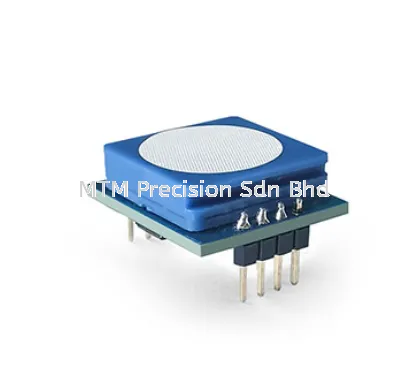
A Fosensor FS11301-based monitoring arrangement may be considered when the factory needs continuous environmental measurement.
Before ordering, confirm:
-
Required sensors
-
Measurement ranges
-
Number of monitoring points
-
Display arrangement
-
Adjustable alarm levels
-
Audible and visual alarms
-
Relay outputs
-
Communication protocol
-
Remote monitoring
-
Data storage and export
-
Power supply
-
Installation environment
-
Ventilation-control requirements
Available functions depend on the selected configuration and connected equipment.
Do Not Remove Portable Instruments Completely
Upgrading to fixed monitoring does not make portable instruments unnecessary.
Portable tools remain useful for:
-
Investigating new complaints
-
Checking other factory areas
-
Comparing monitoring points
-
Examining ventilation outlets
-
Following up after corrective work
-
Supporting routine inspections
-
Checking areas without fixed sensors
The strongest factory monitoring strategy often combines portable inspection, data logging and fixed continuous monitoring.
Conclusion
A factory should consider upgrading from portable to fixed environmental monitoring when abnormal conditions are repeated, unpredictable, safety-related or likely to occur outside inspection periods.
Fixed monitoring is also valuable when workers need immediate alarms, management needs historical records or ventilation equipment must respond automatically.
Conduct portable measurements first, confirm the actual risk and select representative monitoring points before installing the fixed system.
Meta Description: Learn when a factory should upgrade from portable environmental monitors to a fixed monitoring system in Malaysia for continuous data, alarms and ventilation control.
Contact MTM Precision
MTM Precision Sdn. Bhd.
Showroom & Service Centre
No. 29-1 & 29-2, Jalan Bandar 18,
Pusat Bandar Puchong,
47160 Puchong, Selangor, Malaysia
🌐 Website: www.mtmpre.com.my
📧 Email: mtmpre@yahoo.com
📱 WhatsApp: +6016-660 7346
01 Sep 2026


