





NOVKER NK301 Four-Wavelength Stable Light Source for Single-Mode and Multimode Fibre Malaysia

Fibre optic contractors do not always work with only one type of fibre. A company may maintain single-mode FTTH and building-backbone links while also testing multimode fibre inside offices, factories or data centres.
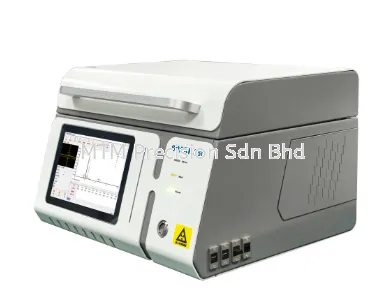
The NOVKER NK301 Series Handheld Stable Light Source can be configured with multiple optical wavelengths, including versions suitable for both single-mode and multimode fibre testing.
A four-wavelength configuration gives professional technicians broader testing coverage without carrying separate light sources for each fibre type.
What Is a Four-Wavelength Stable Light Source?
A four-wavelength stable light source contains four selectable optical outputs in one handheld instrument.
A typical configuration for mixed fibre work may include:
-
850nm
-
1300nm
-
1310nm
-
1550nm
The exact wavelength combination must be confirmed when ordering because different NK301 versions may be supplied for different applications.
The instrument sends the selected optical signal through the fibre. A compatible optical power meter at the opposite end measures the received power and helps determine the total insertion loss.
Which Wavelengths Are Used for Multimode Fibre?
Multimode fibre is commonly tested at:
-
850nm
-
1300nm
These wavelengths may be used for multimode links found in:
-
Data centres
-
Server rooms
-
Internal building networks
-
Campus installations
-
Factory communication systems
-
Legacy fibre backbones
Common multimode fibre categories include OM1, OM2, OM3, OM4 and OM5.
Formal multimode testing may require controlled launch conditions and specific reference procedures. Buyers should confirm the applicable testing standard before using a general handheld light source for certification work.
Which Wavelengths Are Used for Single-Mode Fibre?
Single-mode fibre is commonly tested at:
-
1310nm
-
1550nm
These wavelengths are relevant to:
-
FTTH networks
-
Telecom infrastructure
-
Long-distance fibre
-
Building-to-building links
-
Factory fibre backbones
-
CCTV fibre transmission
-
Campus networks
Testing at both wavelengths can provide additional information about the link.
The 1550nm wavelength is generally more sensitive to bending loss. A link that performs normally at 1310nm but shows significantly higher loss at 1550nm should be inspected for tight bends, compression or poor cable routing.
Why Choose Four Wavelengths?
A four-wavelength NK301 provides several practical advantages.
One instrument for two fibre types
Technicians can support both single-mode and multimode testing without purchasing separate light sources.
Reduced equipment handling
Carrying fewer individual instruments makes field work and equipment management easier.
Better preparation for different sites
The contractor can respond to projects involving FTTH, building networks, data centres and factory fibre infrastructure.
Lower risk of bringing the wrong tester
A technician who regularly visits different customer sites may not know the fibre type until inspecting the installation. A four-wavelength unit provides wider coverage.
Suitable for growing contractors
A company expanding from general network cabling into professional fibre testing can use one instrument across more applications.
NK301 Must Be Paired with an Optical Power Meter
The NK301 provides the transmitting signal. It does not independently measure total fibre loss.
A complete testing setup requires:
-
NOVKER NK301 Stable Light Source
-
Compatible optical power meter
-
Correct reference patch cords
-
Suitable optical adaptors
-
Fibre cleaning tools
The power meter must support all the wavelengths that will be used.
A four-wavelength NK301 offers limited value if the selected power meter does not support the same wavelength settings.
Matching the Wavelength Settings
Both instruments must be set to the same wavelength.
| NK301 output | Optical power meter setting | Fibre type |
|---|---|---|
| 850nm | 850nm | Multimode |
| 1300nm | 1300nm | Multimode |
| 1310nm | 1310nm | Single-mode |
| 1550nm | 1550nm | Single-mode |
Incorrect wavelength selection can produce inaccurate measurements.
Technicians should record the result for each wavelength separately.
How to Perform the Test
Identify the fibre type
Confirm whether the installed cable is single-mode or multimode.
Check the cable markings, project documentation, patch-panel labels and connector information.
Select the correct test cords
Use reference patch cords that match:
-
Fibre type
-
Core size
-
Connector type
-
UPC or APC polish
-
Required test procedure
Clean all connectors
Clean the NK301 output port, power-meter port, patch cords and installed connectors.
Contamination is a common cause of excessive or unstable loss.
Establish the reference
Connect the NK301 directly to the optical power meter using the appropriate reference setup.
Select the required wavelength and record the reference value or establish a 0dB reference.
Connect the fibre under test
Place the installed fibre link between the light source and power meter.
Wait for the reading to stabilise and record the measured loss.
Repeat at the second wavelength
For multimode fibre, repeat at 850nm and 1300nm when required.
For single-mode fibre, repeat at 1310nm and 1550nm when required.
Compare the readings with the project’s permitted loss budget.
NK301 vs NK281
Both NOVKER models provide stable optical output, but they serve slightly different customer profiles.
Choose NK301 when:
-
Professional fibre testing is the main requirement.
-
Both single-mode and multimode wavelengths are needed.
-
A four-wavelength configuration is required.
-
Long operating time is important.
-
Separate RJ45 testing equipment is already available.
Choose NK281 when:
-
The technician handles both fibre and copper Ethernet cabling.
-
RJ45 sequence and cable-length functions are useful.
-
General FTTH and structured-cabling work is the priority.
-
A multifunction field instrument is preferred.
-
Dual-wavelength single-mode testing covers most jobs.
For specialised fibre contractors, the NK301’s wavelength flexibility may be more important than the NK281’s network-cable functions.
Can NK301 Replace an OTDR?
No. The NK301 and an OTDR perform different roles.
The NK301 plus an optical power meter measures total end-to-end insertion loss.
An OTDR helps determine:
-
Distance to a break
-
Fibre length
-
Position of connectors
-
Position of splices
-
Individual event loss
-
Reflective events
-
Abnormal sections along the cable
A contractor may use the NK301 and power meter to confirm the total loss, followed by an OTDR to locate the cause when the result is unacceptable.
Can NK301 Test a Live PON Network?
A stable light source is generally used to inject a known signal into a controlled fibre link.
For measuring active upstream and downstream PON signals, the technician should use a suitable PON optical power meter.
Before connecting any test source:
-
Confirm whether the fibre is active.
-
Follow the approved network-maintenance procedure.
-
Identify the correct fibre core.
-
Avoid interfering with live customer services.
-
Use appropriate live-fibre identification equipment when necessary.
Who Needs the Four-Wavelength Version?
The NK301 four-wavelength configuration is most suitable for:
-
Professional fibre optic contractors
-
Data centre cabling companies
-
Telecom maintenance teams
-
Structured-cabling companies
-
Campus network contractors
-
Factory network technicians
-
Fibre installation trainers
-
Companies handling both SM and MM projects
A customer working only with single-mode FTTH may not need four wavelengths. A 1310/1550nm configuration could be more economical.
Questions to Ask Before Buying
Before ordering a NOVKER NK301, confirm:
-
Which four wavelengths are included?
-
Does it support both single-mode and multimode fibre?
-
What is the output power at each wavelength?
-
What modulation modes are available?
-
Which optical connector and adaptors are supplied?
-
What is the continuous operating time?
-
Is a charger or battery included?
-
Does the optical power meter support all four wavelengths?
-
Are single-mode and multimode reference cords included?
-
Is calibration documentation required?
The answers determine whether the selected package is suitable for the intended work.
Recommended Professional Package
A complete mixed-fibre package may include:
-
NOVKER NK301 Four-Wavelength Stable Light Source
-
Optical power meter supporting 850/1300/1310/1550nm
-
Single-mode reference patch cords
-
Multimode reference patch cords
-
Required SC, FC, ST or LC adaptors
-
UPC and APC accessories where applicable
-
Fibre connector cleaning kit
-
Visual Fault Locator
-
Protective carrying case
An OTDR and fibre identifier can be added for more advanced troubleshooting.
Contact MTM Precision
Contact us for the NOVKER NK301 Stable Light Source, four-wavelength fibre test kits, optical power meters, VFLs and OTDRs in Malaysia.
MTM Precision Sdn Bhd
No. 29-1 & 29-2, Jalan Bandar 18,
Pusat Bandar Puchong,
47160 Puchong, Selangor, Malaysia.
Website: www.mtmpre.com.my
WhatsApp: +6016-660 7346
Email: mtmpre@yahoo.com
04 Sep 2026


