





HCHO vs TVOC: Understanding NOYAFA JMS11 and JMS12 Air Quality Readings Malaysia

Understanding HCHO and TVOC Readings
The NOYAFA JMS11 and NOYAFA JMS12 display two commonly requested indoor air quality parameters:
-
HCHO—formaldehyde
-
TVOC—total volatile organic compounds
Although both readings relate to gaseous indoor pollutants, they do not mean the same thing.
Understanding the difference helps users interpret the display correctly and avoid assuming that one reading can replace the other.
What Is HCHO?
HCHO is the chemical formula commonly used for formaldehyde.
Formaldehyde is a volatile chemical that may be released from certain manufactured materials and household products.
Possible indoor sources include:
-
Particleboard
-
Medium-density fibreboard
-
Plywood products
-
Built-in cabinets
-
New furniture
-
Laminate flooring
-
Adhesives
-
Sealants
-
Paint and coatings
-
Fabrics and upholstery
-
Certain cleaning products
The amount released may vary according to:
-
Material composition
-
Material age
-
Room temperature
-
Humidity
-
Ventilation
-
Surface area
-
How long the room remains closed
A portable HCHO detector helps users perform an initial comparison between locations or observe changes after ventilation.
What Is TVOC?
TVOC means total volatile organic compounds.
It is a combined indication of multiple volatile organic compounds that may be present in the air. TVOC does not identify the name or exact concentration of every individual compound.
Possible TVOC sources include:
-
Paint
-
Solvent
-
Adhesive
-
Cleaning chemicals
-
Air fresheners
-
Perfume
-
Alcohol
-
Furniture coatings
-
Printing products
-
Fuel vapours
-
Interior vehicle materials
-
Renovation products
A higher TVOC reading suggests that the detector is responding to volatile substances, but it does not confirm which specific chemical is responsible.
Is Formaldehyde Part of TVOC?
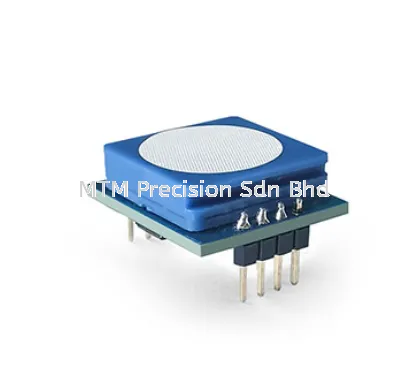
Formaldehyde is itself a volatile organic compound, but portable instruments may use different sensing channels or algorithms to display HCHO and TVOC separately.
Users should therefore read the two displayed values as separate screening indicators.
A high TVOC reading does not automatically mean the same concentration of formaldehyde is present. Likewise, a change in the HCHO display should not be treated as a complete analysis of every volatile compound in the room.
HCHO vs TVOC: Quick Comparison
| Parameter | HCHO | TVOC |
|---|---|---|
| Meaning | Formaldehyde | Total volatile organic compounds |
| Represents | One particular compound | A broad combined indication |
| Common sources | Composite wood, cabinets, adhesive and certain coatings | Paint, solvent, fragrance, cleaner, adhesive and many other products |
| Identifies individual chemicals | Displays an HCHO estimate | No |
| Suitable for trend comparison | Yes | Yes |
| Equivalent to laboratory analysis | No | No |
The two readings complement each other, but neither provides a complete chemical analysis of indoor air.
Why Can TVOC Be High When HCHO Is Low?
TVOC may increase because the room contains volatile substances other than formaldehyde.
Common examples include:
-
Perfume
-
Air freshener
-
Alcohol
-
Cleaning spray
-
Paint thinner
-
Solvent
-
Furniture polish
-
Fuel vapour
In this situation, the TVOC channel may respond strongly while the displayed HCHO value remains comparatively lower.
What to do
Check whether any fragrance, cleaning chemical or solvent was recently used. Remove the product, ventilate the room and repeat the measurement after the conditions stabilise.
Why Can HCHO Rise Near New Furniture?
Certain composite wood products, adhesives and finishes may release formaldehyde.
A detector positioned close to a newly installed cabinet may therefore show a different reading from one placed in the centre of the room.
This type of comparison can help identify a possible source, but the measurement near the cabinet should not be treated as representative of the entire room.
Take separate readings for:
-
Centre of the room
-
Near the furniture
-
Inside the cabinet
-
Another room without new furniture
Label each reading clearly.
Why Does Perfume Affect the Reading?
Perfume contains volatile ingredients. Semiconductor gas sensors may respond to these vapours and cause the TVOC display to rise.
Depending on sensor characteristics and the concentration involved, other displayed values may also change temporarily.
For more consistent testing:
-
Do not spray perfume in the room.
-
Keep fragrance products away from the detector.
-
Avoid holding the instrument immediately after applying sanitiser.
-
Ventilate the area before repeating the measurement.
A sudden response to perfume does not necessarily indicate that the detector is defective.
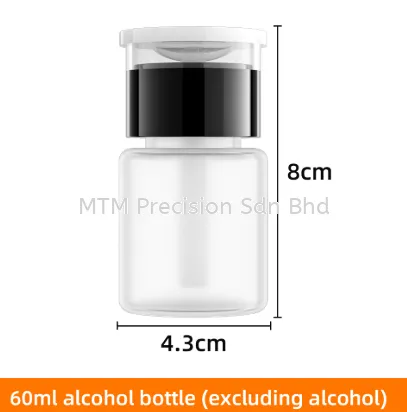
Why Does Alcohol or Sanitiser Cause a High Reading?
Alcohol evaporates rapidly and can produce a strong response from a general gas sensor.
A user who applies hand sanitiser and immediately handles the tester may unintentionally expose the sensor to a concentrated vapour.
If this happens:
-
Move the detector to clean, ventilated air.
-
Keep it away from the sanitiser bottle.
-
Allow the displayed values to decrease and stabilise.
-
Repeat the room test.
-
Do not blow directly into the sensor inlet.
Do HCHO and TVOC Measurements Detect PM2.5?
No. HCHO and TVOC are gaseous-pollutant indicators. PM2.5 refers to fine airborne particles.
Possible PM2.5 sources include:
-
Haze
-
Smoke
-
Combustion
-
Traffic pollution
-
Cooking emissions
-
Fine dust
A dedicated particle sensor is required to measure PM2.5.
The NOYAFA JMS11 and JMS12 should not be promoted as haze or dust monitors unless the particular model specification explicitly includes particulate measurement.
Do HCHO and TVOC Measurements Show Carbon Dioxide?
No. TVOC is not carbon dioxide, and an HCHO reading cannot be converted into CO2.
A proper carbon dioxide meter should state:
-
CO2 measurement in ppm
-
Measurement range
-
Accuracy
-
Sensor technology
-
Preferably an NDIR sensor
Customers evaluating ventilation in occupied offices, classrooms or meeting rooms should select a dedicated CO2 meter.
How Should JMS11 and JMS12 Readings Be Used?
The most useful approach is to look for repeatable patterns.
Compare different rooms
Check whether a newly renovated room produces consistently different results from an older, unaffected room.
Compare before and after ventilation
Take a reading after the room has remained closed, then ventilate the room and repeat the test in the same position.
Compare near and away from a suspected source
Take one general room reading and another reading near new furniture, flooring or cabinets.
Repeat the test
Repeat measurements at the same time on several days. A consistent trend is more informative than one isolated number.
Record environmental conditions
For the JMS12, record temperature and humidity together with HCHO and TVOC.
For the JMS11, note whether the room was hot, cool, humid, ventilated or air-conditioned.
Which Model Displays HCHO and TVOC?
Both models display HCHO and TVOC:
NOYAFA JMS11
The JMS11 is suitable for users who need:
-
Basic HCHO screening
-
Basic TVOC screening
-
Simple operation
-
Replaceable battery power
-
Occasional checks
NOYAFA JMS12
The JMS12 adds:
-
Temperature
-
Relative humidity
-
Rechargeable operation
-
USB Type-C charging
It is generally more suitable for users who want to record changing room conditions together with HCHO and TVOC.
Are Portable Readings the Same as Laboratory Results?
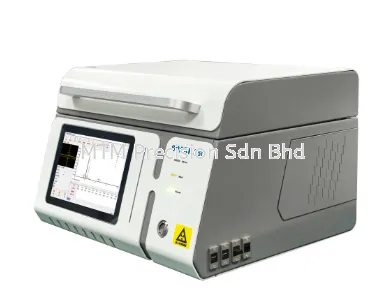
No. Portable semiconductor detectors and laboratory analytical methods operate differently.
A portable tester is useful for:
-
Initial screening
-
Comparing locations
-
Observing changes
-
Checking the effect of ventilation
-
Identifying areas for further investigation
Laboratory or professional testing may be required to:
-
Identify individual chemical compounds
-
Produce a certified report
-
Demonstrate regulatory compliance
-
Assess occupational exposure
-
Support a legal or insurance matter
Users should interpret portable readings within the limitations of the sensor technology.
What Should You Do with an Elevated Reading?
If HCHO or TVOC remains elevated across repeated tests:
-
Improve ventilation.
-
Remove unnecessary chemical products.
-
Check new furniture and renovation materials.
-
Compare the affected room with another location.
-
Repeat the test under similar conditions.
-
Record temperature and humidity when available.
-
Consult a suitable professional if the issue persists.
Seek appropriate medical advice if occupants experience health symptoms. An air quality detector is not a medical diagnostic device.
Buy NOYAFA HCHO and TVOC Testers in Malaysia
MTM Precision supplies the NOYAFA JMS11 and JMS12 for preliminary indoor HCHO and TVOC screening.
Contact us for:
-
JMS11 and JMS12 stock availability
-
Model comparison
-
Updated technical specifications
-
Alternative PM2.5 and CO2 instruments
-
Product operating guidance
-
Delivery throughout Malaysia
-
Collection from our Puchong showroom
Contact MTM Precision
MTM Precision Sdn. Bhd. (744811-A)
Telephone: +603-8080 7172
WhatsApp: +6016-660 7346
Email: mtmpre@yahoo.com / enquiry@mtmpre.com.my
Website: www.mtmpre.com.my
Showroom & Service Centre:
No. 29-1 & 29-2, Jalan Bandar 18,
Pusat Bandar Puchong,
47160 Puchong, Selangor, Malaysia.
18 Sep 2026
