





Linshang LS137 vs LS136 UV Energy Meter Which One Should You Choose? Malaysia

Linshang LS137 vs LS136 UV Energy Meter – Which One Should You Choose? Malaysia
When choosing a UV energy meter, one of the most important factors is the type of UV light source being measured.
Two instruments may look similar and both may measure UV energy, but they are not necessarily designed for the same UV spectrum.
The Linshang LS137 and LS136 UV Energy Meters are a good example. Both are professional instruments for UV curing applications, but their intended UV light sources are different.
Understanding this difference can help Malaysian printing companies, coating manufacturers, electronics factories and UV curing users select the correct instrument.
LS137 vs LS136 – The Main Difference
The simplest way to understand these two models is:
Linshang LS137 → UV LED curing systems
Linshang LS136 → Traditional mercury-lamp UV curing systems
This difference is more important than the physical appearance of the meters.
UV LEDs and traditional mercury lamps have different spectral characteristics. Therefore, the detector inside a UV meter must have an appropriate spectral response for the light source being measured.
Linshang LS137 – Designed for UV LED
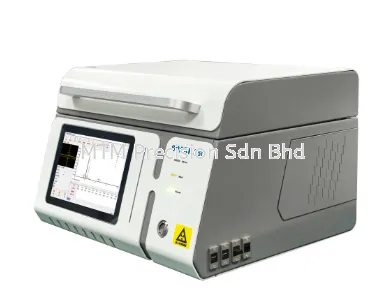
The Linshang LS137 UV Energy Meter is designed specifically for UV LED light sources.
Its spectral response covers approximately:
340–420 nm
The instrument is calibrated using a 395 nm UV LED source.
This makes the LS137 suitable for many modern industrial UV LED curing applications.
Typical UV LED wavelengths include:
365 nm
385 nm
395 nm
405 nm
Among these, 395 nm UV LED curing systems are particularly common in industrial printing and curing applications.
Linshang LS136 – Designed for Traditional UV Lamps
The Linshang LS136 UV Energy Meter, on the other hand, is intended for conventional UV curing systems using light sources such as high-pressure mercury lamps.
Traditional mercury UV lamps produce a different spectral distribution compared with UV LEDs.
Therefore, companies operating conventional UV curing equipment should not automatically choose the LS137 simply because it is a newer-looking or similarly named instrument.
The correct meter depends on the actual UV source.
Why Can't One UV Meter Be Used for Everything?
This is one of the most common misunderstandings when purchasing UV measurement equipment.
Customers sometimes ask:
“If both instruments measure UV, why can't I just use one meter?”
The reason is that UV covers a relatively broad range of wavelengths.
Different detectors respond differently to different wavelengths.
A meter designed around the spectral output of a mercury lamp may produce different results when exposed to a narrow-band UV LED source.
Similarly, a meter optimized for UV LEDs may not be the correct choice for a traditional mercury curing system.
For meaningful process monitoring, the meter should match the UV source.
How to Know Whether You Need LS137
Choose the Linshang LS137 when your machine uses a UV LED curing source.
Look at the specifications or label of your curing equipment.
You may see descriptions such as:
UV LED 365 nm
UV LED 385 nm
UV LED 395 nm
or
UV LED 405 nm
If your machine uses this type of UV LED technology, the LS137 is the model to consider.
How to Know Whether You Need LS136
Consider the Linshang LS136 if your equipment uses a conventional UV curing lamp, particularly a high-pressure mercury lamp.
This type of curing technology is still widely found in:
Printing machinery
Coating lines
Older UV curing systems
Industrial finishing equipment
Exposure equipment
If you are uncertain about the lamp type, check the machine specification before purchasing the meter.
What Does the LS137 Measure?
The LS137 provides more information than simply whether a UV lamp is ON or OFF.
It can monitor important curing parameters such as:
UV energy
Real-time UV irradiance
Peak UV irradiance
Measurement duration
Real-time temperature
Maximum temperature
Its UV irradiance measuring capability reaches up to 40,000 mW/cm², making it suitable for high-intensity UV LED curing systems.
Why UV Energy Is Important
UV intensity alone does not tell the complete story.
Imagine two production lines using the same UV LED system.
Production Line A
The product travels slowly underneath the UV source.
Production Line B
The product travels much faster.
Even if both systems produce similar peak UV intensity, the product on Line A may receive significantly more accumulated UV energy because it remains under the light for a longer period.
This can affect:
Ink curing
Coating hardness
Adhesive bonding
Surface finish
Production consistency
For this reason, accumulated UV energy is an important parameter in many curing processes.
Example: Printing Factory
Consider a Malaysian printing company using a 395 nm UV LED curing machine.
The operator notices that printed material occasionally remains slightly tacky after curing.
Several possible causes exist:
UV LED output has decreased
Conveyor speed is too high
Exposure distance has changed
Cooling performance has changed
Ink formulation has changed
Instead of immediately replacing the UV LED module, the technician can use the LS137 to measure the actual UV intensity and accumulated energy.
The readings can then be compared with previous acceptable production conditions.
This makes troubleshooting more objective.
Example: Factory Still Using Mercury UV Lamps
Now consider another factory operating an older printing line with a traditional high-pressure mercury UV lamp.
Although the LS137 may physically fit inside the curing machine, it is not automatically the appropriate instrument.
For this application, the LS136 should be considered because it is designed around traditional mercury-lamp UV curing.
This demonstrates why knowing the UV source is essential before buying a UV energy meter.
LS137 or LS136 – Quick Selection Guide
Your machine uses UV LED
→ Consider Linshang LS137
Your machine uses 395 nm UV LED
→ LS137 is particularly relevant
Your machine uses a traditional high-pressure mercury UV lamp
→ Consider Linshang LS136
You don't know what UV source your machine uses
→ Check the lamp specification first before purchasing.
Don't Choose Based Only on Price
When purchasing industrial measuring equipment, choosing the cheapest available UV meter can be costly if the instrument is unsuitable for the actual light source.
An incorrect meter can produce measurements that are difficult to compare with your production specifications.
For UV curing quality control, the better approach is:
Identify UV source → Identify wavelength → Select appropriate UV meter → Establish baseline → Monitor regularly
This creates a much more reliable measurement process.
Applications for Linshang LS137 in Malaysia
The LS137 can be considered for UV LED measurement in industries such as:
Commercial printing
Packaging printing
Label printing
UV ink curing
UV coating
Adhesive curing
Electronics manufacturing
PCB manufacturing
Optical manufacturing
Automated production lines
Industrial quality control
As more factories move from mercury lamps to energy-efficient UV LED curing technology, selecting the correct UV LED measurement instrument becomes increasingly important.
Need Help Choosing LS136 or LS137?
Before ordering, simply provide MTM Precision with:
UV curing machine model
UV lamp type
UV wavelength
Application
Expected UV intensity, if known
We can help determine which Linshang UV Energy Meter is more appropriate for your application.
Contact MTM Precision
MTM Precision Sdn. Bhd.
Showroom & Service Centre
No. 29-1 & 29-2, Jalan Bandar 18,
Pusat Bandar Puchong,
47160 Puchong, Selangor, Malaysia
馃寪 Website: www.mtmpre.com.my
馃摟 Email: mtmpre@yahoo.com
馃摫 WhatsApp: +6016-660 7346
Contact MTM Precision for Linshang LS136 and LS137 UV Energy Meter selection, technical information and quotation in Malaysia.
12 Aug 2026


