





Why Is My UV LED Curing Not Working Properly? Troubleshooting with Linshang LS137 Malaysia

Why Is My UV LED Curing Not Working Properly? Troubleshooting with Linshang LS137 Malaysia
A UV LED curing lamp can look bright and appear to be operating normally, yet the ink, coating or adhesive may still fail to cure properly.
This is a common challenge in UV curing applications.
The reason is simple: seeing UV light does not tell you how much UV energy is actually reaching the product.
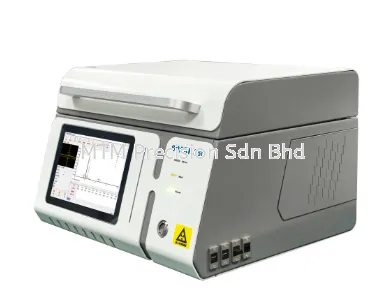
The Linshang LS137 UV Energy Meter is designed for UV LED light sources and can measure UV energy, UV irradiance and temperature. These measurements can help production and maintenance teams investigate curing problems using actual data instead of guesswork.
Common Signs of Insufficient UV Curing
Poor UV curing does not always look the same.
Depending on the material and process, symptoms may include:
Sticky or tacky surfaces
Ink that smears easily
Poor coating hardness
Weak adhesion
Scratching
Peeling
Incomplete adhesive bonding
Uneven curing
Poor surface finish
Differences between production batches
Increased rejection rate
When these problems occur, operators may immediately suspect the ink, coating or adhesive.
However, the UV curing system should also be checked.
Problem 1: UV LED Output Has Decreased
UV LED modules do not necessarily maintain exactly the same output throughout their entire operating life.
Performance can gradually change because of:
Operating hours
Thermal stress
LED degradation
Power-supply condition
Cooling performance
Contamination
The UV LED may still illuminate normally even though the actual irradiance reaching the product has decreased.
This is where measurement becomes important.
Using the LS137, technicians can compare current UV readings with previous measurements taken when production quality was acceptable.
A significant decrease can indicate that the UV system requires further investigation.
Problem 2: Conveyor Speed Is Too High
Increasing production speed sounds attractive because more products can be produced per hour.
However, faster conveyor speed also means that each product spends less time underneath the UV source.
This can reduce the accumulated UV energy received by the material.
For example:
Original production
Normal UV output + correct conveyor speed = satisfactory curing
After production-speed increase
Similar UV intensity + shorter exposure time = potentially lower accumulated UV energy
The UV LED itself may have nothing wrong with it.
The problem may simply be insufficient exposure time.
Because the LS137 measures accumulated UV energy as well as irradiance, it can help identify this type of process change.
Problem 3: UV Lamp Distance Has Changed
The distance between the UV source and the product can affect the UV intensity reaching the surface.
Changes can occur after:
Machine servicing
Product changeover
Conveyor adjustment
UV module replacement
Mechanical modification
Even a process that previously worked well may behave differently after the physical configuration changes.
If curing problems appear immediately after maintenance or machine adjustment, check the UV measurement again.
Problem 4: Optical Surface Is Dirty
Industrial environments are rarely perfectly clean.
Dust, ink mist, coating residue and other contamination can accumulate on optical surfaces.
The UV LED may still be producing power, but contamination can reduce the radiation reaching the product.
Before replacing expensive components, inspect the UV system according to the equipment manufacturer's maintenance procedures.
Measurement before and after maintenance can help determine whether UV transmission has improved.
Problem 5: Cooling System Performance Has Changed
UV LED systems depend on effective thermal management.
Depending on the machine design, cooling may involve:
Air cooling
Fans
Heat sinks
Water cooling
Chillers
If cooling performance deteriorates, UV LED operating conditions can change.
This is another reason why curing problems should not automatically be blamed on the ink or coating.
The entire UV system should be considered.
Problem 6: Correct Intensity but Insufficient Energy
This is an especially important troubleshooting scenario.
A technician measures the UV source and finds that peak intensity appears acceptable.
Does this prove the curing process is correct?
Not necessarily.
The product must receive sufficient accumulated UV exposure.
If the exposure duration is too short, total UV energy may still be insufficient.
This is why measuring both UV irradiance and accumulated UV energy provides more useful information for curing applications.
Problem 7: UV Output Is Normal but Curing Is Still Poor
Suppose the LS137 readings are consistent with previous known-good measurements.
The UV system may not be the main cause.
The investigation can then move to other variables such as:
Ink formulation
Coating formulation
Adhesive formulation
Material thickness
Substrate type
Surface contamination
Storage condition
Application thickness
Process temperature
Material compatibility
This is an important benefit of measurement.
A UV energy meter does not simply identify UV problems—it can also help technicians determine when the UV source is not the likely problem.
Why Visual Inspection Is Not Enough
Human eyes are not UV measurement instruments.
An operator may say:
“The lamp still looks bright.”
But brightness does not provide a quantitative measurement of:
UV irradiance
Peak UV irradiance
Accumulated UV energy
Exposure duration
Two UV curing systems can look similar while producing different measurement results.
For industrial quality control, numerical measurements are much more useful than visual judgement alone.
Using Linshang LS137 for Troubleshooting
The LS137 is designed for UV LED measurement with a spectral response of approximately 340–420 nm and calibration using a 395 nm UV LED source.
It can record important parameters including:
UV energy
UV irradiance
Peak UV irradiance
Measurement duration
Temperature
Maximum temperature
Its UV irradiance measurement capability reaches up to 40,000 mW/cm².
A Better Troubleshooting Method
Instead of changing several parameters simultaneously, use a structured process.
Step 1 – Record the Problem
Identify exactly what has changed.
For example:
Ink remains sticky
Adhesion has decreased
Coating hardness is lower
Reject rate has increased
Step 2 – Check Production Settings
Record:
Conveyor speed
UV power setting
UV wavelength
Lamp distance
Product type
Ink or coating type
Step 3 – Measure UV Conditions
Use the appropriate UV energy meter to record the actual curing conditions.
Step 4 – Compare with Historical Data
Compare current results with measurements from a period when production quality was satisfactory.
Step 5 – Investigate the Difference
If UV output has changed, inspect the curing system.
If UV measurements remain normal, investigate other production variables.
This process helps avoid unnecessary component replacement.
Establish a Known-Good Baseline
One of the best times to measure your UV curing system is before there is a problem.
When the machine is producing good-quality products, record:
Peak UV intensity
Accumulated UV energy
Exposure time
Maximum temperature
Conveyor speed
UV power percentage
Lamp distance
These values become your reference.
Several months later, if curing quality changes, you have something meaningful to compare against.
Without a baseline, technicians only know what the machine is producing today.
With a baseline, they can determine how much it has changed.
Example: UV LED Printing Line
A printing company has been operating a 395 nm UV LED curing line successfully.
After several months, operators notice that certain printed products remain slightly tacky.
Instead of immediately changing ink, the maintenance team measures the curing process with the LS137.
If current UV energy is significantly lower than the previous baseline, the team can investigate:
UV LED condition
Optical cleanliness
Cooling system
Conveyor settings
Lamp distance
Power system
This provides a logical starting point for troubleshooting.
Example: Adhesive Curing
A manufacturing company uses UV adhesive for assembly.
Occasionally, bonded components fail quality inspection.
Possible causes include the adhesive itself, application thickness, component positioning or UV exposure.
By recording UV energy during acceptable production and comparing it with problematic production, engineers gain another useful piece of information for root-cause analysis.
When Should UV Output Be Checked?
Consider checking the curing system:
During initial machine setup
After installing a new UV LED module
After maintenance
After changing conveyor speed
After changing UV power settings
When curing quality deteriorates
When comparing production machines
As part of periodic preventive maintenance
The objective is not simply to collect measurements.
The objective is to create consistent production conditions.
Is Linshang LS137 Suitable for Your UV System?
The LS137 is intended for UV LED light sources.
Before ordering, confirm:
UV source type
UV wavelength
Expected intensity
Curing application
Available measurement space
If your equipment uses a traditional high-pressure mercury UV lamp rather than UV LED, another model such as the Linshang LS136 should be considered.
Selecting the correct detector for the UV source is essential.
UV Curing Troubleshooting in Malaysia
For Malaysian printing, coating, electronics and manufacturing companies, UV curing problems can lead to production delays, rejects and unnecessary material waste.
A measurement-based approach helps technicians answer an important question:
Has the UV curing condition actually changed?
The Linshang LS137 provides quantitative data that can support this troubleshooting process for UV LED systems.
Contact MTM Precision
MTM Precision Sdn. Bhd.
Showroom & Service Centre
No. 29-1 & 29-2, Jalan Bandar 18,
Pusat Bandar Puchong,
47160 Puchong, Selangor, Malaysia
🌐 Website: www.mtmpre.com.my
📧 Email: mtmpre@yahoo.com
📱 WhatsApp: +6016-660 7346
Contact MTM Precision for Linshang LS137 UV Energy Meter enquiries, model selection, technical information and quotation in Malaysia.
12 Aug 2026


