





365nm vs 385nm vs 395nm vs 405nm UV LED How to Choose a UV Energy Meter Malaysia

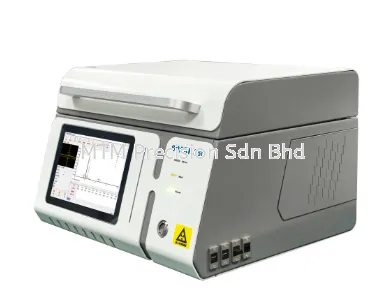
365nm vs 385nm vs 395nm vs 405nm UV LED How to Choose a UV Energy Meter Malaysia UV LED curing systems are commonly available in several wavelengths, including 365 nm, 385 nm, 395 nm and 405 nm. Although all of these wavelengths fall within the ultraviolet or near-UV region commonly used for industrial curing, they should not automatically be treated as identical when selecting a UV measurement instrument. For Malaysian manufacturers using UV LED printing, coating, adhesive curing or electronics production equipment, understanding the wavelength of the UV source is one of the first steps in choosing an appropriate UV energy meter. The Linshang LS137 UV Energy Meter is designed specifically for UV LED curing applications, with a spectral response range of approximately 340420 nm and calibration based on a 395 nm UV LED source. Why Do UV LED Curing Systems Use Different Wavelengths? Different UV-curable materials respond differently to ultraviolet radiation. The optimum wavelength depends on factors such as: Photoinitiator Ink formulation Coating formulation Adhesive formulation Material thickness Substrate Required curing depth Production speed UV LED equipment design This is why industrial UV LED systems are not all built around one wavelength. Four wavelengths are particularly common: 365 nm 385 nm 395 nm 405 nm What Is 365 nm UV LED? 365 nm is located deeper within the UVA region compared with 395 nm and 405 nm. It is commonly associated with applications requiring strong interaction with materials formulated for shorter UVA wavelengths. Potential applications include: UV adhesive curing Electronics manufacturing Optical bonding Fluorescence inspection UV exposure applications Specialized coating processes The correct wavelength depends on the material being cured. A 365 nm curing system should therefore be evaluated together with the specifications of the adhesive, ink or coating. What Is 385 nm UV LED? 385 nm is another common industrial UV LED wavelength. It sits between 365 nm and 395 nm and is used in various curing applications. Potential applications can include: UV printing UV coating Adhesive curing Industrial manufacturing Electronics production As with any UV curing system, the actual performance depends on the compatibility between the UV wavelength and the curing chemistry. What Is 395 nm UV LED? 395 nm is widely encountered in modern industrial UV LED curing equipment. It is commonly used in applications such as: UV ink curing Digital printing Packaging printing Label printing UV coating Adhesive curing Industrial production lines The Linshang LS137 is calibrated using a 395 nm UV LED source, making 395 nm applications particularly relevant to this instrument. What Is 405 nm UV LED? 405 nm is positioned close to the boundary between UVA and visible violet light. It is used in various photopolymerization and industrial curing applications. Potential applications include: UV resin curing Electronics Adhesive processes Specialized printing Photopolymer applications Because 405 nm is closer to visible light, the optical characteristics are different from shorter-wavelength UV sources. Again, instrument selection should be based on the actual spectral response rather than simply choosing a generic “UV meter.” Why Wavelength Matters When Measuring UV A common purchasing mistake is assuming: “UV is UV, so any UV meter should work.” This is not a good assumption. UV detectors have specific spectral-response characteristics. A detector may respond strongly at one wavelength and differently at another. Therefore, the same physical UV output measured using two instruments with different spectral responses may produce different readings. This is why professional UV measurement begins by identifying the source wavelength. Linshang LS137 Spectral Response The Linshang LS137 is designed for UV LED sources. Its spectral response range is approximately: 340420 nm Its calibration is based on: 395 nm UV LED This range covers several wavelengths commonly found in industrial UV LED curing equipment. However, users requiring specific measurement accuracy at a particular wavelength should always evaluate the instrument specification against the actual UV source and application. What Does LS137 Measure? The LS137 measures several useful curing parameters. UV Energy This indicates the accumulated UV exposure during the measurement period. UV Irradiance This indicates the instantaneous UV power density reaching the detector. Peak UV Irradiance This records the maximum UV irradiance encountered during measurement. Measurement Duration This provides information about the exposure period. Temperature Temperature can be monitored during the measurement process. Maximum Temperature The instrument can also record the maximum temperature reached. Together, these measurements provide useful information about the actual UV LED curing environment. UV Wavelength Is Not the Same as UV Intensity Another common misunderstanding is confusing wavelength with intensity. They describe completely different characteristics. Wavelength What part of the UV spectrum is being produced? For example: 395 nm Intensity How strong is the UV radiation? For example: mW/cm Two UV LED systems can both operate at 395 nm but produce very different intensities. Similarly, two systems can produce similar intensity readings while operating at different wavelengths. Both characteristics matter. UV Energy Is Another Separate Parameter UV energy represents accumulated exposure. A simplified way to think about the three parameters is: Wavelength → What type of UV? Intensity → How strong? Energy → How much total exposure? This distinction is especially important for curing applications. Example: Two 395 nm Printing Machines Consider two printing machines. Both use 395 nm UV LED sources. Machine A operates with a slower conveyor. Machine B operates with a faster conveyor. Even if peak UV intensity is similar, the accumulated UV energy received by the printed material may be different because exposure time changes. Therefore, wavelength alone does not define the complete curing condition. Example: Changing from 365 nm to 395 nm Suppose a manufacturer replaces a 365 nm curing system with a 395 nm UV LED system. It may not be appropriate to assume that the same power setting, exposure time and curing parameters will automatically produce identical results. The material's photoinitiator response may be different. The new process should be evaluated and qualified. UV measurement can provide useful data during this process. Choosing a UV Energy Meter Before purchasing a UV energy meter, answer these questions. 1. Is the source UV LED? If yes, an instrument designed specifically for UV LED should be considered. 2. What is the wavelength? Identify whether the source is: 365 nm 385 nm 395 nm 405 nm Another wavelength 3. What intensity is expected? High-power industrial curing systems require an instrument with an appropriate measurement range. The LS137 supports UV irradiance measurement up to 40,000 mW/cm. 4. Do you need accumulated energy? For curing applications, accumulated UV energy can be just as important as peak intensity. 5. What is the application? Measurement requirements may differ between: Printing Coating Adhesive curing Electronics Laboratory work Exposure equipment The application should be considered together with wavelength and intensity. UV LED vs Mercury Lamp Wavelength selection is not the only consideration. You should also determine whether your machine uses: UV LED or Traditional mercury UV lamp These are different light-source technologies. For UV LED curing applications, the Linshang LS137 should be considered. For conventional high-pressure mercury UV curing applications, a model such as the Linshang LS136 may be more appropriate. Why 395 nm Users Should Consider LS137 The LS137 is particularly relevant to 395 nm users because the instrument is calibrated using a 395 nm UV LED source. For companies operating 395 nm curing systems in printing, coating and manufacturing, this makes the LS137 an important model to evaluate. It can help monitor: Peak UV output Accumulated UV energy Exposure time Temperature These values can then be recorded as part of the production process. Establish a Baseline for Each Machine If your factory has several UV curing machines, avoid assuming they all produce identical output. Create a baseline for each machine. For example: Machine A 395 nm Record UV energy and peak intensity. Machine B 395 nm Record separately. Machine C 365 nm Record separately. This makes future troubleshooting much easier. Record Measurements When Production Is Good One of the most valuable UV measurements is a reading taken when the production process is working correctly. Record: UV wavelength UV energy Peak UV irradiance Exposure duration Maximum temperature Conveyor speed UV power setting Curing distance Material Production result This becomes a known-good reference. If curing quality changes later, current measurements can be compared against this baseline. Which Wavelength Is Best? There is no universal answer. 365 nm is not automatically better than 395 nm. 395 nm is not automatically better than 405 nm. The correct wavelength depends on: Material chemistry Photoinitiator Required curing depth Surface curing requirement Production process Equipment design Follow the recommendations of the UV-curable material and curing-equipment manufacturers. The UV energy meter's job is to help verify the actual UV exposure. Who Should Consider Linshang LS137? Potential users include: Printing factories Packaging manufacturers UV coating companies Electronics manufacturers PCB manufacturers Adhesive users Production engineers QA/QC departments Maintenance technicians UV curing equipment suppliers It is especially relevant for companies operating modern UV LED curing systems. Looking for a UV LED Energy Meter in Malaysia? Before requesting a quotation, provide MTM Precision with the following information: UV LED wavelength UV curing machine model UV source type Expected UV intensity Application Measurement requirements For a 395 nm UV LED curing system, the Linshang LS137 is an important model to consider. If your wavelength or UV source is different, we can review the application before recommending a suitable meter. Contact MTM Precision MTM Precision Sdn. Bhd. Showroom & Service Centre No. 29-1 & 29-2, Jalan Bandar 18, Pusat Bandar Puchong, 47160 Puchong, Selangor, Malaysia 🌐 Website: www.mtmpre.com.my 📧 Email: mtmpre@yahoo.com 📱 WhatsApp: +6016-660 7346 Contact MTM Precision for Linshang LS137 UV Energy Meter enquiries, model selection, technical information and quotation in Malaysia.
12 Aug 2026


