





UV Intensity vs UV Energy – What Is the Difference? Linshang LS137 Guide Malaysia

UV Intensity vs UV Energy – What Is the Difference? Linshang LS137 Guide Malaysia
When checking a UV LED curing system, two measurements frequently appear:
UV Intensity
and
UV Energy
Although they are closely related, they do not mean the same thing.
Understanding this difference is important for printing, coating, adhesive curing, electronics manufacturing and other industrial UV LED applications.
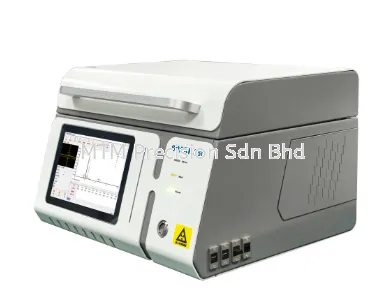
The Linshang LS137 UV Energy Meter can measure both UV irradiance and accumulated UV energy, allowing users to evaluate more than just the peak output of a UV LED source.
What Is UV Intensity?
UV intensity, more precisely referred to as UV irradiance in measurement applications, describes how much UV power reaches a given area at a particular moment.
It is commonly expressed in:
mW/cm²
A higher reading generally indicates stronger UV radiation reaching the detector at that moment.
For example, if two UV LED lamps are measured under comparable conditions and one produces a significantly lower irradiance reading, this may indicate a difference in output or measurement conditions.
What Is UV Energy?
UV energy describes the accumulated UV exposure over time.
It is commonly expressed in:
mJ/cm²
This means UV energy depends not only on how strong the UV source is, but also on how long the product is exposed.
This distinction is extremely important in curing applications.
A Simple Example
Consider two products passing underneath the same UV LED curing system.
Product A
UV intensity is high and the product remains underneath the UV source long enough to receive sufficient accumulated energy.
Product B
The same UV intensity is present, but the conveyor moves much faster.
Product B receives less exposure time.
Therefore, even though peak UV intensity may be similar, the accumulated UV energy can be lower.
This may affect the curing result.
Why Peak Intensity Alone May Not Be Enough
Imagine a production engineer checks only peak UV intensity.
The result looks normal.
However, the product is still not curing properly.
Possible explanation:
The UV source is strong enough, but exposure time is too short.
This can happen after:
Increasing conveyor speed
Reducing curing time
Changing production cycle time
Repositioning the UV source
Modifying the curing zone
Looking at UV energy together with intensity provides a more complete picture.
Why UV Energy Alone May Not Tell the Whole Story
The opposite situation is also possible.
Two processes may deliver similar accumulated energy but use different combinations of intensity and exposure time.
For example:
Process A
Higher intensity + shorter exposure
Process B
Lower intensity + longer exposure
The accumulated energy may be similar, but some UV-curable materials may respond differently depending on the curing chemistry and process requirements.
Therefore, both parameters should be considered when developing or troubleshooting a curing process.
What Does Linshang LS137 Measure?
The Linshang LS137 is designed for UV LED curing applications.
It can provide measurements including:
UV Energy
UV Irradiance
Peak UV Irradiance
Measurement Duration
Temperature
Maximum Temperature
This allows production personnel to examine several important aspects of the curing cycle with one instrument.
LS137 for UV LED Sources
The LS137 has a spectral response range of approximately:
340–420 nm
It is calibrated using a:
395 nm UV LED source
It is therefore particularly relevant to modern UV LED curing equipment.
Before purchasing, users should confirm the wavelength and type of UV source in their machine.
High-Intensity UV LED Measurement
Industrial curing systems can generate much higher UV irradiance than simple UV inspection lamps.
The LS137 supports UV irradiance measurement up to:
40,000 mW/cm²
This allows it to be considered for high-intensity industrial UV LED curing applications within its specified conditions.
Example 1: Printing Industry
A UV printing company has been producing good results at a particular conveyor speed.
Management decides to increase production output.
The conveyor speed is increased.
Afterward, some printed material becomes slightly tacky.
The UV LED source still appears to be working normally.
Peak intensity may also remain similar.
But because the material now spends less time underneath the UV source, accumulated UV energy may have decreased.
This is a good example of why UV energy measurement matters.
Example 2: UV Coating
A coating manufacturer notices that surface hardness has gradually changed.
Possible causes include:
Coating formulation
Coating thickness
Substrate
UV LED output
Exposure time
Conveyor speed
If historical LS137 readings are available, current UV intensity and energy can be compared with known-good production data.
This helps determine whether UV exposure has changed.
Example 3: UV Adhesive
An electronics manufacturer uses UV adhesive for component bonding.
The production instruction specifies a fixed curing time.
However, after many months of machine operation, bond quality becomes inconsistent.
Even though exposure time has not changed, actual UV output may have changed.
Measuring both intensity and accumulated energy helps engineers determine whether the curing system still provides conditions comparable to the original process.
Conveyor Speed and UV Energy
For conveyor curing systems, production speed is closely connected to exposure time.
In general:
Faster conveyor → Shorter exposure
Slower conveyor → Longer exposure
Therefore, increasing production speed should not be evaluated only from an output-per-hour perspective.
The curing requirement must still be satisfied.
A UV energy meter can help engineers quantify what happens to UV exposure after speed changes.
Distance Can Change UV Intensity
The physical distance between the UV source and the product can also influence the UV radiation reaching the surface.
Distance may change because of:
Different product height
Fixture adjustment
Machine servicing
UV module replacement
Conveyor modification
If production quality changes after mechanical adjustment, UV intensity should be checked again under comparable conditions.
Why Establishing a Baseline Is Important
A UV measurement becomes much more useful when there is something to compare it with.
When production quality is good, record:
UV wavelength
Peak UV irradiance
Accumulated UV energy
Exposure duration
Maximum temperature
Conveyor speed
UV power setting
Lamp distance
Material
Production result
These values become your known-good UV curing baseline.
Future measurements can then answer:
Has the curing condition changed?
Don't Rely Only on Machine Power Percentage
A UV curing machine may display:
50%
80%
or
100% power
These values are useful machine settings, but they are not necessarily the same as independently measured UV irradiance.
For example, two machines operating at 80% may not produce identical UV output because of differences in:
UV LED age
Cooling
Optical cleanliness
Equipment condition
Lamp distance
Actual measurement provides more useful comparison data.
UV Intensity vs UV Energy – Quick Guide
A simple way to remember the difference is:
UV Intensity
“How strong is the UV right now?”
Measured commonly in mW/cm².
UV Energy
“How much UV exposure was accumulated during the curing period?”
Measured commonly in mJ/cm².
For industrial UV curing, both can be important.
When Should You Measure Both?
Consider measuring UV intensity and energy:
During machine commissioning
During process development
After UV LED replacement
After maintenance
After changing conveyor speed
After changing exposure time
After adjusting lamp distance
When curing quality changes
During preventive maintenance
When comparing different machines
Regular measurement can create a useful history of curing-system performance.
LS137 or LS136?
Before purchasing a UV energy meter, identify the UV source.
For:
UV LED curing systems → Consider Linshang LS137
For:
Traditional high-pressure mercury UV curing systems → Consider Linshang LS136
Selecting the meter according to the UV source is more important than selecting by model number alone.
Applications for Linshang LS137
The LS137 can be considered for:
UV printing
Packaging printing
Label printing
UV ink curing
UV coating
UV adhesive curing
Electronics manufacturing
PCB manufacturing
Industrial assembly
UV curing equipment maintenance
Production quality control
It is particularly useful where UV LED curing conditions need to be measured and compared over time.
From Machine Settings to Measured Data
A better UV curing control process is:
Set the machine → Measure UV intensity and energy → Record the result → Verify product quality → Establish baseline
Later, if production quality changes:
Measure again → Compare with baseline → Identify the change → Correct the process
This approach can reduce unnecessary trial-and-error troubleshooting.
Looking for a UV Energy Meter in Malaysia?
MTM Precision supplies testing and measurement instruments for industrial, manufacturing, maintenance and quality-control applications in Malaysia.
If you are unsure whether your application requires the Linshang LS137, provide us with:
UV source type
UV wavelength
Curing equipment model
Application
Expected UV intensity
Exposure method
We can assist with model selection according to your UV curing application.
Contact MTM Precision
MTM Precision Sdn. Bhd.
Showroom & Service Centre
No. 29-1 & 29-2, Jalan Bandar 18,
Pusat Bandar Puchong,
47160 Puchong, Selangor, Malaysia
🌐 Website: www.mtmpre.com.my
📧 Email: mtmpre@yahoo.com
📱 WhatsApp: +6016-660 7346
Contact MTM Precision for Linshang LS137 UV Energy Meter enquiries, technical information and quotation in Malaysia.
12 Aug 2026


