





Linshang LS137 UV Energy Meter for UV Coating Curing Quality Control Malaysia

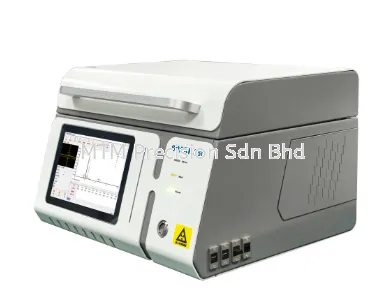
Linshang LS137 UV Energy Meter for UV Coating Curing Quality Control Malaysia UV coating is widely used to improve surface appearance, hardness, durability and production efficiency. However, achieving a good coating result depends not only on the coating material itself but also on whether the product receives the correct amount of UV exposure during curing. When UV energy is insufficient, manufacturers may experience problems such as incomplete curing, poor hardness, weak adhesion or inconsistent surface quality. The Linshang LS137 UV Energy Meter is designed for UV LED light sources and can measure UV energy, UV irradiance and temperature, providing useful measurement data for UV coating process control. Why UV Curing Is Important for Coating Quality In a UV coating process, ultraviolet radiation initiates the curing reaction. The final result can be influenced by several factors: UV wavelength UV irradiance Total UV energy Exposure time Conveyor speed Distance from the UV source Coating thickness Coating formulation Substrate Process temperature If any important parameter changes, coating performance may also change. This is why UV measurement can become an important part of production quality control. What Happens When UV Energy Is Too Low? Insufficient UV exposure may produce several symptoms. Depending on the coating and substrate, manufacturers may encounter: Tacky surfaces Poor surface hardness Easy scratching Weak adhesion Incomplete curing Uneven finish Reduced chemical resistance Poor wear resistance Inconsistent gloss Increased rejection rates These problems do not automatically mean the coating material is defective. The curing process should also be investigated. Why Use the Linshang LS137? The Linshang LS137 is designed specifically for UV LED curing systems. Its spectral response range is approximately: 340420 nm The instrument is calibrated using a: 395 nm UV LED source This makes it particularly relevant to industrial UV LED curing systems operating around commonly used wavelengths such as 365 nm, 385 nm, 395 nm and 405 nm, subject to the actual application and measurement requirements. Measure More Than UV Intensity One of the advantages of using a UV energy meter for curing applications is the ability to evaluate more than instantaneous UV output. The LS137 can measure parameters including: UV Energy UV Irradiance Peak UV Irradiance Measurement Duration Temperature Maximum Temperature For coating processes, accumulated UV energy can be particularly important because the product must receive sufficient exposure to complete the curing process. UV Intensity Is Only Part of the Story Suppose a UV LED curing system produces the correct peak intensity. Does thi automatically guarantee correct curing? No. Imagine that the conveyor speed is increased significantly. The UV LED source may still produce the same peak irradiance, but each product spends less time inside the curing zone. As a result, the total accumulated UV energy may decrease. This can cause coating performance to change even though the UV lamp itself appears to be operating normally. Conveyor Speed and UV Coating Production managers often want to increase line speed. However, faster production must still provide sufficient curing exposure. A useful process-development approach is to test several production speeds while recording: Conveyor speed Peak UV irradiance Accumulated UV energy Exposure duration Coating result This creates measurable data connecting curing conditions with final coating quality. Instead of simply saying: “This speed seems to work.” the manufacturer can establish a more objective production window. Lamp Distance Can Affect Results The distance between the UV LED source and coated surface can influence the UV radiation received by the product. Changes in distance can happen after: Maintenance Conveyor adjustment Product-size changes UV module replacement Mechanical modification If coating quality changes after servicing or machine adjustment, UV measurements should be compared before making major process changes. UV LED Aging and Preventive Maintenance UV LED technology offers long operating life, but output should not be assumed to remain perfectly unchanged forever. Performance can be influenced by: Operating hours Temperature Cooling efficiency Contamination Driver condition LED degradation Periodic measurement provides a practical method for tracking curing-system performance. For example, a company can record UV readings: Month 1 → Month 3 → Month 6 → Month 12 A gradual downward trend may indicate that maintenance should be planned before curing quality becomes unacceptable. High-Intensity UV LED Measurement Industrial UV LED curing systems can produce high irradiance. The Linshang LS137 supports UV irradiance measurement up to: 40,000 mW/cm This makes the instrument suitable for high-intensity UV LED curing applications where a basic low-range UV meter may not be appropriate. Temperature Is Another Useful Parameter UV curing is not only about light. Temperature can also affect: Coating behaviour Substrate condition Production stability Equipment operation The LS137 can record temperature and maximum temperature during measurement. This provides additional process information when investigating curing conditions. Example: UV Coating Line Consider a factory applying UV coating to manufactured components. The process has operated successfully for several months. Suddenly, QA personnel notice that th coating scratches more easily. Several possibilities exist: Coating formulation changed Coating thickness changed Substrate changed Conveyor speed changed UV output decreased Without measurement data, the production team may spend significant time changing multiple parameters. If the factory has historical LS137 readings from good production, current UV energy and intensity can be compared with the baseline. If UV exposure has dropped, the curing system becomes an obvious area for investigation. If UV exposure remains normal, attention can move to the coating or substrate. Establishing a UV Coating Baseline A good time to measure the UV system is when coating quality is excellent. Record the following: UV wavelength UV peak irradiance Accumulated UV energy Exposure duration Maximum temperature Conveyor speed UV power setting Lamp distance Coating type Coating thickness Substrate This becomes the known-good production baseline. Future measurements become much more meaningful when there is historical data for comparison. Comparing Different Production Lines Factories may operate several UV coating lines. Even when machines use similar settings, their actual UV output may not be identical. For example: Line A: UV power setting 80% Line B: UV power setting 80% These percentages alone do not prove that both lines deliver identical UV energy. Measurement allows production engineers to compare actual curing conditions rather than relying only on machine settings. When Should You Measure UV Energy? UV measurement can be useful: During initial machine setup During process qualification After installing a new UV LED module After maintenance After changing conveyor speed After changing lamp distance When coating quality changes When comparing production lines During preventive maintenance Before critical production runs Regular measurement creates a historical record of curing-system performance. LS137 or LS136 for UV Coating? The correct model depends on the UV source. A simple rule is: UV LED curing system → Consider Linshang LS137 Traditional high-pressure mercury UV lamp → Consider Linshang LS136 Do not select a UV energy meter based only on physical appearance or price. The detector should be appropriate for the spectral characteristics of the UV source. Who Can Use the LS137? The Linshang LS137 can be useful for: UV coating manufacturers Printing companies Electronics factories Automotive component suppliers Plastic-product manufacturers Industrial finishing companies Production engineers QA/QC departments Maintenance teams UV equipment suppliers Any company relying on UV LED curing can benefit from having measurable curing-process data. From Guessing to Measurement A common production response to curing problems is: Adjust the power. Slow down the conveyor. Change the coating. Replace the UV module. Some of these actions may eventually solve the problem, but without measurement it can be difficult to know which variable was actually responsible. A better approach is: Measure → Compare → Identify Change → Correct → Verify The LS137 can provide the UV measurement data required for this process. Looking for a UV Energy Meter for Coating Applications in Malaysia? MTM Precision supplies industrial testing and measurement instruments for Malaysian manufacturing, engineering, maintenance and quality-control applications. If your company operates a UV LED coating line, provide us with: UV wavelength UV source type Machine model Coating application Expected UV intensity Conveyor configuration We can assist you in determining whether the Linshang LS137 UV Energy Meter is suitable for your application. Contact MTM Precision MTM Precision Sdn. Bhd. Showroom & Service Centre No. 29-1 & 29-2, Jalan Bandar 18, Pusat Bandar Puchong, 47160 Puchong, Selangor, Malaysia 🌐 Website: www.mtmpre.com.my 📧 Email: mtmpre@yahoo.com 📱 WhatsApp: +6016-660 7346 Contact MTM Precision for Linshang LS137 UV Energy Meter enquiries, technical information and quotation in Malaysia.
12 Aug 2026


