





How to Measure UV LED Curing Energy in the Printing Industry with Linshang LS137 Malaysia

How to Measure UV LED Curing Energy in the Printing Industry with Linshang LS137 Malaysia
UV LED curing has become an important technology in modern printing. Whether the application involves labels, packaging, commercial printing or industrial printing, consistent UV output is essential for achieving reliable ink curing and stable production quality.
However, simply seeing that a UV LED lamp is illuminated does not confirm that sufficient UV energy is reaching the printed surface.
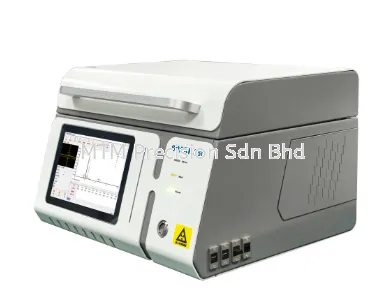
The Linshang LS137 UV Energy Meter provides a practical method for measuring UV energy, UV irradiance and temperature in UV LED curing systems.
For printing companies in Malaysia, these measurements can help with process setup, preventive maintenance, troubleshooting and quality control.
Why UV Measurement Matters in Printing
UV-curable inks depend on exposure to ultraviolet radiation to initiate the curing process.
If the UV dose is insufficient, printing defects may occur.
Common symptoms can include:
Tacky or sticky ink
Poor surface hardness
Weak adhesion
Smudging
Scratching
Inconsistent gloss
Poor chemical resistance
Differences between production batches
The problem is that several different factors can cause these symptoms.
A technician who does not measure the UV output may immediately suspect the ink.
But the actual cause could be the curing system.
What Can Change UV Curing Performance?
UV LED curing performance is affected by more than the rated power of the machine.
Actual exposure at the product surface can change because of:
UV LED aging
Contamination on optical components
Lamp-to-product distance
Conveyor speed
Exposure duration
Cooling-system performance
UV LED driver condition
Machine configuration
Changes in production settings
This is why measurement at the production level is useful.
Why Linshang LS137 Is Suitable for UV LED Printing
The Linshang LS137 is designed specifically for UV LED light sources.
Its spectral response covers approximately 340–420 nm, and the instrument is calibrated using a 395 nm UV LED source.
This makes it particularly relevant to UV LED curing systems used in modern printing machinery.
The LS137 can measure:
UV Energy
UV Irradiance
Peak UV Irradiance
Measurement Duration
Temperature
Maximum Temperature
Its UV power measuring range reaches up to 40,000 mW/cm².
UV Intensity vs UV Energy
These two measurements should not be confused.
UV Intensity
UV intensity indicates how strong the UV radiation is at a particular moment.
It is commonly expressed in:
mW/cm²
UV Energy
UV energy represents the accumulated UV exposure over time.
It is commonly expressed in:
mJ/cm²
Both values can be important in a printing process.
A high peak intensity does not automatically mean that the printed material receives sufficient total UV energy.
Conveyor Speed Makes a Difference
Consider a UV LED printing line.
If the conveyor moves slowly, the printed material remains underneath the UV source for a longer period.
If the conveyor speed increases, exposure time becomes shorter.
Therefore, even when UV intensity remains approximately the same, accumulated UV energy can decrease as production speed increases.
This is one reason why a printing process that works well at one production speed may develop curing problems after the line speed is increased.
The LS137 allows operators to measure the actual curing conditions instead of relying only on machine settings.
How to Use LS137 for UV LED Curing Verification
A practical measurement procedure can be established for the production line.
Step 1 – Confirm the UV Source
First confirm that the curing system uses a UV LED source within the appropriate wavelength range for the LS137.
For example, many industrial systems use:
365 nm
385 nm
395 nm
405 nm
The LS137 is calibrated using a 395 nm UV LED source.
Step 2 – Establish Normal Production Conditions
Set the printing machine according to the normal production parameters.
Record information such as:
Conveyor speed
UV LED power setting
Distance from UV source
Ink type
Substrate
Production mode
This information helps make future measurements comparable.
Step 3 – Measure the UV Exposure
Position the LS137 according to the measurement procedure and allow it to experience the same UV exposure path used during production.
The instrument can record the UV conditions during the curing process.
Step 4 – Review the Results
After measurement, review parameters such as:
Peak UV intensity
Accumulated UV energy
Exposure duration
Maximum temperature
These values can provide a reference for the actual curing conditions.
Step 5 – Create a Baseline
When printing quality is satisfactory, record the LS137 readings.
These measurements become a useful baseline.
For example:
Machine A – Product X
UV intensity: Normal baseline
UV energy: Normal baseline
Conveyor speed: Standard production speed
UV power setting: Standard setting
Future readings can then be compared against these known-good conditions.
Using LS137 for Troubleshooting
Suppose a printing company suddenly experiences poor ink curing.
Instead of changing multiple production parameters at once, technicians can first compare current UV readings with previous baseline measurements.
Situation A – UV Intensity Has Dropped
Possible causes may include:
Aging UV LED module
Dirty optical surface
Cooling problem
Driver problem
Increased lamp distance
Situation B – Intensity Is Normal but Energy Is Low
Check:
Conveyor speed
Exposure duration
Production configuration
The product may simply be passing through the curing zone too quickly.
Situation C – UV Measurements Are Normal
If UV intensity and energy remain consistent with known-good production values, technicians can investigate other factors such as:
Ink formulation
Ink thickness
Substrate
Surface contamination
Material compatibility
This helps narrow down the root cause.
Useful for Preventive Maintenance
The LS137 does not need to be used only when something goes wrong.
Periodic measurement can also support preventive maintenance.
For example, a factory may record UV performance:
Weekly
Monthly
After UV LED maintenance
After replacing a module
After changing machine settings
Before important production runs
By tracking readings over time, gradual changes in UV output may become visible before serious curing problems occur.
Comparing Multiple Printing Machines
Factories operating several UV LED printing machines may also use measurement data to compare curing performance between lines.
If Machine A consistently produces good results while Machine B experiences curing problems, measurements can help determine whether the UV exposure conditions are actually equivalent.
This is more reliable than comparing only the percentage shown on the machine's UV power setting.
For example:
“80% UV power” on Machine A does not necessarily equal “80% UV power” on Machine B.
Actual measured UV output is more useful for comparison.
Applications in the Malaysian Printing Industry
The Linshang LS137 can be considered for applications including:
Label printing
Packaging printing
UV digital printing
UV inkjet printing
Commercial printing
Industrial printing
Plastic printing
Electronics printing
UV coating processes
UV adhesive processes
It can be useful for production engineers, maintenance teams and QA/QC personnel responsible for maintaining consistent UV LED curing conditions.
Building a Better UV Curing Quality-Control Process
A simple approach is:
Measure → Record → Establish Baseline → Compare → Troubleshoot
Rather than waiting until a curing failure occurs, regular UV measurements provide objective information about the condition of the curing system.
This can help reduce unnecessary adjustments and make troubleshooting more systematic.
Looking for Linshang LS137 in Malaysia?
MTM Precision supplies industrial testing and measurement instruments for manufacturing, engineering, maintenance and quality-control applications in Malaysia.
If your printing machine uses UV LED curing and you are unsure whether the Linshang LS137 is suitable, provide us with:
UV wavelength
Printing machine model
UV source type
Application
Expected UV intensity, if available
Our team can assist with product selection.
Contact MTM Precision
MTM Precision Sdn. Bhd.
Showroom & Service Centre
No. 29-1 & 29-2, Jalan Bandar 18,
Pusat Bandar Puchong,
47160 Puchong, Selangor, Malaysia
🌐 Website: www.mtmpre.com.my
📧 Email: mtmpre@yahoo.com
📱 WhatsApp: +6016-660 7346
Contact MTM Precision for Linshang LS137 UV Energy Meter enquiries, technical information and quotation in Malaysia.
12 Aug 2026


