





Why Is UV LED Curing Inconsistent? Troubleshooting with Linshang LS137 Malaysia

Why Is UV LED Curing Inconsistent? Troubleshooting with Linshang LS137 Malaysia
One of the most frustrating UV curing problems is inconsistency.
The same machine is used.
The same UV power setting is selected.
The same product is produced.
Yet one production batch cures properly while another develops tackiness, weak adhesion, poor coating hardness or other quality problems.
When this happens, the cause may not necessarily be the UV LED lamp itself. A number of production variables can change the actual UV exposure received by the product.
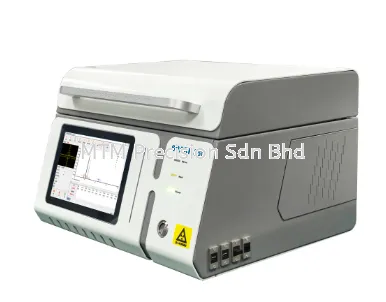
The Linshang LS137 UV Energy Meter allows manufacturers to measure UV energy, UV irradiance and temperature, helping production teams determine whether UV curing conditions are actually consistent from one production run to another.
What Does Inconsistent UV Curing Look Like?
Depending on the process, inconsistent curing may appear as:
Some products cure correctly while others remain tacky
Ink hardness varies between batches
Adhesion is acceptable on one production run but poor on another
Coating scratch resistance changes
Bond strength varies
Different positions on the production line show different results
Reject rates increase intermittently
Curing problems disappear and then return
Intermittent problems are often more difficult to troubleshoot than complete machine failure.
Measurement data can help identify what is changing.
Cause 1 – UV LED Output Is Changing
The UV source itself should be one of the first parameters checked.
UV output can potentially change because of:
UV LED condition
Operating temperature
Cooling performance
Power-supply condition
Driver performance
Optical contamination
The UV lamp may remain illuminated throughout production.
This does not prove that measured output is identical every time.
Cause 2 – Conveyor Speed Is Not Consistent
In conveyor curing systems, speed directly affects exposure time.
If the conveyor runs faster:
Exposure time decreases.
If the conveyor runs slower:
Exposure time increases.
Even relatively small speed differences can matter in a process operating close to its minimum required curing energy.
For troubleshooting, record actual production speed together with UV measurements.
Cause 3 – Working Distance Changes
The distance between the UV LED source and the product can influence irradiance at the curing surface.
Distance may change because of:
Different product height
Fixture variation
Conveyor adjustment
Mechanical movement
Product positioning
Machine servicing
If products do not follow the same geometry through the curing zone, their UV exposure may differ.
Cause 4 – Optical Surfaces Are Contaminated
Printing and coating environments can expose equipment to:
Ink mist
Dust
Coating residue
Oil
Process contamination
If contamination accumulates on an optical window, lens or other relevant surface, less UV radiation may reach the product.
This can create gradual or inconsistent curing performance.
Maintenance should follow the UV equipment manufacturer's recommended cleaning procedure.
Cause 5 – Cooling Performance Changes
UV LED systems rely on thermal management.
Depending on the machine, cooling may involve:
Fans
Air cooling
Heat sinks
Water cooling
Chillers
A cooling problem may affect UV LED operating conditions.
If curing performance changes after the machine has been running for some time, thermal behaviour may deserve investigation.
Cause 6 – Different UV Power Settings
Sometimes the cause is surprisingly simple.
An operator may use:
80% power
while another production recipe uses:
70% power
or a machine setting may have been changed during troubleshooting and not restored.
Always record machine settings before comparing UV measurements.
Cause 7 – Exposure Time Has Changed
Stationary UV curing processes may use a fixed curing time.
For example:
5 seconds
If an operator, PLC program or machine cycle changes the actual exposure duration, accumulated UV energy may also change.
This can occur even if UV intensity remains stable.
Cause 8 – Different UV Modules Are Active
Some curing systems contain multiple UV LED modules.
For example:
Module 1 + Module 2 + Module 3
If one module is:
Switched off
Operating at a different power
Producing reduced output
the total UV exposure through the production line may change.
Check the complete curing configuration.
Cause 9 – The Material Has Changed
Not every curing problem is caused by UV equipment.
If UV measurements remain stable, investigate the production material.
Possible changes include:
Different ink batch
Different coating batch
Different adhesive
Different substrate
Material storage conditions
Coating thickness
Ink thickness
Adhesive thickness
This is why UV measurement is valuable even when it does not reveal a UV problem.
It can help eliminate one possible cause.
What Does the Linshang LS137 Measure?
The Linshang LS137 can measure:
UV Energy
UV Irradiance
Peak UV Irradiance
Measurement Duration
Temperature
Maximum Temperature
For inconsistent curing, these measurements allow engineers to compare a good production run with a problematic production run.
The Best Troubleshooting Method: Good vs Bad
One of the most effective approaches is to capture data from two conditions.
Condition A – Good Production
When curing quality is acceptable, record:
UV peak irradiance
UV energy
Exposure duration
Maximum temperature
Conveyor speed
UV power setting
Working distance
Condition B – Problem Production
When curing quality becomes unacceptable, repeat the same measurements.
Then compare the results.
This can reveal whether UV conditions changed at the same time as product quality.
Example: Printing Factory
A printing factory normally produces fully cured UV ink.
One morning, operators notice tackiness.
Instead of immediately changing ink, the team compares current UV readings with its normal production baseline.
If UV Energy Is Lower
Check:
Conveyor speed
UV LED output
Working distance
Active UV modules
Optical cleanliness
If UV Energy Is Normal
Investigate:
Ink
Substrate
Ink thickness
Material storage
Printing parameters
This makes troubleshooting much more systematic.
Example: UV Adhesive Production
An electronics manufacturer uses UV adhesive for component assembly.
Most products pass inspection, but occasional batches have lower bond strength.
The team measures UV conditions during good and problematic production.
If the readings are consistent, the investigation can shift toward:
Adhesive dispensing
Adhesive storage
Component surface preparation
Bond-line thickness
Component positioning
Without UV measurement, the team may continue adjusting the curing machine unnecessarily.
Example: UV Coating
A coating manufacturer experiences inconsistent surface hardness.
Possible causes include:
UV side
Output
Energy
Speed
Distance
Material side
Coating formulation
Thickness
Substrate
Measuring UV conditions helps separate these two groups of possibilities.
Why Historical Data Is Important
Suppose an LS137 reading is taken only after a problem occurs.
Is the reading normal?
It may be difficult to know.
But if the factory already has a baseline from successful production, the current result can be compared immediately.
This is why regular UV measurement is useful even when the production line appears to be operating perfectly.
Establish a Known-Good Baseline
During stable production, record:
Machine ID:
Product:
UV wavelength:
UV power setting:
Conveyor speed:
Working distance:
Peak UV irradiance:
Accumulated UV energy:
Exposure duration:
Maximum temperature:
Quality result: PASS
This becomes the reference for troubleshooting.
Measure Under Comparable Conditions
When comparing measurements, try to keep important conditions consistent.
For example:
Same machine
Same UV power setting
Same measurement position
Same distance
Same conveyor speed
Same active UV modules
Otherwise, differences may be caused by the measurement setup rather than machine performance.
LS137 for UV LED Curing
The Linshang LS137 is designed for UV LED sources.
Its spectral response is approximately:
340–420 nm
and it is calibrated using a:
395 nm UV LED source
It supports UV irradiance measurement up to:
40,000 mW/cm²
This makes it relevant to many high-intensity industrial UV LED curing applications within its specified operating conditions.
UV LED Wavelength Should Be Confirmed
Common industrial UV LED wavelengths include:
365 nm
385 nm
395 nm
405 nm
Before purchasing a UV energy meter, confirm the actual wavelength and source technology used by your curing equipment.
For 395 nm UV LED applications, the LS137 is particularly relevant because its calibration is based on a 395 nm UV LED source.
LS137 vs LS136
Do not select a UV meter simply by choosing the closest model number.
The light source matters.
UV LED curing
→ Consider Linshang LS137
Traditional high-pressure mercury UV curing
→ Consider Linshang LS136
Using an instrument appropriate for the UV source is essential for meaningful measurements.
Troubleshooting Checklist
When UV LED curing becomes inconsistent, check:
Has UV irradiance changed?
Has accumulated UV energy changed?
Has conveyor speed changed?
Has exposure time changed?
Has working distance changed?
Are all UV modules operating?
Are optical surfaces clean?
Is the cooling system operating normally?
Has the UV power setting changed?
Has the ink, coating, adhesive or substrate changed?
This prevents troubleshooting from focusing on only one possible cause.
Don't Change Everything at Once
A common troubleshooting mistake is changing:
UV power
Conveyor speed
Material
Distance
all at the same time.
The product may improve, but nobody knows which change solved the problem.
A better approach is:
Measure → Identify Difference → Change One Variable → Measure Again → Verify Product
This creates useful process knowledge for future production.
Who Can Use LS137 for Troubleshooting?
The LS137 can be useful for:
Maintenance Engineers
Process Engineers
Production Engineers
QA/QC Personnel
Equipment Engineers
Printing Factories
Coating Manufacturers
Electronics Manufacturers
UV Adhesive Users
It provides quantitative UV information that can support root-cause analysis.
From Intermittent Problems to Measurable Data
Inconsistent curing can be difficult because the machine may appear normal whenever technicians inspect it.
Building a UV measurement history changes the question from:
“What do we think changed?”
to:
“What measurement changed between good and bad production?”
That is a much stronger starting point for industrial troubleshooting.
Looking for Linshang LS137 in Malaysia?
MTM Precision supplies industrial testing and measurement instruments for manufacturing, engineering, maintenance and quality-control applications in Malaysia.
If your production line is experiencing inconsistent UV LED curing, provide us with:
UV wavelength
UV source type
Curing machine model
Application
Expected UV intensity
Production process
We can assist you in determining whether the Linshang LS137 UV Energy Meter is suitable for your application.
Contact MTM Precision
MTM Precision Sdn. Bhd.
Showroom & Service Centre
No. 29-1 & 29-2, Jalan Bandar 18,
Pusat Bandar Puchong,
47160 Puchong, Selangor, Malaysia
🌐 Website: www.mtmpre.com.my
📧 Email: mtmpre@yahoo.com
📱 WhatsApp: +6016-660 7346
Contact MTM Precision for Linshang LS137 UV Energy Meter enquiries, technical information and quotation in Malaysia.
13 Aug 2026


