






How to Calibrate QiWei WGZ-1B Turbidity Meter and Use Turbidity Standards Malaysia

How to Calibrate QiWei WGZ-1B Turbidity Meter Malaysia
Why does a turbidity meter need calibration, and which turbidity standard should be used?
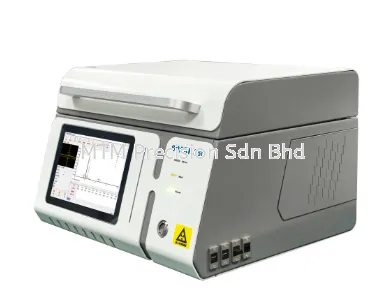
The QiWei WGZ-1B Portable Turbidity Meter measures turbidity from 0 to 200 NTU using the 90° scattered-light principle.
Correct calibration and verification help users identify instrument drift, contaminated sample vials, deteriorated standards and measurement errors before testing actual water samples.
⭐ QiWei WGZ-1B Main Specifications
Measurement parameter: Turbidity
Measuring unit: NTU
Measuring range: 0–200 NTU
Minimum display: 0.1 NTU
Measurement principle: 90° scattered light
Repeatability: ≤1%
Zero drift: ±1%
Power supply: 5 × AA batteries or AC adapter
Portable design
LCD display
Automatic power-off
Sample vials and Formazine turbidity standard supplied
🧪 What Is a Turbidity Standard?
A turbidity standard is a liquid with a known reference value used to check or adjust the response of a turbidity meter.
Common purposes include:
Initial instrument setup
Routine performance checks
Calibration
Verification after transport
Troubleshooting unusual readings
Checking performance after long-term storage
Quality-control documentation
A standard is not an ordinary water sample. It must be handled carefully to protect its assigned value.
🔍 Calibration vs Verification
These two terms are often confused.
Verification
Verification checks whether the instrument reads an appropriate reference standard within an acceptable tolerance.
It answers:
Is the instrument still producing an acceptable result?
Calibration
Calibration compares the instrument’s response with one or more known reference values and may involve adjusting the instrument.
It answers:
How does the instrument respond to known turbidity values, and does it require adjustment?
Accredited Calibration
When a customer requires a traceable or accredited certificate, this is different from the user’s routine adjustment procedure.
The customer should confirm:
Required standard
Required calibration points
Acceptance tolerance
Certificate format
Traceability requirement
Accreditation requirement
Calibration interval
⚠️ Important Note About the Included Standard
The WGZ-1B product information states that a 400 NTU Formazine turbidity standard solution is included.
However, the stated WGZ-1B measuring range is 0–200 NTU.
Users should not assume that the 400 NTU solution can be inserted and measured directly. It may be intended as a stock solution for preparing lower calibration values.
Before preparing or diluting any standard:
Check the QiWei operating manual
Confirm the required calibration points
Confirm whether the standard is supplied ready to use
Follow the manufacturer’s preparation instructions
Use suitable volumetric equipment
Do not estimate dilution volumes
Do not exceed the instrument’s specified measuring range
Incorrectly prepared standards will result in incorrect calibration.
🧰 Items Required Before Calibration
Depending on the instrument procedure, prepare:
QiWei WGZ-1B turbidity meter
Correct turbidity standards
Clean, matching sample vials
Lint-free cleaning cloth
Suitable purified or turbidity-free water, if specified
Clean transfer equipment
Gloves
Calibration record sheet
QiWei operating manual
Do not begin calibration until the required standard concentrations and preparation method are confirmed.
✅ Pre-Calibration Inspection
Before using the calibration function:
Check that the instrument is clean and undamaged.
Inspect the measuring chamber.
Check the sample vials for scratches or stains.
Confirm the standard concentration.
Check the standard’s expiry date.
Review its storage condition.
Check for contamination or leakage.
Allow the instrument and standard to reach suitable measurement conditions.
Install fresh batteries or use the correct AC adapter.
Read the manufacturer’s calibration instructions.
📝 General Calibration Workflow
The exact button sequence and calibration points must follow the QiWei manual. A general workflow is:
Step 1: Power On the Instrument
Place the meter on a stable surface and allow it to initialise.
Step 2: Prepare the Required Standard
Use the specified standard concentration. If preparation is necessary, follow the manufacturer’s documented procedure.
Step 3: Prepare the Vial
Fill a clean vial with the standard. Avoid contaminating the inside of the vial or cap.
Step 4: Remove Air Bubbles
Allow bubbles to disappear. Do not shake the vial aggressively.
Step 5: Clean the Vial Exterior
Use a clean, lint-free cloth to remove fingerprints, moisture and residue.
Step 6: Insert the Vial Consistently
Align the vial according to the instrument or vial marking.
Step 7: Start the Calibration Procedure
Follow the correct WGZ-1B button sequence and calibration-point order.
Step 8: Confirm the Calibration
Wait for the instrument to complete the procedure before removing the vial.
Step 9: Verify the Result
Remeasure an appropriate standard to confirm that the instrument response is acceptable.
Step 10: Record the Calibration
Document the date, standard value, batch number, expiry date, reading, result and operator.
🫧 Why Air Bubbles Affect Calibration
The WGZ-1B detects light scattered by material in the vial.
Air bubbles can also scatter light and may cause:
An incorrectly high reading
Poor repeatability
Calibration failure
Different results after reinserting the same vial
Pour the standard carefully and allow bubbles to disappear before measurement.
🧴 How to Handle Turbidity Standards
To protect the standard:
Check its instructions before use
Store it under the specified conditions
Keep the container tightly closed
Avoid touching the inside of the cap
Use clean transfer equipment
Do not return used liquid to the original bottle
Avoid cross-contamination between concentrations
Record the opening date
Check the expiry date
Dispose of expired material appropriately
🧼 Why Sample-Vial Condition Matters
The sample vial forms part of the instrument’s optical path.
Calibration can be affected by:
Fingerprints
Dust
Scratches
Water droplets
Stains
Condensation
Mismatched vials
Inconsistent vial orientation
Use clean, undamaged vials and handle them near the cap or upper section.
❌ Common Calibration Mistakes
Avoid the following:
Using an expired standard
Using an unknown standard concentration
Measuring a stock solution outside the instrument range
Making an estimated dilution
Using dirty or scratched vials
Leaving fingerprints on the vial
Shaking the standard and creating bubbles
Changing the vial orientation between measurements
Skipping verification after adjustment
Using ordinary tap water as a zero standard without confirmation
Returning used standard to the original bottle
Failing to record the calibration result
🔧 Why Calibration May Fail
Calibration failure may be caused by:
Incorrect standard concentration
Improperly prepared dilution
Contaminated standard
Expired standard
Dirty sample vial
Scratched vial
Air bubbles
Incorrect vial orientation
Contaminated measuring chamber
Low battery
Wrong calibration sequence
Instrument drift or optical fault
Check the simple causes before assuming that the instrument requires repair.
📅 How Often Should WGZ-1B Be Checked?
The appropriate interval depends on:
Frequency of use
Importance of the measurements
Site quality procedure
Required test method
Environmental conditions
Instrument transport
Previous verification history
Customer or consultant requirements
Additional verification should be considered:
Before important measurements
After transporting the instrument
After long-term storage
After replacing or changing standards
When results appear unusual
After the instrument is dropped
After exposure to moisture or chemicals
Follow the organisation’s quality procedure and applicable measurement requirements.
📋 Suggested Calibration Record
Record:
Instrument model
Serial number
Calibration date
Calibration-standard value
Standard manufacturer
Batch or lot number
Expiry date
Initial reading
Final reading
Acceptance limit
Pass or fail result
Operator
Corrective action
Next review date
Good documentation makes it easier to investigate abnormal readings later.
⚠️ When Should You Stop Using the Meter?
Stop relying on the instrument for critical measurements when:
A valid standard repeatedly produces unacceptable results
Calibration cannot be completed
The measuring chamber is contaminated or damaged
Multiple undamaged vials produce inconsistent readings
The instrument was dropped or flooded
The display or controls behave abnormally
The required test method is outside the WGZ-1B specification
Arrange inspection or comparison with a suitable reference instrument.
📍 QiWei WGZ-1B and Turbidity Standard Supplier Malaysia
MTM Precision supplies the QiWei WGZ-1B and water-quality testing instruments for customers in Selangor, Kuala Lumpur, Johor, Penang, Perak, Melaka, Negeri Sembilan, Pahang, Kedah, Perlis, Terengganu, Kelantan, Sabah and Sarawak.
When requesting a replacement turbidity standard or technical assistance, provide:
Instrument model
Required standard concentration
Existing standard details
Expected calibration points
Certificate requirement
Application
Delivery location
📞 Contact MTM Precision
MTM Precision Sdn Bhd
Tel / WhatsApp: +6016-660 7346
Office: +603-8080 7172
Email: mtmpre@yahoo.com
Website: www.mtmpre.com.my
Showroom & Service Centre:
No. 29-1 & 29-2, Jalan Bandar 18,
Pusat Bandar Puchong,
47160 Puchong, Selangor, Malaysia.
Contact MTM Precision for the QiWei WGZ-1B price, availability, turbidity-standard enquiries, sample-vial enquiries and technical support in Malaysia.
15 Sep 2026
