





QiWei WGZ-1B Turbidity Meter for Food and Beverage Process Water Malaysia

Turbidity Meter for Food and Beverage Process Water Malaysia
How can a food or beverage factory check whether its process water remains consistently clear?
Changes in incoming water, filtration performance, storage tanks or production conditions can increase the number of suspended particles in process water.
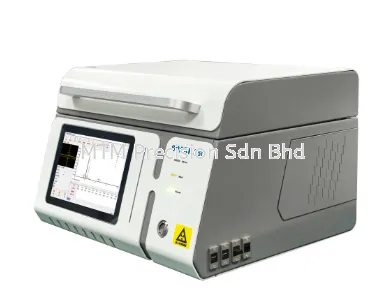
The QiWei WGZ-1B Portable Turbidity Meter measures turbidity from 0 to 200 NTU, allowing quality-control and maintenance teams to compare water clarity at different points in the process.
⭐ QiWei WGZ-1B Main Specifications
Measurement parameter: Turbidity
Measuring unit: NTU
Measuring range: 0–200 NTU
Minimum display: 0.1 NTU
Measurement principle: 90° scattered light
Repeatability: ≤1%
Zero drift: ±1%
Power supply: 5 × AA batteries or AC adapter
LCD display
Automatic power-off
Portable carrying case
Sample vials and Formazine turbidity standard included
💧 Why Monitor Process-Water Turbidity?
Process water may be used for:
Ingredient preparation
Product processing
Equipment rinsing
Bottle or container washing
Cleaning operations
Utility systems
Boiler feed preparation
Cooling systems
General factory use
A change in turbidity may indicate that the water contains more light-scattering particles than usual.
Routine measurements can support investigations into filtration, storage and distribution conditions.
🏭 Where Can Turbidity Be Checked?
Possible sampling points include:
Incoming water supply
Raw-water storage tank
Before filtration
After filtration
Reverse-osmosis pretreatment
Treated-water storage tank
Production-area outlet
Equipment-rinsing point
Cooling-water system
Final distribution point
The correct sampling points should be defined by the facility’s quality or process-control procedure.
📊 Comparing Water Before and After Filtration
One useful application is comparing turbidity at different stages.
Sampling PointPurposeIncoming waterEstablish the initial conditionBefore filtrationCheck water entering the filterAfter filtrationEvaluate the change after treatmentStorage tankIdentify possible tank contaminationProduction outletConfirm condition near the point of use
Repeated measurements taken under consistent conditions are more useful than a single reading.
🔍 What Can an Increase in Turbidity Indicate?
A higher-than-normal result may be associated with:
Dirty or exhausted filter media
Filter breakthrough
Sediment entering the system
Storage-tank contamination
Pipe disturbance
Incomplete flushing
Increased raw-water turbidity
Treatment-chemical residue
Biofilm or organic contamination
Cross-contamination
Poor sample collection
A turbidity meter detects a change in optical clarity. It does not identify the particle type or contamination source.
Further inspection or laboratory analysis may be required.
🧪 How to Measure Process-Water Turbidity
Step 1: Use a Defined Sampling Point
Collect the sample from the location specified in the factory’s monitoring procedure.
Step 2: Flush the Outlet
Where appropriate, allow stagnant water to clear before collecting the sample.
Step 3: Rinse the Sample Vial
Rinse the vial using the sample before filling it for measurement.
Step 4: Fill Carefully
Avoid creating bubbles when transferring the sample.
Step 5: Clean the Vial Exterior
Remove water droplets, fingerprints, dust and residue using a clean, lint-free cloth.
Step 6: Insert the Vial Consistently
Use the correct vial orientation and close the measuring chamber.
Step 7: Record the NTU Result
Document the value together with the sampling location, date, time and process condition.
Step 8: Compare with the Established Trend
Compare the result with previous measurements and the facility’s internal acceptance criteria.
⚠️ Air Bubbles Can Produce False High Readings
Water collected from pressurised pipes may release small bubbles after entering the sample vial.
These bubbles scatter light and may increase the displayed turbidity.
To reduce this problem:
Collect the sample gently
Avoid shaking
Allow visible bubbles to disappear
Use a consistent waiting time
Inspect the vial before measurement
🧼 Sample-Vial Cleanliness Is Critical
Oil, detergent, product residue or fingerprints can interfere with optical measurement.
Before every reading:
Inspect the vial
Ensure it is properly rinsed
Remove external moisture
Check for scratches
Handle it near the cap
Avoid cross-contamination
Use separate or dedicated vials when testing samples that may leave difficult residue.
🥤 Can WGZ-1B Measure Finished Beverages?
The WGZ-1B may be used to compare certain clear liquids, but suitability depends on the product and test method.
Results may be influenced by:
Product colour
Bubbles or carbonation
Pulp
Emulsion
Sugar concentration
Natural suspended material
Product-specific optical properties
A reading obtained from a coloured or carbonated beverage should not automatically be interpreted in the same way as a water-turbidity result.
Before using the instrument for final-product quality control:
Confirm the required method
Test representative samples
Establish an internal procedure
Evaluate repeatability
Define product-specific acceptance limits
Compare results with a suitable reference method
⚠️ Turbidity Does Not Identify Contamination
The WGZ-1B measures the amount of light scattered by particles in the sample.
It cannot determine whether the material is:
Dirt
Sediment
Microorganisms
Product residue
Chemical precipitate
Corrosion material
Organic matter
A higher NTU result is a signal for further investigation, not a complete contamination diagnosis.
🧰 Other Measurements for Food and Beverage Water
A more complete process-water assessment may include:
pH
Conductivity
TDS
Temperature
Turbidity
Residual chlorine
Dissolved oxygen
Microbiological testing
Other parameters defined by the facility
The correct combination depends on the process and quality requirements.
✅ How WGZ-1B Supports Quality Control
Routine turbidity measurements may help teams:
Compare incoming and treated water
Monitor filter-performance trends
Investigate changes in water appearance
Check water after maintenance work
Compare storage tanks or production outlets
Document internal process checks
Identify when further testing is required
Support preventive-maintenance decisions
⚠️ When Is WGZ-1B Not the Correct Instrument?
Consider another method or instrument when:
The required result is suspended solids in mg/L
Expected turbidity exceeds 200 NTU
Continuous online monitoring is required
The sample contains heavy sludge
The product is strongly coloured or opaque
A specific regulatory method is required
Extremely low-level turbidity must be measured
Microbiological contamination must be identified
The WGZ-1B is best positioned as a portable instrument for routine turbidity comparisons within its stated range.
📋 Suggested Process-Water Record
A basic record may include:
Date and time
Sampling point
Product or production line
Turbidity reading in NTU
Water temperature
Filter status
Last filter replacement or backwash
Visual observation
Operator
Corrective action
Verification result
Consistent records help identify gradual changes and recurring problems.
🛒 Information Required for a Quotation
When requesting a turbidity meter, provide:
Type of water or liquid
Expected turbidity range
Required measurement unit
Sampling points
Testing frequency
Internal monitoring or formal reporting
Applicable test method
Certificate requirements
Required accessories
Factory location
MTM Precision can help determine whether the QiWei WGZ-1B is suitable for the intended application.
📍 Food and Beverage Water-Testing Instruments Malaysia
MTM Precision supplies water-quality instruments for food factories, beverage plants, laboratories, maintenance contractors and industrial customers throughout Malaysia.
Available categories include turbidity, suspended solids, pH, conductivity, TDS, salinity, dissolved oxygen, ORP, residual chlorine, refractometers and multiparameter water-quality instruments.
We support customers in Selangor, Kuala Lumpur, Johor, Penang, Perak, Melaka, Negeri Sembilan, Pahang, Kedah, Perlis, Terengganu, Kelantan, Sabah and Sarawak.
📞 Contact MTM Precision
MTM Precision Sdn Bhd
Tel / WhatsApp: +6016-660 7346
Office: +603-8080 7172
Email: mtmpre@yahoo.com
Website: www.mtmpre.com.my
Showroom & Service Centre:
No. 29-1 & 29-2, Jalan Bandar 18,
Pusat Bandar Puchong,
47160 Puchong, Selangor, Malaysia.
Contact MTM Precision for the QiWei WGZ-1B price, availability, water-testing instrument selection and delivery throughout Malaysia.
16 Sep 2026
